Meditation for Beginners: How to Start, Step by Step


Meditation for beginners is the practice of resting your attention on one thing, usually the breath, noticing when the mind wanders off and bringing it back. That return is the whole exercise. Start with 5-10 minutes a day, sitting upright on a cushion or a chair, at the same time each day.
You do not need to empty your mind, sit in Lotus or believe anything. You need a timer, a place to sit and the patience to begin again a few hundred times.
What is meditation?
Meditation is a name for many practices that train attention. Some ask you to hold your focus on one object, such as the breath, a sound or a word. Others ask you to widen it and notice whatever arises: sounds, sensations, thoughts. Both are meditation, and most beginner practices mix the two.
The English word comes from the Latin meditari, "to think over" or "to ponder". In yoga the word is dhyana (ध्यान), from the Sanskrit root dhyai, "to contemplate". In the Yoga Sutras of Patanjali, dhyana is the seventh of the 8 limbs of yoga. It follows dharana, concentration, where you keep bringing the mind back to one point. Dhyana is the stage where attention stays there without the constant pulling back. Almost everything a beginner does is dharana, and that is fine.
How to meditate: a first practice, step by step
This is a plain breath meditation. It is the one most teachers start with, because the breath is always with you and you do not have to invent anything.
- Set a timer for 5 minutes. Use a gentle sound. Put the phone face down so you do not check it.
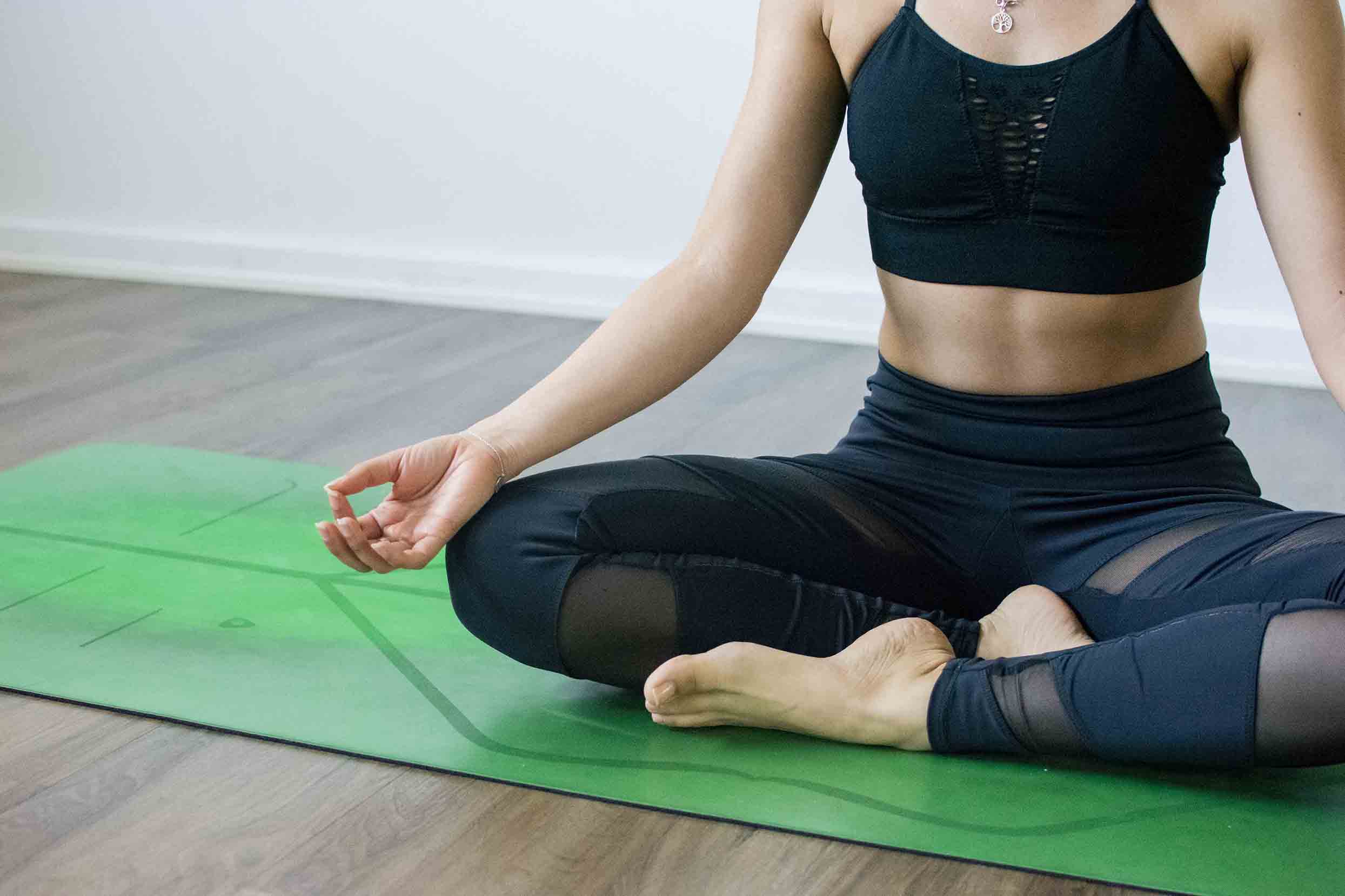
- Sit so your spine can stay upright without effort. Cross-legged on a cushion or folded blanket, with your hips higher than your knees, or on a chair with both feet flat on the floor. Sukhasana (Easy Pose) is the usual floor seat.
- Rest your hands on your thighs and let your shoulders drop. Close your eyes, or keep them half open with a soft gaze on the floor a metre in front of you.
- Breathe through your nose at your normal pace. Do not deepen or slow the breath on purpose. Your job is to watch it, not to steer it.
- Pick one place to feel the breath: the cool air at the tip of the nose, or the belly rising and falling. Stay with that one place.
- Count if it helps. Count each exhale from one to ten, then start again at one. When you lose count, which you will, go back to one without comment.
- When you notice you are thinking, name it and return. Say "thinking" silently, then come back to the next breath. Every return is one repetition, the way a squat is one repetition for the legs.
- When the timer sounds, open your eyes slowly. Sit for a few more breaths before you stand up.
Do this daily for a week. Then go to 10 minutes. Consistency matters more than length: five minutes every morning teaches you more than one hour on a Sunday.
What to expect in the first weeks
Your mind will wander within seconds. It will plan dinner, replay a conversation, notice an itch. This is what minds do. Beginners often decide they are bad at meditation because of it. The wandering is the material you practise with, so a session full of wandering and returning is a good session.
Other common experiences:
- Restlessness. The body wants to move. Allow one slow adjustment, then settle again.
- Sleepiness. Sit taller, open your eyes a little, or practise earlier in the day.
- Discomfort in the knees or back. Raise the seat or move to a chair. Pain is a signal to change position, not something to sit through.
- Boredom. Notice it the way you notice the breath. It passes.
Most people who keep going for a few weeks report that they notice sooner when they have drifted. That shorter gap is the skill you are building.
Types of meditation beginners can try
There is no best style. The one you will do every day is the right one. These are the common starting points:
- Breath awareness. The practice above. Good for most people and the base of many other styles.
- Body scan. You move your attention slowly through the body, from the feet to the head, noticing sensation without changing it. Try the 20-minute guided body scan class.
- Loving-kindness (metta). You repeat phrases of goodwill toward yourself and then others. Our guide to meditation for self-love walks you through it.
- Mantra meditation. You repeat a word or sound, aloud or silently. In yoga the classic mantra is Om. Transcendental Meditation is a trademarked mantra method taught in paid courses by certified teachers.
- Walking meditation. You walk slowly and feel each foot lift, move and land. Helpful when sitting still is hard.
- Informal mindfulness. You bring the same attention to an everyday task, such as washing the dishes: the warmth of the water, the weight of a plate. Useful practice, and a good complement to sitting.
Breath practice and meditation overlap. If you want to work with the breath itself, Nadi Shodhana (alternate nostril breathing) is a common way to settle before you sit.
What meditation can and cannot do
The old version of this article promised lower cholesterol, fewer infections, relief from addiction and better athletic performance. The research does not support promises like that, so they are gone. Here is what holds up:
- Anxiety, low mood and pain. A large review in JAMA Internal Medicine (Goyal and colleagues, 2014) looked at 47 trials of structured mindfulness programmes and found moderate evidence of small improvements in anxiety, depression and pain. It also found no evidence that meditation works better than other active treatments, such as exercise or therapy.
- Depression that keeps coming back. Mindfulness-Based Cognitive Therapy, an eight-week group course, has been shown to lower the risk of relapse for people who have had several episodes of depression. It is used alongside medical care, not as a replacement for it.
- Stress. Many people feel calmer after a session, and slow, steady attention on the breath gives the nervous system a chance to shift toward rest. Long-term effects on stress in the studies are less clear than the popular claims suggest.
- Sleep. Some trials show better sleep quality after a mindfulness course. The effect is modest.
- Blood pressure. The American Heart Association has said meditation may be considered as an add-on for lowering blood pressure, while calling the evidence limited.
For a longer look at the studies, read our article on the benefits of meditation.
Where the sources disagree
"Clear your mind." Popular advice often says the goal is an empty mind. Most teachers in both the yoga and Buddhist traditions describe it differently: you train where your attention goes and how you relate to thoughts. A blank mind is not the measure of a good session.
"Meditation is always calming." For most people it is. A minority report anxiety, strong emotions or old memories that come up during practice, especially on long retreats. If you have a history of trauma or a mental health condition, work with a teacher who has trauma-informed training, keep sessions short, and keep your eyes open if that feels safer.
"Meditation is thousands of years old." The practice is old. The oldest detailed descriptions of meditation in India are in the Upanishads and early Buddhist texts, from roughly the middle of the first millennium BCE. Claims that go further back, to the Vedas or before written records, are guesses. What most people practise today, short secular sessions for stress, grew from the 1970s onward, through programmes such as Jon Kabat-Zinn's Mindfulness-Based Stress Reduction.
"Meditation is religious." It comes from religious traditions: Hindu, Buddhist, Jain, and contemplative strands of Christianity, Judaism and Islam. The breath practice above asks you to believe nothing. You can practise it as a secular skill, or connect it to a tradition if that means something to you.
Tips that help beginners keep going
- Same time, same place. Tie it to something you already do, such as after your morning coffee.
- Start shorter than you think. Five minutes you do beats twenty minutes you skip.
- Use guided sessions at first. A voice gives you something to return to. Our 10-minute meditation for beginners and the 5-minute guided breathing meditation are good first sessions.
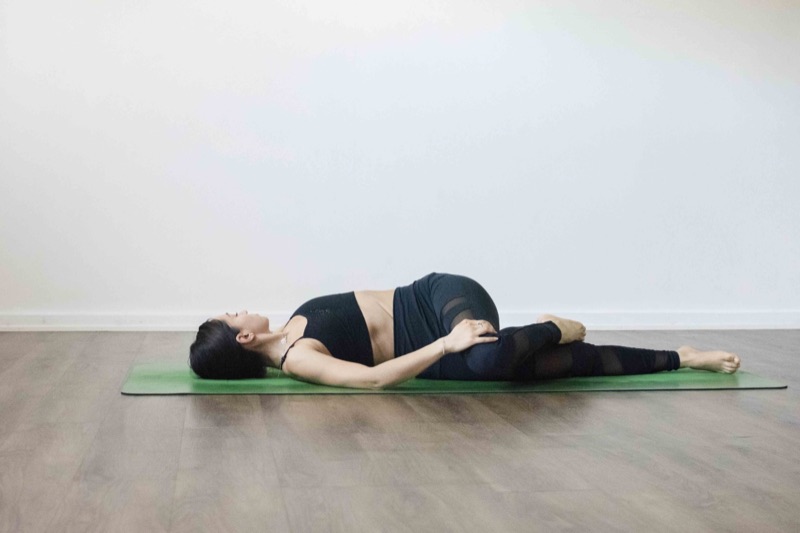
- Move first if you are restless. A few minutes of yoga before you sit makes stillness easier. Ending a yoga class in Savasana (Corpse Pose) is a form of meditation lying down.
- Keep a two-line note. How long you sat and one thing you noticed. After a month you can see what changed.
If you want a structure to follow, the free 21-day meditation challenge with Guy Powiecki gives you ten guided minutes a day, starting with day 1: start where you are. All our guided sessions are collected under meditation classes.
Frequently asked questions
How should a beginner start meditating?
Sit upright on a cushion or chair, set a timer for 5 minutes and rest your attention on the breath at the nose or belly. When your mind wanders, notice it and come back to the next breath. Do it daily at the same time, and add minutes after a week or two.
What is the best meditation for beginners?
Breath awareness is the usual first practice, because it needs nothing but your own breathing. Guided meditations help many beginners, since a voice gives you something to return to. If sitting still is hard, try a body scan lying down or a slow walking meditation.
Can you teach yourself to meditate?
Yes. The basic instructions fit in a paragraph, and many people learn with books, recordings and guided classes. A teacher helps when you get stuck, and is worth finding if you have a history of trauma or strong reactions during practice.
How long should a beginner meditate?
Five to ten minutes a day is enough to start. Regular short sessions build the habit better than occasional long ones. Many people settle at 10-20 minutes once the practice is steady.
What are the 7 stages of meditation?
There is no single agreed list of seven stages. Different teachers and traditions describe the path in different ways. In the Yoga Sutras the last three limbs are dharana (concentration), dhyana (meditation) and samadhi (absorption), and Buddhist traditions have their own maps. For a beginner, the first stage is the one that matters: noticing that the mind has wandered and bringing it back.
Is it normal for my mind to wander the whole time?
Yes. Wandering is what minds do, and noticing it is the practice. Each time you catch yourself thinking and return to the breath, you have done one repetition. Over weeks, most people notice the drift sooner.
Can I meditate lying down?
You can, and it is a good choice if sitting hurts. The risk is falling asleep, so keep your arms by your sides, your eyes slightly open, or practise at a time of day when you are alert. Yoga Nidra and body scans are often done lying down.
Do I need to sit cross-legged to meditate?
No. A chair works well: sit toward the front edge, feet flat, spine upright. What matters is a position you can hold without pain for the whole session.
Practise it with a teacher
Over 600 online yoga classes and programs for $4.99 a month. Cancel any time.
Become a member