Anjaneyasana (Low Lunge Pose): How to Do It Step by Step

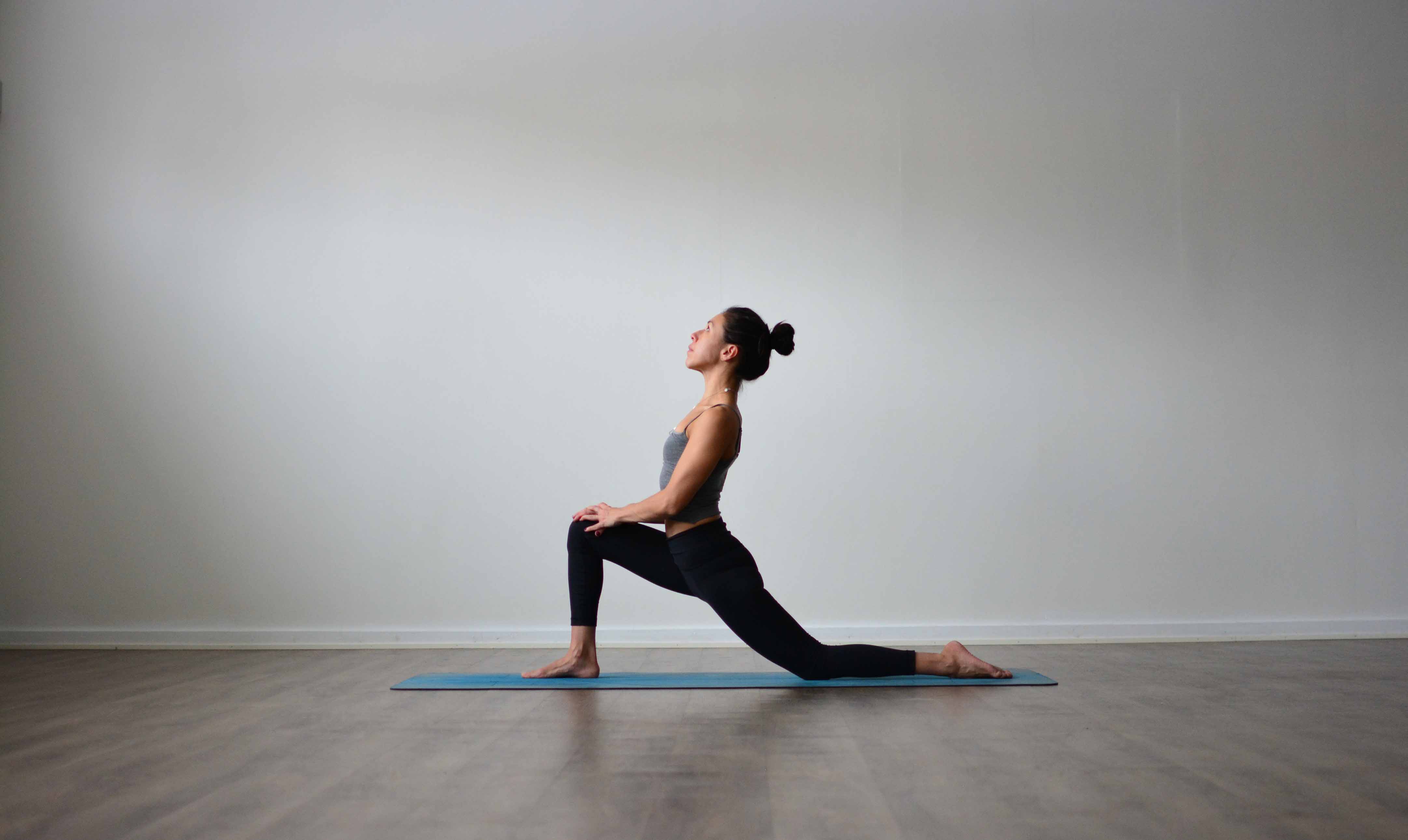
Anjaneyasana (Low Lunge Pose) is a kneeling lunge: one foot forward with the knee bent over the ankle, the back knee on the mat, the chest lifted and the arms reaching up. It stretches the hip flexors and the front of the thigh of the back leg while the front leg and the core hold you steady. It is a common pose in Vinyasa and Hatha classes and one of the simplest ways to open the front of the hips after a day of sitting.
Pose type: kneeling lunge, hip flexor stretch, mild backbend. Level: beginner. Props: a folded blanket under the back knee, two blocks for the hands.
What Anjaneyasana means
The name joins Anjaneya and asana, seat or posture. Anjaneya means "son of Anjana" and is another name for Hanuman, the monkey god of the Ramayana. In the story Hanuman crosses the sea to Lanka in one great leap, and the long reach of the lunge is read as that leap, or as the moment he kneels before it. Some Hindu traditions see Hanuman as a form of Shiva. The old version of this page gave the Sanskrit as ananda, which means bliss and has nothing to do with the name. Fixed.
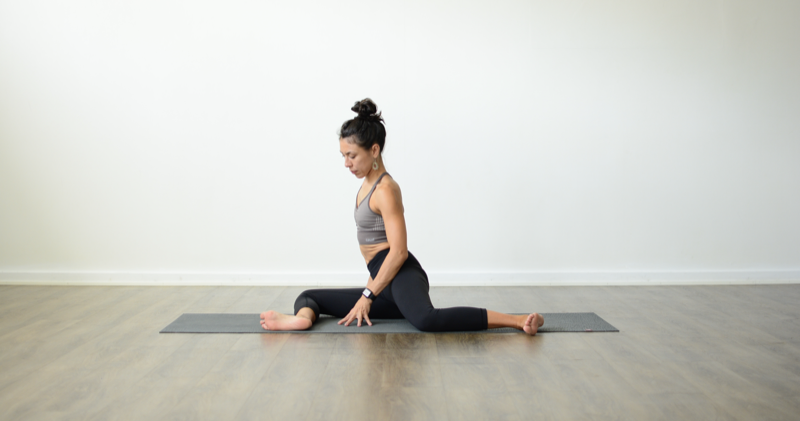
Hanuman gives his name to one more pose you will meet in the same classes: Hanumanasana (Monkey Pose), the full front splits, which is where many low lunge sequences are heading.
How to do Anjaneyasana, step by step
- Start in Adho Mukha Svanasana (Downward-Facing Dog). Inhale and lift your right leg behind you.
- Exhale and step the right foot forward between your hands. If it does not reach, pick it up with your right hand and help it the rest of the way. Stack the right knee over the right ankle.
- Lower the left knee to the mat. Put a folded blanket under it if the knee is sensitive. Rest the top of the left foot on the mat, toes pointing straight back.
- Slide the left knee back until you feel a stretch along the front of the left thigh and hip. The right knee can move a little past the ankle once you sink in, as long as it stays pain free.
- Inhale and bring your torso upright. Rest your hands on the front thigh or on blocks while you find your balance.
- Draw the lower belly in and let the tailbone point down. You should feel the stretch move higher, into the front of the left hip. That is the hip flexor.
- Sweep the arms up, palms facing each other, shoulder-width apart. Let the shoulder blades slide down the back so the shoulders move away from the ears.
- Look forward, or up toward your hands if your neck is happy there. Stay for 5-8 slow breaths.
- To come out, bring your hands down to either side of the front foot, tuck the back toes and step back to Downward-Facing Dog. Repeat on the left side.
The lift in the chest is a mild backbend. It should come from the upper back and the length in the front of the hips, not from squeezing the lower back.
Benefits of Low Lunge
The main thing Anjaneyasana does is stretch the front of the back hip. With the knee down and the pelvis moving forward, the hip of the back leg goes into extension, which lengthens the iliopsoas and the rectus femoris, the one quadriceps muscle that crosses the hip. Hours in a chair keep those muscles in a short position, which is why the pose is a regular in classes for runners, cyclists and office workers.
- Front of the hip: a stretch for the hip flexors of the back leg. Our guide to the hip flexors and the psoas explains the anatomy.
- Front of the thigh: the quadriceps of the back leg, most of all when you lift the back foot. More on that in the quadriceps and yoga.
- Front leg and core: the glutes and the thigh of the front leg hold the lunge, and the core keeps the pelvis from tipping forward.
- Balance: with the arms up and the base narrow, you have to steady yourself through both legs.
Two claims from the old version of this page are gone. Nothing we could find shows that the pose eases sciatica. Some people with sciatica feel better in a gentle lunge and some feel worse, so let your own symptoms decide. The same goes for "a calming effect on the mind": slow breathing calms you, in this pose or any other.
Who should skip or modify Low Lunge
- Sore knees: kneeling puts your weight on the kneecap of the back leg. Double the mat over, use a folded blanket, or practise the high lunge with the back knee lifted.
- Lower back pain: keep the torso upright, hands on the front thigh, and skip the backbend. If the lower back pinches, bring the back knee forward a little.
- Neck problems: look straight ahead instead of up.
- Shoulder problems: keep the hands on the hips or the front thigh, or open the arms wider than shoulder-width.
- Balance or blood pressure concerns: keep the hands on blocks and the head level. Come up slowly, as you would from any lunge.
- Pregnancy: the pose is common in prenatal classes. Widen the stance so the belly has room, keep a hand on a block or a wall, and stay out of the deep backbend.
The old page said the pose is not for people with a heart condition. We found no source for that as a rule for a kneeling lunge. If you have a heart condition, follow your doctor's advice on exercise in general. For more on practising without injury, read our 10 tips to avoid yoga injuries.
Common mistakes
- Hanging in the lower back. The pelvis tips forward, the lower back arches and the hip flexor stretch disappears. Draw the lower belly in and let the tailbone drop until you feel the front of the hip.
- Front knee falling inward. Keep the front knee pointing over the second and third toes.
- Feet on a tightrope. If the front foot and the back knee are in one line, you will wobble. Keep them hip-width apart, as if on two rails.
- Chasing depth. Sinking the hips lower without the pelvis tucked under turns the pose into a hang on the ligaments. A shorter lunge with the pelvis set right stretches more.
- Shoulders up by the ears. Reach up through the fingers and let the shoulder blades move down.
- Holding the breath. Breathe slowly through the nose. The stretch lets go more on the exhale.
Preparatory poses
- Downward-Facing Dog: the usual way in, and it wakes up the legs.
- Tadasana (Mountain Pose): teaches the neutral pelvis you need to feel the hip flexor stretch.
- Core work: a stable core is what keeps the pelvis from tipping in the lunge.
- Bhujangasana (Cobra Pose): a gentle backbend for the upper back before you lift the chest and arms.
Follow-up poses
- Virabhadrasana I (Warrior I): the standing version of the same shape, with the back heel down.
- Eka Pada Rajakapotasana (One-Legged King Pigeon): opens the outer hip of the front leg and the front of the back hip.
- Ustrasana (Camel Pose): a deeper kneeling backbend with both hips in extension.
- Hanumanasana (Monkey Pose): the full splits, for when the lunge has stopped being a stretch.
Anjaneyasana variations
- Hands on the thigh or on blocks: the easiest version, good for balance and for the lower back.
- Toes tucked under: tuck the back toes if the top of the foot or the ankle is uncomfortable on the mat.
- High lunge (Crescent Lunge): lift the back knee off the mat. More work for the legs, less pressure on the knee.
- Quad stretch: bend the back knee and hold the back foot with the hand on the same side. A strong stretch for the rectus femoris. Put a blanket under the knee.
- Side bend: reach the arm on the back-leg side up and over toward the front leg. The stretch runs from the hip up the side of the waist.
- Twist: bring the hands to heart centre and hook the opposite elbow outside the front knee.
For runners, the lunge is one of the key stretches in our guide to yoga for runners and tight hips. For longer, quieter holds, the Yin Yoga for the Psoas class uses the lunge with a bolster, and the Vinyasa flow classes put it into movement.
The Low Lunge Class is 25 minutes of Hatha built on this pose, for the hips and the hip flexors.
Frequently asked questions
What is the English name for Anjaneyasana?
Anjaneyasana is called Low Lunge or Low Lunge Pose in English, and some teachers call it Crescent Moon Pose. In Sivananda-style sun salutations a similar kneeling lunge is called Ashwa Sanchalanasana, the Equestrian Pose.
What is Anjaneyasana and its benefits?
Anjaneyasana is a kneeling lunge with the chest lifted and the arms up. It stretches the hip flexors and the front of the thigh of the back leg, works the front leg and the core, and asks for balance. It is a good stretch after a day of sitting.
How long should you hold Low Lunge?
In a flowing class, 3-5 breaths on each side. As a stretch, 5-8 slow breaths, or up to a minute with the hands on blocks. In Yin Yoga, with a bolster for support, holds of two to four minutes are common.
What is the difference between Low Lunge and High Lunge?
In Low Lunge the back knee is on the mat, which makes it steadier and puts more of the stretch into the front of the back hip. In High Lunge the back knee lifts and you balance on the ball of the back foot, so the legs work harder.
Is Low Lunge good for sciatica?
There is no good evidence that it eases sciatica. A gentle lunge feels good for some people and makes symptoms worse for others. If pain, tingling or numbness runs down the leg during the pose, come out and ask a physiotherapist which movements suit you.
Why does my back knee hurt in Low Lunge?
Kneeling puts your weight on the kneecap and the tissue in front of it. Fold the mat, add a blanket, or move the weight a little above the kneecap by sliding the knee back. If it still hurts, practise High Lunge instead.