Creamy and Spicy Broccoli Tofu Soba Bowl with Peanut Satay Sauce

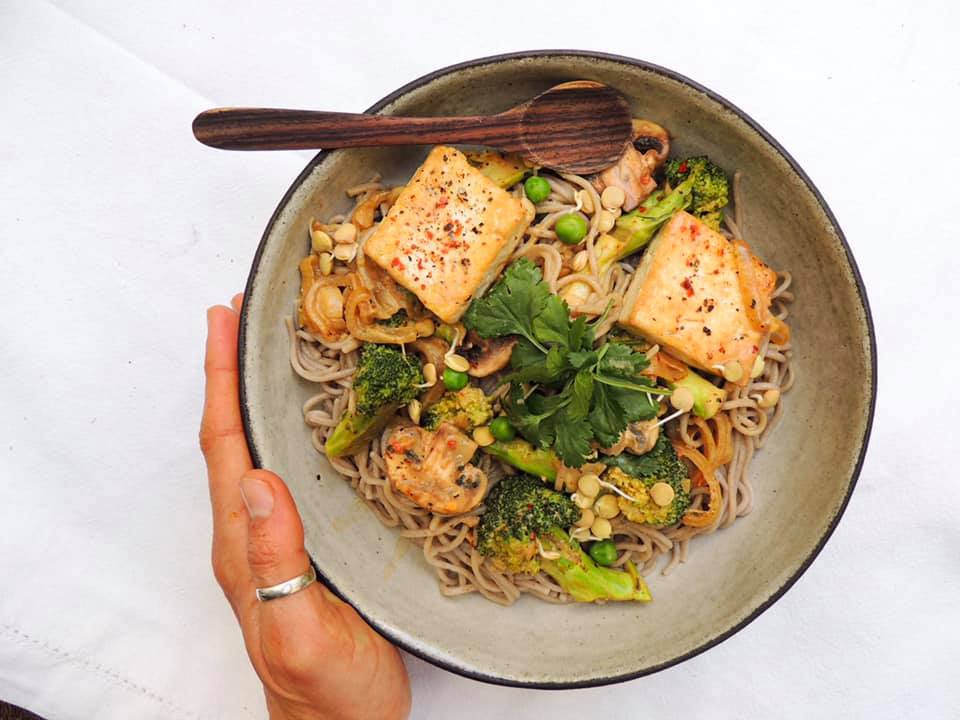
This creamy and spicy broccoli tofu soba bowl is a plant-based noodle dish: buckwheat soba tossed in a peanut and soy satay sauce with broccoli, mushrooms and peas, topped with pan-fried tofu, chili flakes and fresh coriander. It takes about 30 minutes, uses two pans and a pot, and keeps well as a packed lunch the next day.
Serves: 3-4. Time: about 30 minutes. Diet: vegan. Gluten-free only with 100% buckwheat soba and tamari (see below). Equipment: a large pot, two frying pans, a blender or a jar with a lid.
Ingredients
For the satay sauce
- 1/2 cup (120 ml) unsweetened soy milk
- 2 tablespoons smooth natural peanut butter
- 4 tablespoons soy sauce or tamari
- 2 teaspoons apple cider vinegar
- 1 teaspoon freshly ground black pepper
For the bowl
- 1.5 tablespoons olive oil, divided
- 1 yellow onion, sliced
- 3 garlic cloves, chopped
- 1 teaspoon finely grated fresh ginger
- 3 cups (about 250 g) broccoli florets, chopped
- 8 button mushrooms, or mushrooms of your choice, sliced
- 1/2 cup frozen peas
- 1 packet (200 g) soba noodles
- 1 block (about 400 g) firm tofu, cut into cubes
- 1/2 teaspoon chili flakes, plus extra to serve
- A pinch of sea salt
- 1/3 cup lentil sprouts (optional)
- 1/2 bunch fresh coriander (cilantro), chopped
- Lemon wedges to serve (optional)
How to make it
- Start the base. Heat 1 tablespoon of olive oil in a large frying pan over medium-high heat. Add the onion and cook until it smells sweet and turns translucent, about 5 minutes. Add the garlic and ginger and cook for another minute. If anything sticks, add a splash of water.
- Blend the sauce. Put the soy milk, peanut butter, soy sauce, vinegar and black pepper in a blender and blend until smooth. A jar with a tight lid, shaken hard, works too.
- Cook the noodles and peas. Bring a big pot of water to the boil and cook the soba as the packet says, usually 4-6 minutes. Add the frozen peas for the last minute. Drain, rinse under cold water to stop the cooking and wash off the starch, then toss with a few drops of oil so the noodles stay loose.
- Cook the vegetables in the sauce. Add the broccoli and mushrooms to the onion pan, pour in the sauce and stir. Let it simmer gently while you cook the tofu.
- Fry the tofu. Pat the tofu dry with a clean towel first. Heat the remaining 1/2 tablespoon of oil in a second pan and add the cubes in one layer. Leave them alone for a few minutes so each side browns and crisps before you turn it. Take the pan off the heat and season with a pinch of salt and the chili flakes.
- Check the broccoli. It is done when it is tender but still bright green. Turn off the heat and taste the sauce. With 4 tablespoons of soy sauce it will already be salty, so add more vinegar or pepper before you reach for salt.
- Put it together. Fold the soba into the broccoli and sauce until every strand is coated. Top with the tofu, coriander and lentil sprouts. Serve with extra chili flakes, black pepper and a squeeze of lemon if you like.
Is this soba bowl gluten-free?
It can be, but check two labels. Most soba sold in shops is a blend of buckwheat and wheat flour. A common ratio is 80% buckwheat to 20% wheat, and some cheaper brands contain more wheat than buckwheat. Only soba made from 100% buckwheat (sometimes sold as juwari or towari soba) is free of wheat. Buckwheat itself is a seed, unrelated to wheat, and contains no gluten.
Regular soy sauce is brewed with wheat too. Use tamari labelled gluten-free instead. If you cook for someone with coeliac disease, look for a gluten-free certification on both, since buckwheat is often milled alongside wheat.
Swaps and variations
- No peanuts: use tahini, almond butter or sunflower seed butter. Tahini gives a more bitter, sesame taste, so add a teaspoon of maple syrup.
- Richer sauce: swap half the soy milk for light coconut milk.
- More heat: add a teaspoon of chili oil or sriracha to the blender.
- Other greens: broccolini, bok choy, spinach or edamame all work. Add leafy greens at the end so they only wilt.
- Other noodles: rice noodles or udon, cooked as the packet says.
- Crispier tofu: press the block under a heavy pan for 15-20 minutes and toss the cubes in a tablespoon of cornstarch before frying.
The six tastes of Ayurveda, and where this bowl fits
The recipe's author, Maria Praeg, built it with Ayurveda in mind. Ayurveda, the traditional medical system of India, names six tastes, or rasas: sweet (madhura), sour (amla), salty (lavana), pungent (katu), bitter (tikta) and astringent (kashaya). Each taste is described as made of two of the five elements, and the classical advice is to include all six in a meal. If the Sanskrit is new to you, our list of 50 Sanskrit yoga terms covers the basics.
In this bowl you can find all six:
- Sweet: soba, peas, soy milk, peanut butter.
- Sour: apple cider vinegar and lemon.
- Salty: soy sauce and sea salt.
- Pungent: chili, ginger, garlic, onion, black pepper.
- Bitter: broccoli and coriander.
- Astringent: peas, tofu, lentil sprouts.
Where the claim goes further, the sources part ways. Ayurvedic texts and teachers say each taste increases or calms particular doshas, the three constitutions called vata, pitta and kapha, and that a meal with all six tastes keeps your personal balance, your prakriti, steady. That is a traditional framework. It has not been tested the way nutrition science tests diets, and studies on dosha types are small and hard to compare. Nutrition science would describe the same bowl in other words: protein from tofu and soba, fibre from vegetables and buckwheat, fat from peanut butter. The two views land on a similar plate from different directions. If the idea of elements interests you, the Five Elements program brings earth, water, fire, air and space into a Vinyasa practice.
Many yogis eat plant-based as part of ahimsa, the principle of non-harm. Classical Ayurveda is not vegetarian by rule, though, and some Ayurvedic cooks would leave out the onion and garlic, which they count as too stimulating. Cook it the way that suits you.
Make ahead and storage
Keep the tofu separate if you want it to stay crisp. The dressed noodles keep for up to 3 days in a closed container in the fridge. Soba soaks up sauce as it sits, so loosen leftovers with a splash of soy milk or water. It is good cold as a lunch, or warmed briefly in a pan.
For more from the same kitchen, try the thyme and caraway broccoli pasta bake, the gluten-free almond and blueberry breakfast muffins, or the salted hazelnut brownie loaf for afters.
It makes a good dinner after an evening class: put the noodle water on, roll out your mat for a Vinyasa flow class or a slower Hatha class, and the rest takes 20 minutes.
Frequently asked questions
Are soba noodles gluten-free?
Only when they are made from 100% buckwheat flour. Most soba in shops mixes buckwheat with wheat flour, often 80 to 20, so it contains gluten. Read the ingredient list, and look for a gluten-free label if you have coeliac disease.
How much protein is in this bowl?
Most of it comes from the tofu. A 400 g block of firm tofu gives roughly 50-60 g of protein, depending on the brand, and the soba, peas and peanut butter add more. Shared between four bowls, that is a filling dinner. Check your tofu's label for exact numbers.
Should I rinse soba noodles after cooking?
Yes. Rinse them under cold water right after draining. It stops the cooking and washes off surface starch, so the noodles do not turn gummy or stick together in the sauce.
Can I make the satay sauce without peanut butter?
Yes. Tahini, almond butter or sunflower seed butter all work in the same amount. Tahini tastes more bitter, so balance it with a teaspoon of maple syrup.
Can I eat this cold?
Yes. It works as a cold noodle salad for lunch. Loosen the sauce with a little water or soy milk, since the noodles absorb it overnight, and add fresh coriander and lemon before eating.
What are the six tastes in Ayurveda?
Sweet, sour, salty, pungent, bitter and astringent. Ayurveda recommends including all six in a meal. This bowl covers them with soba and peas (sweet), vinegar (sour), soy sauce (salty), chili and ginger (pungent), broccoli (bitter) and tofu and sprouts (astringent).
How long does it keep?
Up to 3 days in a closed container in the fridge. Store the fried tofu separately if you want it to stay crisp, and reheat briefly in a pan or eat it cold.