Namaste Meaning: What It Means and How to Say It

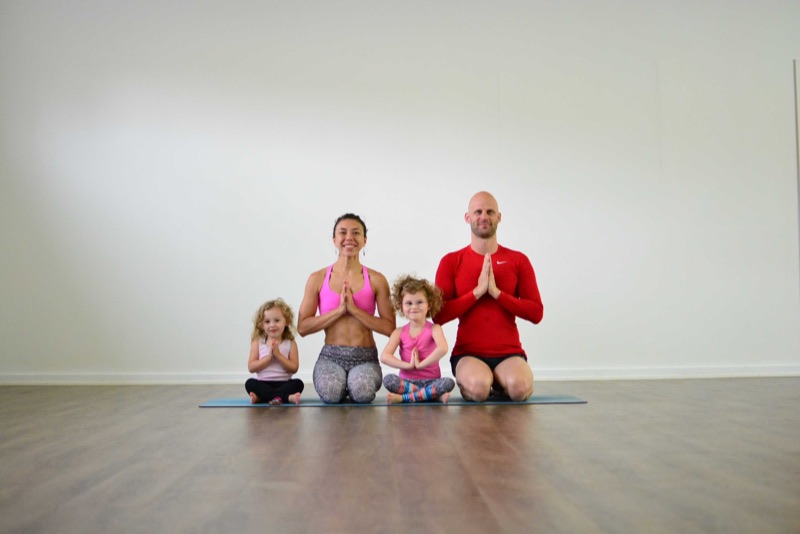
Namaste (Sanskrit and Hindi: नमस्ते) is a respectful greeting that means "I bow to you." You say it with your palms pressed together in front of the chest and a small bow of the head. In India and Nepal it is an everyday way to say hello, and many people use it for goodbye too. In yoga classes outside India it is usually said once, at the end of class.
What does namaste mean?
Namaste is two Sanskrit words joined together:
- Namah (नमः): a bow, homage, respect.
- Te (ते): to you.
Put together: "a bow to you", or in plain English, "I bow to you." The s in the middle comes from a sound rule in Sanskrit called sandhi. The word namah changes to namas when a t follows it, so namah + te becomes namaste. The s belongs to the first word. It is not a separate link between the two.
One small detail tells you something about the tone. Te is the familiar form of "you" in Sanskrit, the one used for someone close, for a child or for a god. Sanskrit also has forms for more than one person: namo vah to a group of three or more.
Namaste meaning in Hindi
In Hindi, Nepali, Marathi and several other languages of India, नमस्ते (namaste) is the ordinary respectful greeting. It works like "hello", said to a shopkeeper, a neighbour or a teacher. Many speakers also use it when they leave. The gesture often does the talking: in India you will see people join their palms and nod without saying the word at all.
How formal it sounds depends on who you ask. Some South Asian yoga teachers describe it as a formal greeting for elders and teachers, and would never use it to part. Others use it with anyone, all day. Both are real usage, from different regions and families.
"The light in me honors the light in you"
This is the version most yoga students hear first. It is an interpretation, and it has a recent source. The American teacher Ram Dass described namaste this way in lectures around 1970: in India, he said, people greet each other by honouring the Atman, the true self, in the other person. American yoga teachers picked up the phrase, and it spread from there.
The idea behind it is older than the phrase. In Hindu thought the same Atman lives in every person, and many Hindu writers explain the bow of namaste as respect for that. So the spiritual reading has roots in the tradition. The wording "the light in me honors the light in you" does not come from any Sanskrit text, and it is not a translation of the word.
You may also read that nama means na ma, "not mine", so namaste is about letting go of the ego. That is a devotional reading some teachers give. It is a play on the sounds of the word, not where the word comes from.
Namaste vs namaskar
Namaskar (नमस्कार, also namaskara) comes from namas (bow) and kara (making, doing): "the act of bowing". You know the word from Surya Namaskar, the Sun Salutation. As a greeting it means the same as namaste and uses the same gesture.
A rule you will often read is that namaste is for one person and namaskar is for a group. Grammatically there is something to it, since te is "to you" in the singular. In daily life, people in India say namaste to a room full of people without a second thought. Many speakers hear namaskar as a little more formal, and in some regions it is the usual word. If you are a guest, use the one you hear around you.
How to do the namaste gesture
The hand position is Anjali Mudra, one of the classic yoga mudras. Anjali means "offering".
- Bring your palms together in front of the centre of your chest, fingers pointing up.
- Press the palms evenly. Let your thumbs rest lightly against the breastbone.
- Soften your shoulders away from your ears.
- Tip your head forward in a small bow. A nod is enough. There is no need to bend from the waist.
- Say "namaste": three short, even syllables, close to nuh-muh-stay, with a soft t made with the tongue against the teeth. Avoid a big stress on the last syllable ("nama-STAY").
The height of the hands can carry meaning. The Natya Shastra, a classical Indian text on theatre and dance, places the joined palms near the chest for friends, in front of the face for someone you revere, and above the head for prayer in a temple.
When to say namaste, in yoga and outside it
In India and Nepal, namaste is a greeting for any time of day. Use it when you meet someone, especially someone older.
In a yoga class, the teacher usually says it at the end, after Savasana (Corpse Pose) and a short seated moment. It is a thank-you between teacher and students. Some classes also open or close by chanting Om. Ending class with namaste is a habit of Western studios from the last few decades. It is not a custom handed down from India, and many Indian teachers never do it. That does not make it wrong. It helps to know where it comes from.
When a teacher says namaste to you, bring your palms together, bow your head a little and say namaste back.
Using namaste with respect
Namaste is a living word in a living culture, said every day across South Asia. Some Hindu and South Asian yoga teachers are tired of seeing it turned into a slogan, and the complaints are specific:
- Puns like "Nama'stay in bed" on T-shirts and mugs, which treat a word of respect as a joke.
- Namaste used as a polite brush-off, or with a smirk.
- A careless "nama-STAY", said with great ceremony.
Used the way it is meant, as a greeting of respect, with the gesture and a real bow of the head, it is welcome. That is the view of many Hindu voices who write on the subject: learn what it means and say it properly.
If you want the wider context, our guide to 50 Sanskrit yoga terms covers the words you hear in class, and the 8 limbs of yoga explains the philosophy behind the postures.
Where namaste comes from
The word namas, bowing or homage, is among the oldest in the Sanskrit record. It appears in the Vedic hymns, for example in the Rigveda (8.75.10) and the Atharvaveda (6.13.2), as a word of worship and salutation. Terracotta figures from Indus Valley sites show people in a posture like Anjali Mudra. What that gesture meant to the people who made them, we cannot know.
Today the greeting is used across South Asia by Hindus, Buddhists, Jains and people of other faiths. Related gestures with joined palms exist in Thailand (the wai) and in Japanese Buddhism (gassho), with their own words.
If you would like to go further into the ideas behind the word, our yoga philosophy classes and the introduction to the Yoga Sutras of Patanjali start with the texts themselves.
Frequently asked questions
Does namaste mean peace?
No. Namaste means "I bow to you". Words that mean peace are shanti in Sanskrit, shalom in Hebrew and salaam in Arabic. In yoga you often hear Om shanti at the end of a chant.
How do you respond when someone says namaste?
Say namaste back. Bring your palms together in front of your chest and bow your head slightly. If your hands are full, a nod and the word are enough.
When should I say namaste?
In India and Nepal, when you greet someone, at any time of day, and many people also say it when they leave. In a yoga class, at the end, when the teacher says it first.
Can Christians say namaste?
Opinions differ. In India, namaste is an everyday greeting used by people of many faiths. Some Christian writers are uneasy with the spiritual reading "the divine in me bows to the divine in you" and prefer to use the word only as a greeting. Taken literally, "I bow to you" is a greeting of respect and nothing more.
Is it racist to say namaste?
Saying namaste as a sincere, correctly used greeting is not racist. The criticism from South Asian teachers is aimed at careless use: mispronunciation, jokes and puns on merchandise, and treating the word as a yoga brand. Learn what it means, say it properly and use it as a greeting of respect.
Is namaste Japanese or Indian?
Indian. Namaste comes from Sanskrit and is used across India and Nepal. Japan has a similar joined-palm gesture in Buddhism, called gassho, but the word namaste is not Japanese.
What does namaskar mean?
Namaskar means "the act of bowing", from namas (bow) and kara (doing). It is used as a greeting with the same meaning and gesture as namaste, and many speakers hear it as a little more formal.
Is namaste a religious word?
It comes from a religious tradition, and its root word namas appears in Vedic prayers. In daily life in India it is a greeting, used by people of every faith and by people of none. In a yoga class it works as a thank-you between teacher and students.
Practise it with a teacher
Over 600 online yoga classes and programs for $4.99 a month. Cancel any time.
Become a member