What Is Pranayama? Meaning, Prana and How to Practise

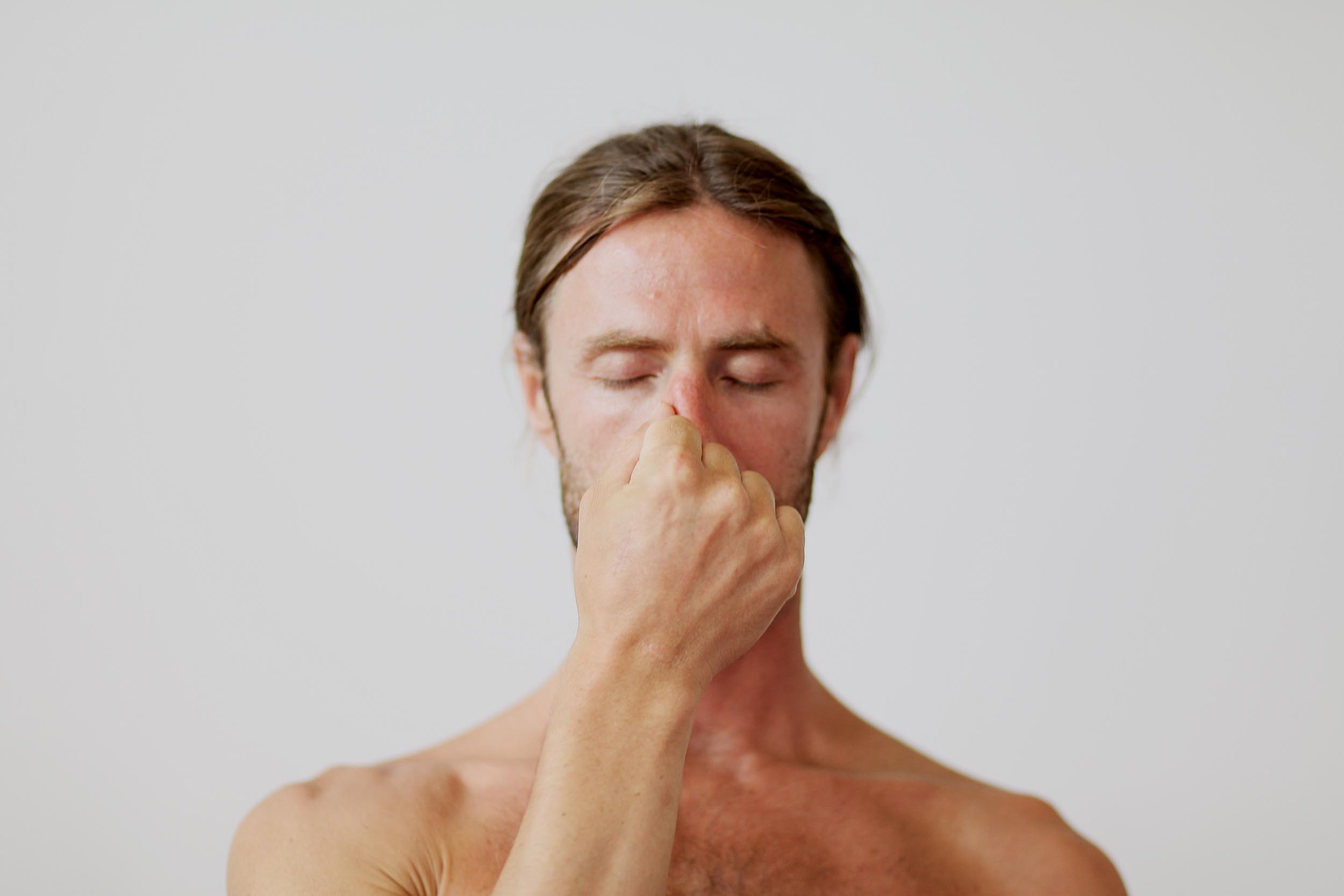
Pranayama (Sanskrit: प्राणायाम) is the yogic practice of working with the breath: slowing it, lengthening it, directing it through one nostril or the other, and at a later stage holding it. The word joins prana, breath or life force, with ayama, extension. It is the fourth of the eight limbs of yoga, and in the older Hatha texts it was the centre of the physical practice, more than the postures.
What does pranayama mean?
Pranayama is two Sanskrit words put together:
- Prana (प्राण): breath, and in yoga the life force carried by the breath.
- Ayama (आयाम): extension, stretching out, expansion.
Read that way, pranayama is "the extension of the breath" or "the extension of the life force". You will also see it split as prana + yama, with yama meaning restraint or control, which gives "breath control". Both readings are common in yoga books. Grammatically, prana + ayama is the one that fits the long a in the middle of the word. In practice the two meanings meet: you control the breath so that you can lengthen it.
What is prana?
In the yoga tradition, prana is the energy that keeps a body alive. It moves through channels called nadis and gathers in centres called chakras. The texts also divide it into five vayus, or winds, each with its own direction and job in the body. Breath is the part of prana you can feel and steer. That is why the practice starts there.
This is a traditional model of the body. It is not anatomy, and no scanner will find a nadi. Modern teachers handle that in different ways. Some teach prana as something real and subtle. Others use it as a map for attention: where you send the breath, you send your awareness. Both kinds of teacher give you the same instructions on the mat.
Pranayama in the yoga texts
Breath control is as old as written yoga. The Mahabharata, the great Sanskrit epic, already names it as part of yoga practice. The poet Kalidasa, writing around the fifth century CE, describes Shiva sitting in meditation with his breath held still.

In the Yoga Sutras of Patanjali, pranayama is the fourth of the 8 limbs of yoga, after the ethical rules and the postures. Patanjali gives it only a few short verses (2.49 to 2.53): once the seat is steady, you regulate the in-breath and the out-breath, and the mind becomes fit for concentration.
The Hatha texts, written between roughly the 11th and the 15th centuries, go much further. The best known, the Hatha Yoga Pradipika, gives a whole chapter to breath, describes eight kinds of breath retention (kumbhaka), and puts the link between breath and mind in one line (2.2): when the breath moves, the mind moves, and when the breath is still, the mind is still.
Why breath sat at the centre of Hatha yoga
Hatha is usually translated as force or effort. The early Hatha yogis used physical methods on the body: purification techniques (kriyas), postures (asanas), breath control and seals (mudras and bandhas). A later reading splits the word into ha, the sun, and tha, the moon, two sides of a person to bring into balance. That reading comes from later texts. It is a teaching image, not the origin of the word.
All of these methods had one aim. They prepared the body for sense withdrawal (pratyahara), concentration (dharana) and meditation (dhyana). The body work came first, and the stillness came after. Breath was the method the texts trusted most for that shift.
Modern yoga turned this around. Postures became the main event, and in many studios "yoga" now means asana. Hatha is also sold as one style among many, usually a slower class. Strictly speaking, every style that works through the body is Hatha yoga. Our guide what is Hatha yoga covers that history. Pranayama is coming back, often as five minutes at the start or end of a class. That is a good start. It is a short version of what used to be the main practice.
How pranayama is practised
A pranayama practice has three layers, and they are learned in this order.
Preparation. First you learn to breathe freely. That means a relaxed belly breath and releasing the places that hold tension: the abdomen, the neck, the face, the jaw. Short exercises such as Lion's Breath (Simha Mudra) and Brahma Mudra, slow head movements with the breath, belong here.
Kriyas. Some schools add kriyas such as Agni Sara and Uddiyana Bandha kriya, strong movements of the abdomen done on an empty stomach.
The pranayamas themselves. Most follow the same template with small changes: which nostril you use, the direction of the breath, the length of the inhale and the exhale, and later, the holds. The ones you meet first:
- Ujjayi (the victorious breath): a soft sound at the back of the throat that slows the breath down.
- Nadi Shodhana (alternate nostril breathing): one nostril at a time, slow and even.
- Bhramari (the humming bee breath): a long exhale with a low hum.
- Sitali (the cooling breath): an inhale drawn in over a curled tongue.
- Kapalabhati (skull shining breath): short, sharp exhales pushed out by the belly. This one is energising, and it comes after the calm ones.

Calm first, then energising. That is the order most teachers keep. You build a slow, steady breath before you add fast breaths like Kapalabhati or Bhastrika (bellows breath). Breath retention, covered in our guide to Kumbhaka pranayama, and the bandhas come last, once the basic breath is stable.
A first practice: five minutes
- Sit on a cushion or a chair with your spine upright and your shoulders soft. Close your eyes.
- Breathe in and out through the nose. Let the belly move out on the inhale and back in on the exhale.
- Count the length of your inhale, for example four counts. Let the exhale take the same four counts.
- After a minute, lengthen the exhale to six counts, and later to eight. Keep the inhale at four.
- Stay for five minutes. If you feel short of air or dizzy, go back to your normal breath.
An exhale about twice as long as the inhale is the ratio many teachers start with. It is the base of the approach in our own pranayama program. Other schools begin with an even breath, in and out for the same count, and lengthen both over time.
What the research says about breath and the nervous system
Your breath is controlled automatically, and it is also the one part of that system you can take over. Emotion changes the breath: stress gives a fast, high, shallow breath with a short exhale, and a sleeping child breathes low and slow in the belly. Pranayama runs the loop the other way.
Some of the mechanism is well described. Heart rate rises a little on every inhale and falls on every exhale. That rhythm is steered by the vagus nerve, part of the parasympathetic nervous system, the "rest and digest" side. A long exhale gives the calming side more time. Slow breathing, around six breaths a minute, tends to raise heart rate variability, a common marker of parasympathetic activity. Reviews of slow breathing and yoga breathing find effects on stress and anxiety, and they also note that many of the studies are small and use different methods. Our post on pranayama benefits and the research goes through some of them.
A calmer nervous system is a fair claim for slow pranayama. Claims that it fixes digestion, strengthens every organ or protects you from illness go further than the evidence, and we leave them out.
Where sources disagree
Right and left nostril. In the yoga tradition, the right nostril is the sun side, warming and activating, and the left nostril is the moon side, cooling and calming. Some small studies found measurable differences between right and left nostril breathing. Others did not, and the results are mixed. Teach it as the tradition's map. Do not treat it as settled physiology.
The nasal cycle. Most people breathe mainly through one nostril, and the dominant side switches every few hours. The old post said every 90 minutes. Measurements vary a lot between people, and no single number fits everyone. The yogis noticed the shift long before anyone measured it.
Breath or prana. Traditional teachers say you work with prana, and the breath is the handle. Scientists describe the same practice as breathing, blood gases and the nervous system. The instructions are the same. The explanation is different.
Old physiology. Swami Kuvalayananda (1883 to 1966), the teacher of Guy Powiecki's teacher and one of the first to study yoga in a laboratory, believed that pranayama raised pressure in the spinal canal and the brain and so stimulated the whole nervous system. He also wrote that consciousness refines step by step until the individual merges with the cosmic. The first is an early 20th-century theory that later research has not confirmed. The second is a spiritual aim, stated as one. His lab work at Kaivalyadhama, which he founded in 1924, still started the scientific study of yoga.

Who should be careful with pranayama
Slow, gentle breathing suits almost everyone. The stronger techniques do not.
- High blood pressure or heart disease: skip breath retention, Kapalabhati and Bhastrika. Stay with slow breathing and a long exhale.
- Pregnancy: no retention, no fast or forceful breathing, no strong belly work.
- Epilepsy: avoid fast breathing, since overbreathing can trigger seizures in some people.
- Panic attacks or anxiety: breath holds and fast breathing can bring on the feelings you want to avoid. Start with a slow, easy exhale and keep your eyes open if that helps.
- Recent surgery on the abdomen or chest: wait with Kapalabhati, Agni Sara and the kriyas.
Stop if you feel dizzy, tingling in your hands or short of air. Practise on an empty stomach, and learn the stronger techniques from a teacher.
To learn it week by week, the eight-week Pranayama Level 1 program with Guy Powiecki starts with belly breathing and builds up to Nadi Shodhana and Kapalabhati, and the pranayama classes give you shorter practices for any day.
Frequently asked questions
What is pranayama in simple words?
Pranayama is yoga breathing practice. You slow the breath, make it longer and steer it in set patterns, for example one nostril at a time or with a long exhale. In the yoga tradition it works on prana, the life force, through the breath.
What are the 5 basic pranayama?
There is no fixed list. A common beginner set is Ujjayi, Nadi Shodhana, Bhramari, Sitali and Kapalabhati. Most teachers start with belly breathing and a long exhale before any of them.
What are the types of pranayama?
The Hatha Yoga Pradipika names eight kinds of kumbhaka, or breath retention: Surya Bhedana, Ujjayi, Sitkari, Sitali, Bhastrika, Bhramari, Murcha and Plavini. Lists of seven or more types online are modern selections and vary by teacher. Nadi Shodhana and Kapalabhati are on most of them.
Who should not do pranayama?
Slow, gentle breathing is fine for most people. People with high blood pressure, heart disease, epilepsy or panic attacks, and pregnant women, should avoid breath holds and fast techniques such as Kapalabhati and Bhastrika. Check with a doctor if you have a medical condition.
What is the most powerful pranayama?
Bhastrika, the bellows breath, is often called the most powerful because it is fast, forceful and has a strong effect. Stronger does not mean better. It is an advanced technique, and it comes after the calm, slow breaths.
How long should you practise pranayama?
Five to ten minutes a day is a good start. A regular short practice teaches you more than a long one now and then. Many people practise in the morning, on an empty stomach, before asana or meditation.
Can beginners do pranayama?
Yes. Start with a relaxed belly breath, then a longer exhale, then Ujjayi or Nadi Shodhana. Leave breath retention and fast breathing until the slow breath is easy and steady.
Is pranayama the same as breathwork?
Pranayama is the yogic form of breathwork, with techniques taken from texts such as the Hatha Yoga Pradipika. Modern breathwork methods borrow from it, and some of them use long periods of fast breathing that traditional pranayama keeps short and adds slowly.
Practise it with a teacher
Over 600 online yoga classes and programs for $4.99 a month. Cancel any time.
Become a member