Upavistha Konasana (Wide-Angle Seated Forward Bend): How to Do It Step by Step

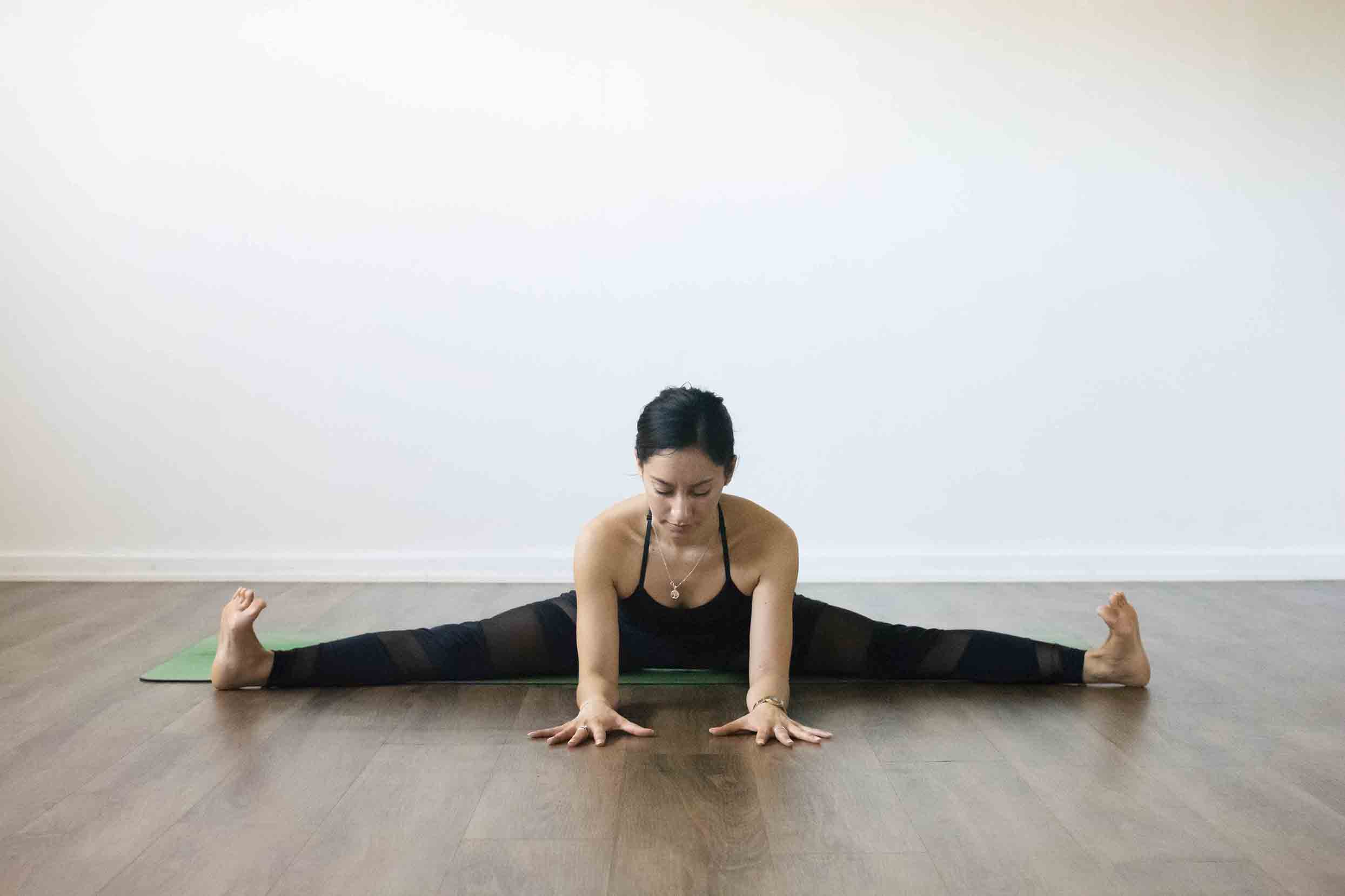
Upavistha Konasana (Wide-Angle Seated Forward Bend) is a seated yoga pose in which you sit with your legs spread wide in a V and fold forward from the hips between them. It stretches the inner thighs (the adductors) and the hamstrings at the same time. Most people fold only a little way, and a tall spine with a small fold is the pose done well.
Pose type: seated forward bend, hip opener. Level: beginner to intermediate, depending on how far you fold. Props: a folded blanket to sit on, one or two blocks or a bolster to rest on.
What Upavistha Konasana means
The name comes from three Sanskrit words: upavistha, seated, kona, angle, and asana, posture. The angle is the wide one between your legs. You will also see it spelled Upavishta Konasana, and in English it goes by Seated Wide-Legged Forward Fold, Seated Straddle or, in gymnastics and mobility training, the pancake. It is the seated sister of Prasarita Padottanasana (Wide-Legged Forward Bend), the same shape on your feet.
How to do Upavistha Konasana, step by step
- Sit on the front edge of a folded blanket with your legs straight out in front of you, as in Dandasana (Staff Pose). The height tips the pelvis forward, which is the whole secret of this pose.
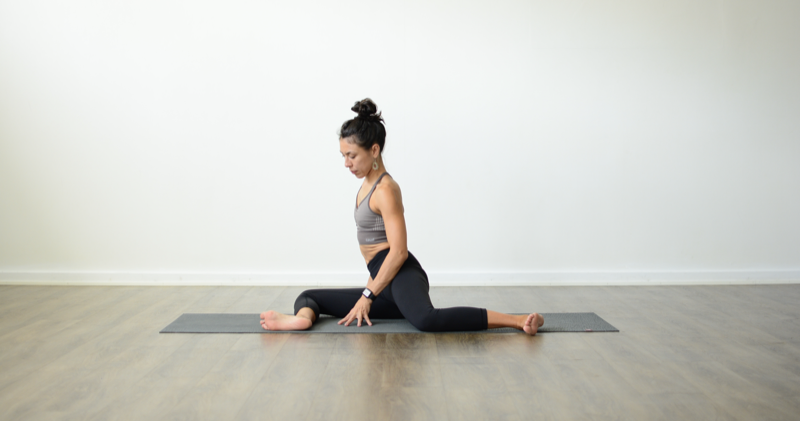
- Open your legs as wide as you can while the kneecaps and toes still point straight up at the ceiling. For most people that is somewhere between 90 and 120 degrees. Wider is not better if the knees start to roll in.
- Press the backs of the thighs into the floor, flex your feet and reach out through the heels. The legs stay active the whole time.
- Place your hands on the floor behind your hips and lift your chest. If your lower back rounds here, sit higher, bring the legs a little closer together, and stay upright. That is your pose for today.
- Walk your hands forward between your legs on an exhale. Tip the pelvis forward from the hip joints and keep the front of the body long. Stop when the pelvis stops moving.
- Rest your hands, forearms or forehead on blocks or a bolster at the height where you can keep breathing slowly. Let the shoulders drop away from the ears.
- Stay for 5 to 10 breaths. To come out, walk your hands back toward you, lift the chest, then bring the legs together with your hands under the knees and shake them out.
Keep a micro-bend in the knees if the backs of them pull sharply. The fold comes from the hips, and nothing is gained by locking the knees.
.jpg)
Benefits of Wide-Angle Seated Forward Bend
The main thing this pose does is stretch the muscles that the wide leg position puts on length:
- Inner thighs: the adductors run from the pelvis to the inner thigh bone, and the wide V stretches them along their length.
- Hamstrings: the fold stretches the back of the legs, from the sitting bones toward the knees. Our guide to hamstrings and yoga explains why they tighten and how to work with them.
- Hip mobility: practised over months, it helps you keep the range to sit wide and fold forward from the hips instead of the lower back.
- Back strength: in the upright version, the muscles along the spine work to hold you tall against the pull of the legs.
Many sources say the pose tones the belly, improves digestion, eases sciatica or stimulates the ovaries. B.K.S. Iyengar writes in Light on Yoga that it helps blood circulate in the pelvic region. That is how the tradition describes it. No study we know of shows any of these effects, so we do not promise them. What you can count on is a long, slow stretch and a few minutes of quiet breathing.
Who should skip or modify the pose
- Hamstring or groin strain: skip the fold until the injury has settled. The hamstrings attach at the sitting bones, and a strain there, a common injury in yoga, often comes from pulling into a forward fold. Stay upright with the legs narrower, or skip the pose.
- Lower back pain or a disc problem: keep the spine long and the fold small, or stay upright with your hands behind you. Rounding forward under load is what tends to aggravate a disc.
- Knee trouble: bend the knees and place a rolled blanket under them.
- Pregnancy: the wide seat leaves room for the belly, and many prenatal teachers use an upright version. Skip the deep fold, do not overstretch (the hormone relaxin makes the joints more mobile), and follow the advice of your midwife or doctor.
- Tight hips: if your pelvis tips back and the lower back rounds even when you sit upright, sit on a higher support or sit with your back against a wall.
For more on practising without injury, read our 10 tips to avoid yoga injuries.
Common mistakes
- Legs too wide. If the knees and toes roll inward, the stretch moves into the inside of the knee. Bring the legs in until the kneecaps point up.
- Folding from the waist. A rounded back with the pelvis tipped back folds the spine and leaves the hips where they were. Sit higher and lead with the chest.
- Pulling with the arms. Hauling yourself forward by the feet forces the stretch into the attachment of the hamstrings. Let gravity and the breath take you down.
- Passive legs. Legs that roll and slump give you less stretch and less control. Press the thighs down and reach through the heels.
- Holding the breath. If you cannot breathe slowly through the nose, you have gone too far. Come up a little.
Preparatory poses
- Baddha Konasana (Bound Angle Pose): opens the inner thighs with the knees bent, a gentler way in.
- Janu Sirsasana (Head-to-Knee Pose): one leg straight, one bent, so you can feel how to fold from the hip on each side.
- Malasana (Garland Pose): a deep squat that opens the adductors with bent knees.
- Prasarita Padottanasana (Wide-Legged Forward Bend): the same wide shape standing, with gravity doing the work.
Follow-up poses
- Paschimottanasana (Seated Forward Bend): bring the legs together and fold over them.
- Supta Konasana (Reclined Angle Pose): in the Ashtanga primary series, Upavistha Konasana is followed by rolling back with the legs wide over the head. It is a wide-legged form of Halasana (Plow Pose).
- Savasana (Corpse Pose): lie down and let the legs rest after a long hold.
After the pose, bring your legs together and bend the knees into the chest for a few breaths. The inner thighs often feel tender for a moment.
Upavistha Konasana variations
- Upright with a wall: sit with your back against a wall and the legs wide. You get the adductor stretch without any fold.
- Parsva Upavistha Konasana (Side Wide-Angle Pose): turn your chest toward one leg and fold over it. More hamstring on that side.
- Side bend: reach one arm over your head toward the opposite foot for a stretch along the side of the waist.
- Dragonfly (Yin): in Yin yoga the same shape is called Dragonfly. You let the spine round, rest on a bolster and stay for three to five minutes.
- Upavistha Konasana B: in Ashtanga, you balance on your sitting bones with the legs lifted wide and the hands holding the big toes.
The class Splits Time is 30 minutes of slow stretching for the hamstrings, inner thighs and quads, working toward the splits or the straddle.
Frequently asked questions
What is Upavistha Konasana called in English?
Wide-Angle Seated Forward Bend. It is also called Seated Wide-Legged Forward Fold, Seated Straddle or, outside yoga, the pancake stretch. The Sanskrit name means seated angle posture, from upavistha, seated, and kona, angle.
What are the benefits of Upavistha Konasana?
It stretches the inner thighs and the hamstrings, and over time helps you keep the hip mobility to sit wide and fold from the hips. The upright version works the muscles along the spine. Claims that it improves digestion or cures sciatica come from yoga tradition, not from research.
Why can't I do Upavistha Konasana?
Usually because tight hamstrings and adductors pull the pelvis back, so the lower back rounds before you fold. Sit on a folded blanket or a block, bring the legs a little closer, and fold only as far as the pelvis tips. The shape of the hip joint also sets a limit, and for some people a deep fold may never come.
How wide should my legs be?
As wide as you can go while the kneecaps and toes still point up to the ceiling. For most people that is 90 to 120 degrees. If the knees roll in, the legs are too wide.
How long should I hold Wide-Angle Seated Forward Bend?
Five to ten slow breaths in an active Hatha or Vinyasa class. In Yin yoga, where the pose is called Dragonfly, three to five minutes with the body resting on a bolster. Come out if you feel sharp pain behind the knee or at the sitting bones.
Is Upavistha Konasana in Ashtanga yoga?
Yes. It is part of the Ashtanga primary series in two parts: A, a fold with the hands holding the feet, and B, a balance on the sitting bones with the legs lifted wide. It is followed by Supta Konasana.
Practise it with a teacher
Over 600 online yoga classes and programs for $4.99 a month. Cancel any time.
Become a member