Urdhva Hastasana (Upward Salute): How to Do It Step by Step

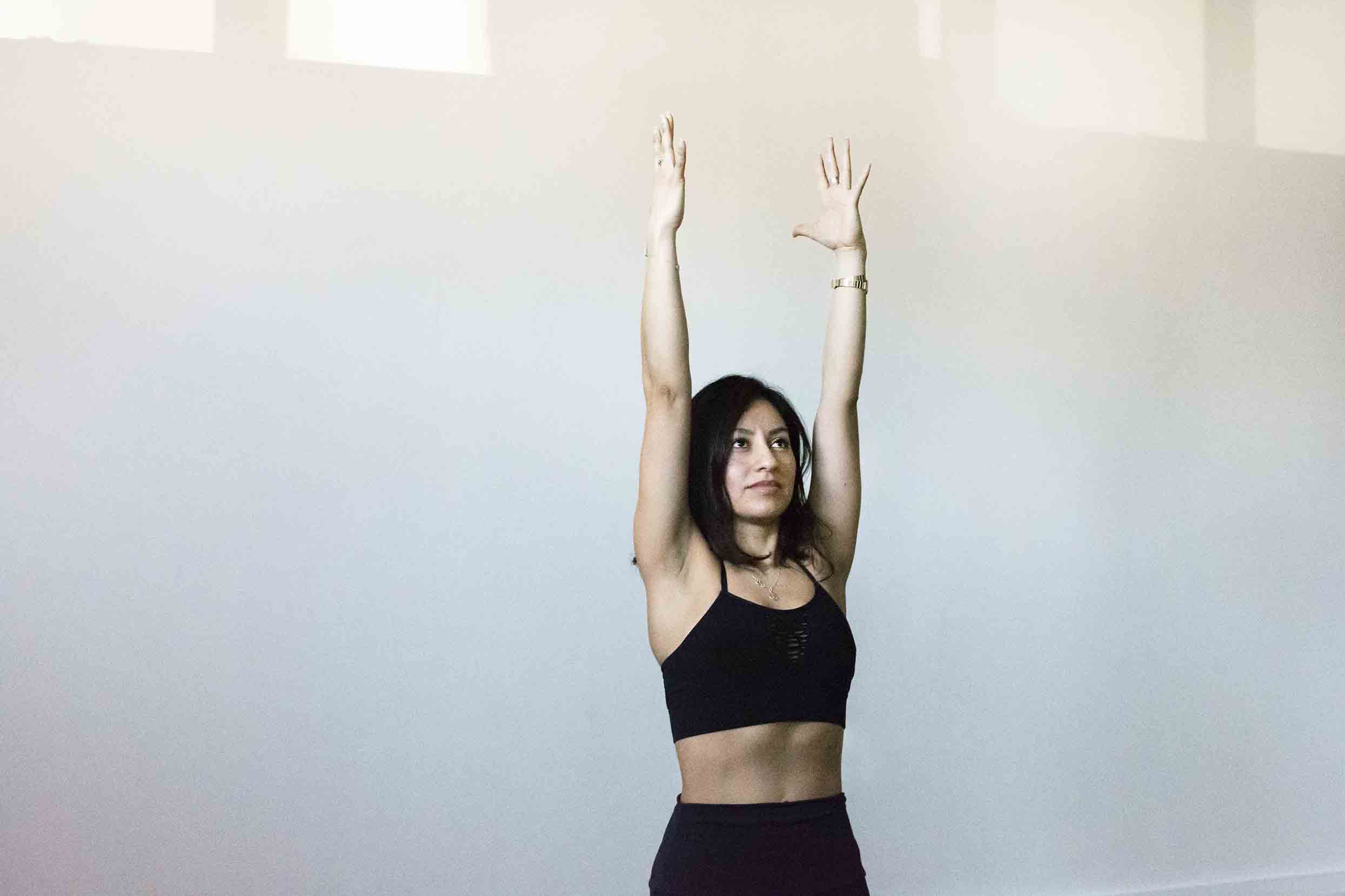
Urdhva Hastasana (Upward Salute) is a standing yoga pose in which you stand in Mountain Pose and reach both arms straight up over your head. It is the first movement of the Sun Salutation, done on an inhale, and it stretches the sides of the body, the shoulders and the upper back. It looks easy. Done well, it teaches you to lift the arms from the shoulders without arching the lower back.
Pose type: standing, gentle side-body stretch and overhead reach. Level: beginner. Props: none, or a strap held between the hands if your shoulders are tight.
What Urdhva Hastasana means
The name has three Sanskrit parts: urdhva, upward, hasta, hand, and asana, posture. Upward Hands Pose is the literal translation. Upward Salute, Raised Hands Pose and Extended Mountain Pose are all names for the same shape. You will also see it called Palm Tree Pose, but in some traditions, such as the Satyananda school, Palm Tree is a different pose: the fingers interlock above the head and you rise onto the balls of the feet.
How to do Urdhva Hastasana, step by step
- Stand in Tadasana (Mountain Pose), feet together or hip-width apart, weight spread over the heels and the balls of the feet. Arms hang by your sides.
- Firm your thighs without locking the knees. Let your tailbone point down and your pelvis sit level, so the lower back keeps its natural curve.
- Turn your palms out. On an inhale, sweep the arms out to the sides and up, in a wide arc, until they point to the ceiling.
- Keep the arms shoulder-width apart, palms facing each other, or bring the palms together. Straighten the elbows and reach up through the fingertips.
- Draw your lower front ribs down toward your hip bones. The stretch should come from the shoulders and the sides of the waist, not from arching the lower back.
- Look straight ahead, or lift your gaze to your thumbs if your neck is comfortable. Keep the back of the neck long.
- Stay for three to five slow breaths. On an exhale, lower the arms out to the sides and back down.
In a Sun Salutation A you do not hold it. The arms rise on one inhale, and on the exhale you fold forward.
Benefits of Upward Salute
This is a small pose with modest, clear effects.
- Side body and shoulders: reaching up stretches the latissimus dorsi and the sides of the waist, and takes the shoulders into full flexion.
- Shoulder control: the shoulder blades have to turn upward for the arms to go straight overhead. Practising the pose trains that movement, which you need later in Downward-Facing Dog, Handstand and backbends. Our guide to the scapula in yoga explains how it works.
- Breath: lifting the arms on the inhale makes room in the chest, and it links movement and breath from the first seconds of a practice.
It feels good after a long time in a chair. The older version of this post said the pose cures asthma, improves digestion and makes the skin glow. No study supports any of that, and we have taken it out.
Who should skip or modify Urdhva Hastasana
- Shoulder injury or impingement: take the arms wider, into a V, or lift them only as high as they go without pain. A pinch at the top of the shoulder is the signal to lower them.
- Neck problems: keep your gaze forward instead of looking up at the thumbs.
- Dizziness or low blood pressure: lift the arms slowly and keep the eyes open. Some teachers also advise people with uncontrolled high blood pressure to keep the arms overhead only briefly.
- Pregnancy: stand with the feet hip-width apart or wider for a steadier base.
For more on practising without injury, read our 10 tips to avoid yoga injuries.
Common mistakes
- Arching the lower back. When the shoulders are tight, the ribs flare forward and the lower back arches to make the arms look higher. Draw the ribs in. The arms may end up a little in front of the ears. That is fine.
- Bent elbows. Straighten them, or take the hands wider apart until you can.
- Locked knees. Keep a micro-bend, and let the thigh muscles hold you up.
- Dropping the head back. If you look up, lift from the upper back and keep the neck long.
- Tension in the face and jaw. Reach with the arms and leave the rest soft.
Where teachers disagree
Two cues split teachers. The first is the shoulders. The classic studio cue is "shoulders down, away from the ears". Many teachers with a background in anatomy now teach the opposite: when the arms go overhead, the shoulder blades must turn and rise, so forcing them down fights the movement and can crowd the shoulder joint. Both sides agree on one thing: the neck should not be squeezed. A useful middle cue is to let the shoulder blades rotate up while the neck stays long.
The second is the hands. The Ashtanga tradition brings the palms together and the gaze to the thumbs. Many Hatha and Iyengar-influenced teachers keep the hands shoulder-width apart, which is easier on tight shoulders. Choose shoulder-width if you are new or stiff, and palms together when the elbows can stay straight.
Preparatory poses
- Tadasana (Mountain Pose): the base of the pose, from the feet to the crown of the head.
- Adho Mukha Svanasana (Downward-Facing Dog): the same arm position, with the hands on the floor.
- Balasana (Child's Pose) with the arms stretched forward: a gentle stretch for the lats before you stand.
Our guide to the trapezius in yoga covers the muscles that lift the shoulder blades when the arms go up.
Follow-up poses
- Padahastasana (Hand to Feet Pose): the forward fold that follows on the exhale in a Sun Salutation.
- Utkatasana (Chair Pose): the same arms, with the knees bent. It opens Sun Salutation B.
- Virabhadrasana I (Warrior I): the arms stay up while the legs go into a lunge.
- Ardha Chandrasana with Pada Hastasana: the first pose of the Bikram series starts from the arms overhead and bends to the side.
Urdhva Hastasana variations
- Side bend (Parsva Urdhva Hastasana): hold the left wrist with the right hand and lean to the right, then change sides. A deeper stretch for the side of the waist.
- Interlaced fingers (Urdhva Baddhanguliyasana): interlace the fingers, turn the palms up to the ceiling and press up.
- Small backbend: in some Sun Salutation styles the chest lifts and the upper back arches a little. Keep it in the upper back and keep the legs firm.
- With a strap: hold a strap between the hands, a little wider than the shoulders, and pull it gently apart. It keeps the elbows straight.
- Seated: the same arms from a chair or a cross-legged seat, when standing is not an option.
To practise the pose where it belongs, try the class Ujjayi meets Sun Salutation A, which teaches the breath and the first Sun Salutation of Ashtanga yoga at level 1-2.
Frequently asked questions
What is Urdhva Hastasana?
Urdhva Hastasana, or Upward Salute, is a standing yoga pose where you stand in Mountain Pose and lift both arms straight overhead. It stretches the sides of the body and the shoulders, and it is the first movement of the Sun Salutation.
What is the difference between Urdhva Hastasana and Tadasana?
The legs and the pelvis are the same. In Tadasana the arms hang by your sides. In Urdhva Hastasana the arms reach up over your head, which adds a stretch for the shoulders and the side body and asks you to keep the ribs from flaring forward.
What are the contraindications for Urdhva Hastasana?
Take care with a shoulder injury or impingement: keep the arms wider or lower. With neck problems, look straight ahead instead of up. If you get dizzy, lift the arms slowly. Stop if you feel a sharp pinch in the shoulder.
Should the palms touch in Upward Salute?
Both forms are taught. Ashtanga brings the palms together. Many teachers keep the hands shoulder-width apart. Start with shoulder-width if your shoulders are tight, and bring the palms together once your elbows can stay straight.
Should you look up in Urdhva Hastasana?
In the Ashtanga Sun Salutation the gaze goes to the thumbs. Looking straight ahead is also correct, and it is the better choice with a sore neck. If you look up, keep the back of the neck long and do not let the head drop back.
How long should you hold Upward Salute?
On its own, three to five slow breaths is enough. In a Sun Salutation you do not hold it at all: the arms rise on the inhale and you fold forward on the next exhale.