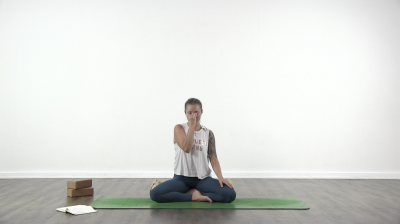
Trust Your Foundation

In today's society there is a lot of talk about finding balance, as if it were some mystical state in a galaxy far, far away that we can only reach with much effort.

The truth is that balance is our natural state. If we could clear away the clutter we have piled on top of the body's own wisdom, and listen better to what it tells us, we would notice what throws us out of that state of ease, and let it go instead of burying it under more distractions.

Finding physical balance is about learning not to hold on for dear life, but to trust yourself enough to expand into the space around you. Start with the Introduction.

Level 1-2, no props needed. Grounded and rooted, yet light.
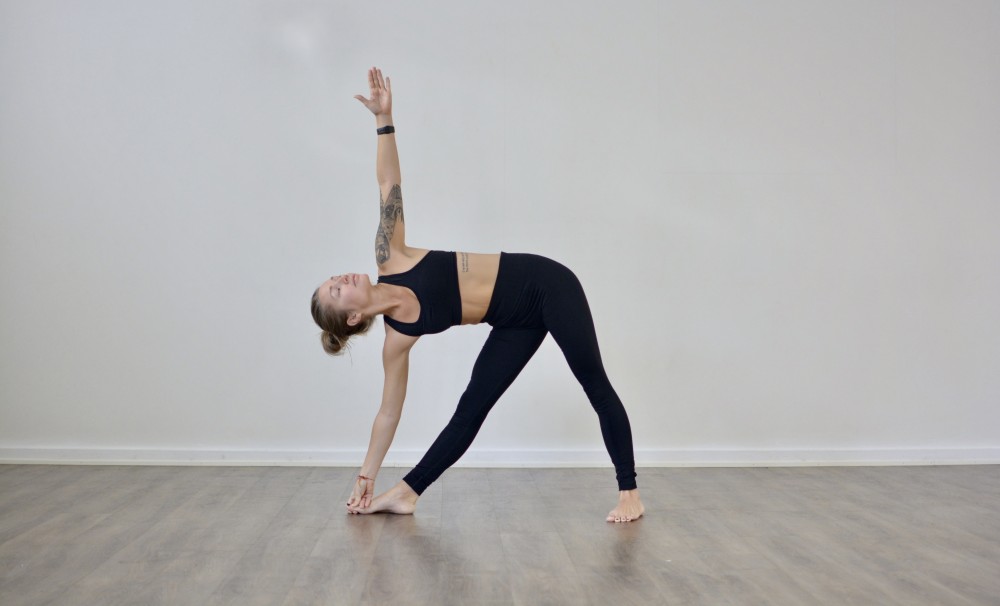
Trust Your Foundation

Week 1

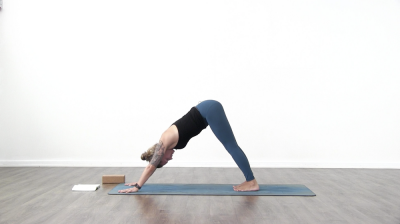
Yogi is practising yoga on a blue yoga mat on white background

Introduction

Why I put together this program, what you can expect, and how to approach it.

Trust Your Foundation is a program about standing work, balance and arm balances, built step by step. Watch this short introduction before you start day 1.

Yogi is practising yoga on a blue yoga mat on white background

Breath and Tadasana

Begin to find your center and to quiet the mind by working with the breath and the most fundamental of all standing postures, Tadasana (Mountain Pose).

Even out your breath and set the foundation to stay grounded and stable through the program. Equilibrium of breath translates into equilibrium of mind.

Yogi is practising yoga on a blue yoga mat on white background

Connect to your Roots

We spend so much time on our feet during the day, yet most of us take them for granted and pay them little attention until something goes wrong.

Our sense of connection to the earth holds a lot of power. Let's bring awareness into the feet, move the energy from them up through the legs and build a strong standing foundation. Level 1.

Yogi is practising yoga on a blue yoga mat on white background

Expand into Space

Get right into the practice and keep connecting to your center through strong standing work.

Then use the wall to take some of the wobble out of common balancing postures like Warrior III and Half Moon Pose, so you can focus on extending into space rather than holding on so you don't fall over. Level 1-2, with a block.

Yogi is practising yoga on a blue yoga mat on white background

Let go of Grasping

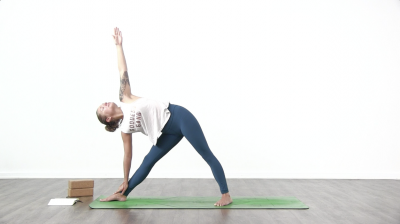
We begin to challenge our proprioception, the sense of where the body is in space, by adding a twist to standing postures such as Utkatasana, Parsvakonasana and Parivrtta Trikonasana.

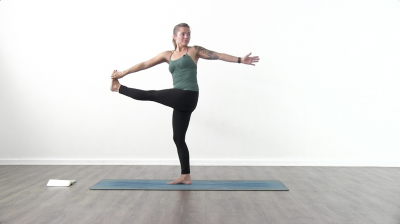
Then we come back to the wall and practise extending into a slightly more challenging twisting standing balance. Twists also keep the muscles around the spine supple and mobile. Level 1-2, no props needed.

Week 2

Yogi is practising yoga on a blue yoga mat on white background

Hands, Wrists, Core

This week we begin to shift the weight into our hands and take flight.

In this class, we bring awareness into the fingers, hands, wrists, arms, shoulders and core, and learn to pull everything in towards the center. With therapeutic movements to warm up the wrists and breath work to connect to the core, you can use this class on its own or as a warm-up before another arm balancing sequence. Level 1-2.

Yogi is practising yoga on a blue yoga mat on white background

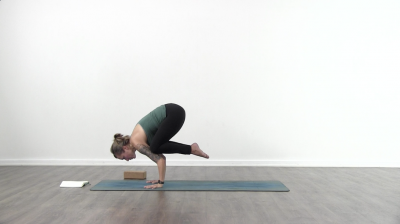
Crow Pose

Keep working with the wrists, arms and core, now connecting to the inner legs, so that you can take flight in Bakasana, one of the most fundamental arm balances.

You already have all the tools you need, so trust yourself enough to shift the weight forward, think light and happy thoughts and take flight. If you already have a Bakasana practice, this class lets you refine it.

Yogi is practising yoga on a blue yoga mat on white background

Back to Standing

Giving the wrists a little break, we return to connecting to the earth through the feet and legs.

We warm up with sun salutations, then move through a strong standing sequence, touch on some standing balances we have yet to cover, and expand on the ones we have. Includes Tree Pose, Warrior III and Half Moon away from the wall. Expand into spaciousness.

Yogi is practising yoga on a blue yoga mat on white background

Remain Centred through Twists and Turns

For the last class of this week we come back to our twisting poses and our hands. We begin on our backs, then move a little to create heat and warm up the spine, which leads us into a progression of twists.

We end by playing with Parsva Bakasana, Side Crow, an arm balance with a twist. Please take some time on your own afterwards to quiet down in Savasana.

Week 3

Yogi is practising yoga on a blue yoga mat on white background

Trust the Space

Welcome to week 3, where we revisit and expand on our balancing postures, move towards balancing upside down on our head, and explore how the breath can help us create an inner balance.

Includes variations on Extended Side Angle, Tree Pose, Revolved Triangle and Moon Rise. Level 1-2, no props needed.

Yogi is practising yoga on a blue yoga mat on white background

Headstand

This is a short preparatory class and Headstand tutorial. Headstand is often a long process. If it feels like a struggle to get up there, stay a while longer with the preparatory steps until a sense of lightness begins to show up.

Please practise patience and follow the instructions carefully. Options are given for working around problems with the neck.

Yogi is practising yoga on a blue yoga mat on white background

Pranayama

A short pranayama sequence, accessible to anyone, to balance the nervous system, both the activating and the calming side.

Use it several times a week at any time of day, on its own or after an asana practice. It is also a good way for the mind to enter a seated meditation.

Yogi is practising yoga on a blue yoga mat on white background

Bringing it all Together

Congratulations. You have made it to the end of week 3, and hopefully you have begun to feel more grounded and to trust yourself and the space around you on your mat, and maybe in your day to day life.

Here we bring everything that has become familiar over these weeks into a longer practice, and add some new elements so you can notice how you perhaps respond a little differently to the unknown now.