Baddha Konasana (Bound Angle Pose): How to Do It Step by Step

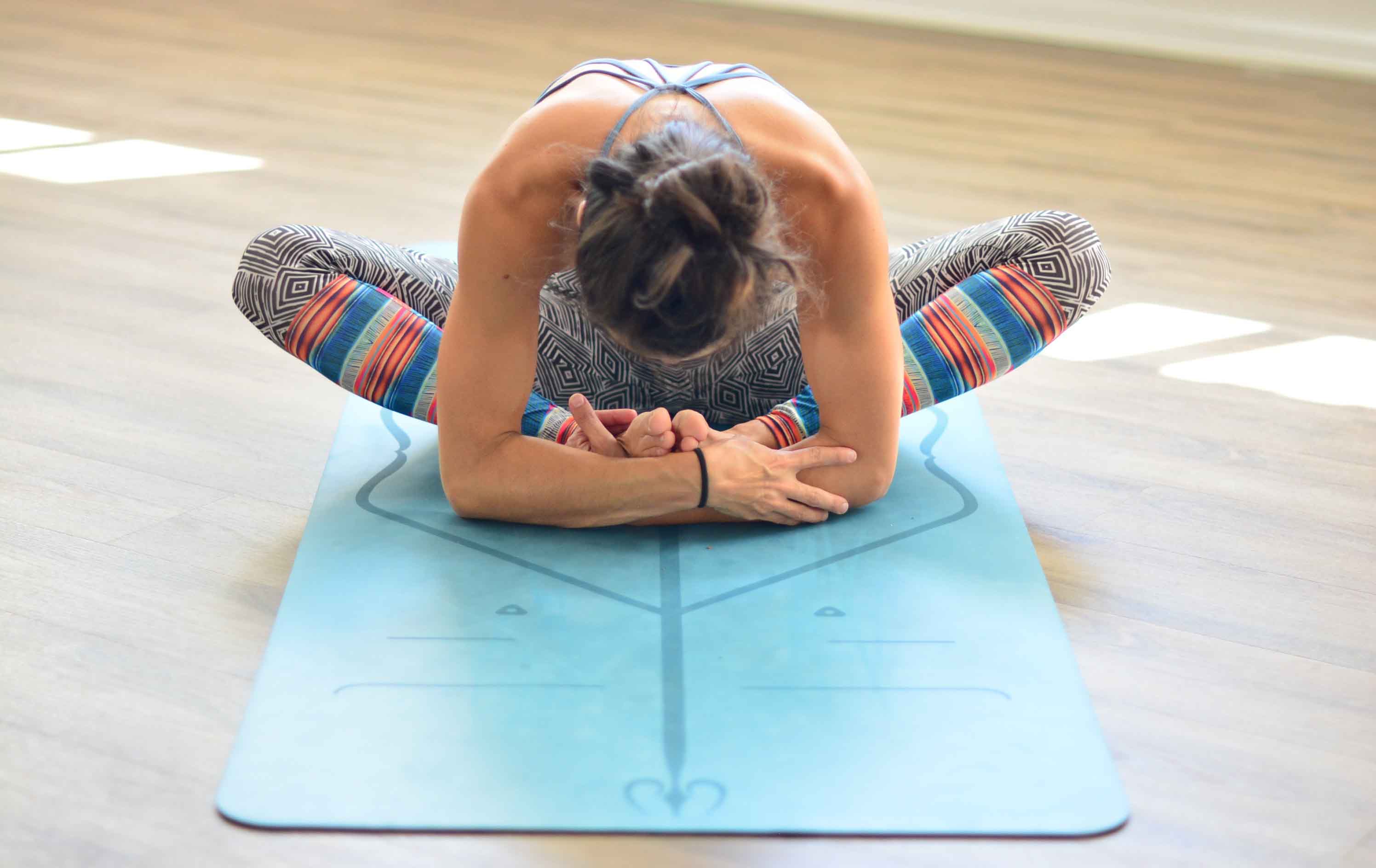
Baddha Konasana (Bound Angle Pose) is a seated yoga pose in which you bring the soles of your feet together, let your knees fall out to the sides and hold your feet with your hands. It stretches the inner thighs and asks the hips to rotate outward, which is why it shows up in hip-opening, prenatal and Ashtanga classes. It is also called Butterfly Pose or Cobbler's Pose.
Pose type: seated, hip opener. Level: beginner. Props: a folded blanket to sit on, two blocks or cushions under the thighs if you need them.
What Baddha Konasana means
The name has three Sanskrit parts: baddha, bound, kona, angle, and asana, seat or posture. The hands bind the feet, and the legs make an angle out from the pelvis. The name Cobbler's Pose comes from B.K.S. Iyengar, who wrote in Light on Yoga (1966) that Indian cobblers sit this way while they work. Butterfly is the name most people use in class, after the way the knees open like wings.
A close relative is older. The Hatha Yoga Pradipika (15th century) describes Bhadrasana, a seat with the heels drawn in under the body and the feet held firmly with the hands. Some teachers treat Bhadrasana and Baddha Konasana as the same pose, others as two different ones. The name Baddha Konasana itself belongs to the 20th century, to Krishnamacharya's students Iyengar and Pattabhi Jois.
How to do Baddha Konasana, step by step
- Sit on the front edge of a folded blanket with your legs straight out in front of you. If your hips or groin are tight, add a second blanket. The height lets the pelvis tip forward.
- Bend both knees, place the soles of your feet together and let your knees fall out to the sides.
- Draw your heels in toward your pelvis, as close as is comfortable. Closer gives more stretch in the inner thighs, further away is kinder to tight hips and to the knees.
- Hold your feet or ankles with both hands. In the classic version you open the feet like a book, with the thumbs pressing into the soles.
- Sit up on your sitting bones and lengthen your spine up through the crown of the head. Reach a hand behind you to your lower back: it should feel flat or gently curved in, not rounded out. If it rounds, sit higher.
- Let the knees sink by their own weight. Do not push them down. Think of the thigh bones rolling outward in the hip sockets, and the knees follow.
- Breathe slowly through the nose and stay for 1-3 minutes, longer as it gets comfortable. To come out, lift your knees with your hands, bring them together and straighten your legs.


Two variations with different arm placements for a deeper stretch.
The forward fold
Many classes, and the Ashtanga series, add a fold. Keep your spine long, and on an exhale hinge forward from the hips, chest toward the feet. Stop when your back starts to round. The fold is a lengthening of the front body, so a flat back halfway down does more than a round back all the way down. In Ashtanga the gaze rests on the tip of the nose, nasagra drishti. Our guide to drishti, the yoga gaze, explains why.
Benefits of Bound Angle Pose
What the pose does is mechanical, and that is enough.
- Inner thighs: it stretches the adductors, the muscles that pull the legs together. The closer the heels, the stronger the stretch toward the groin.
- Hips: it asks for outward rotation and a wide angle between the thighs, the same range you need for cross-legged seats and for Padmasana (Lotus Pose).
- A seat you can stay in: with support under the hips it is a steady, low seat for breathing and meditation.
Older texts and many websites promise more: relief from menstrual cramps, menopause symptoms and sciatica, and stimulation of the abdominal organs and kidneys. Iyengar made several of these claims in Light on Yoga. That is the tradition speaking. We found no study that tests Baddha Konasana on its own for any of them. Some people with period pain find the reclined version comfortable, and that is a good reason to try it, not a treatment.
Who should skip or modify Bound Angle Pose
- Knee injuries: if the knees hurt, move the feet further away from the pelvis and put blocks under the thighs. Stop if you feel pain on the inside of the knee.
- Groin strain: skip the pose, or keep it gentle with support under both knees, until the strain has healed.
- Hip replacement: ask your surgeon or physiotherapist. Wide outward rotation is often limited for a while after surgery.
- Pregnancy: the upright and supported versions are common in prenatal yoga. Relaxin loosens the ligaments during pregnancy, so stay out of the end of your range. If you have pelvic girdle pain (pain at the pubic bone or in the back of the pelvis), keep the knees higher and supported, or leave the pose out.
- Lower back pain: sit higher so the spine stays long, and leave out the forward fold.
For more on practising without injury, read our 10 tips to avoid yoga injuries.
Common mistakes
- Pressing the knees down. Hands or elbows forcing the knees toward the floor put the strain into the knee and the groin. Let gravity do it.
- Bouncing the knees. Flapping the butterfly wings is fine as a warm-up. It does not deepen the stretch.
- Sitting on the tailbone. A rounded lower back means the pelvis has tipped back. Sit on a higher blanket.
- Folding from the upper back. In the fold, move from the hips and keep the chest open.
- Heels pulled in too far. If the knees complain, give them room.
Preparatory poses
- Sukhasana (Easy Pose): a simple cross-legged seat to find your sitting bones.
- Malasana (Garland Pose): a deep squat that opens the inner thighs with the knees wide.
- Vrksasana (Tree Pose): the same outward rotation of the bent leg, standing on one leg.
- Janu Sirsasana (Head-to-Knee Pose): one leg at a time in the bent-knee position, with a fold.
- Supta Padangusthasana (Reclining Hand-to-Big-Toe Pose), with the leg taken out to the side: the inner thigh of one leg, lying down.
If the hips feel stuck, our hip-strengthening yoga exercises work on control around the joint as well as range.
Follow-up poses
- Upavistha Konasana (Wide-Angle Seated Forward Bend): the next pose in the Ashtanga Primary Series, legs straight and wide.
- Paschimottanasana (Seated Forward Bend): brings the legs together and lengthens the back of the legs.
- Gomukhasana (Cow Face Pose): the outer hips, the opposite side of the work.
Seated twists and standing poses work well afterwards too. See where the pose sits in the sequence in our list of Ashtanga Primary Series postures.
Baddha Konasana variations
- Supta Baddha Konasana (Reclining Bound Angle Pose): from the seated pose, lower yourself onto your forearms and then onto your back. A bolster along the spine and a block under each thigh turn it into one of the classic poses of restorative yoga. Stay 5-10 minutes.
- Supported seat: a high blanket under the hips and a block under each knee, for longer sits and for tight hips.
- Against a wall: sit with your back to a wall to learn how an upright pelvis feels.
- Ashtanga A, B and C: A is upright with a fold, chest toward the feet. B rounds the back and brings the head toward the feet. C, taught by some teachers, lifts the knees and draws the feet toward the body.
For long, supported holds of this kind, Sofia Soori's Yin Hips is a 30-minute class for the hips with a bolster. To practise it inside the Ashtanga sequence, follow the last part of the seated postures.
Frequently asked questions
What are the benefits of Baddha Konasana?
Baddha Konasana stretches the inner thighs and asks the hips to rotate outward, which helps with cross-legged seats like Lotus. With a blanket under the hips it is also a steady seat for breathing and meditation. Claims about menstrual pain, menopause and sciatica come from tradition, not from studies of the pose.
Who should avoid Baddha Konasana?
Skip or modify it with a knee injury, a fresh groin strain, pelvic girdle pain in pregnancy, or after a hip replacement unless your surgeon has cleared it. In most of these cases a higher seat, feet further from the pelvis and blocks under the thighs make the pose possible without strain.
How long should you hold Baddha Konasana?
Start with 1-3 minutes, breathing slowly. In Ashtanga it is five breaths in each version. In Yin and restorative classes the reclined, supported form is held for 5-10 minutes. Come out if you feel pain in the knee or the groin.
Why won't my knees go down in Butterfly Pose?
Usually because the adductors are tight or the hips do not yet rotate far enough outward. The shape of the hip socket also differs from person to person. Sit higher, move the feet away from the pelvis and let the knees rest on blocks. Pushing them down does not help.
What is the difference between Baddha Konasana and Butterfly Pose?
They are the same shape. Baddha Konasana is the Sanskrit name, Bound Angle Pose the English translation, and Butterfly Pose the everyday name. In Yin Yoga, Butterfly usually means a relaxed version with the feet further away and the back rounded.
Is Baddha Konasana good during pregnancy?
The upright pose and the supported reclining version are common in prenatal yoga, and many find them comfortable. Stay well inside your range, because the ligaments are looser during pregnancy, and ask your midwife or doctor if you have pelvic girdle pain.
Practise it with a teacher
Over 600 online yoga classes and programs for $4.99 a month. Cancel any time.
Become a member