Supta Vajrasana (Fixed Firm Pose): How to Do It Step by Step

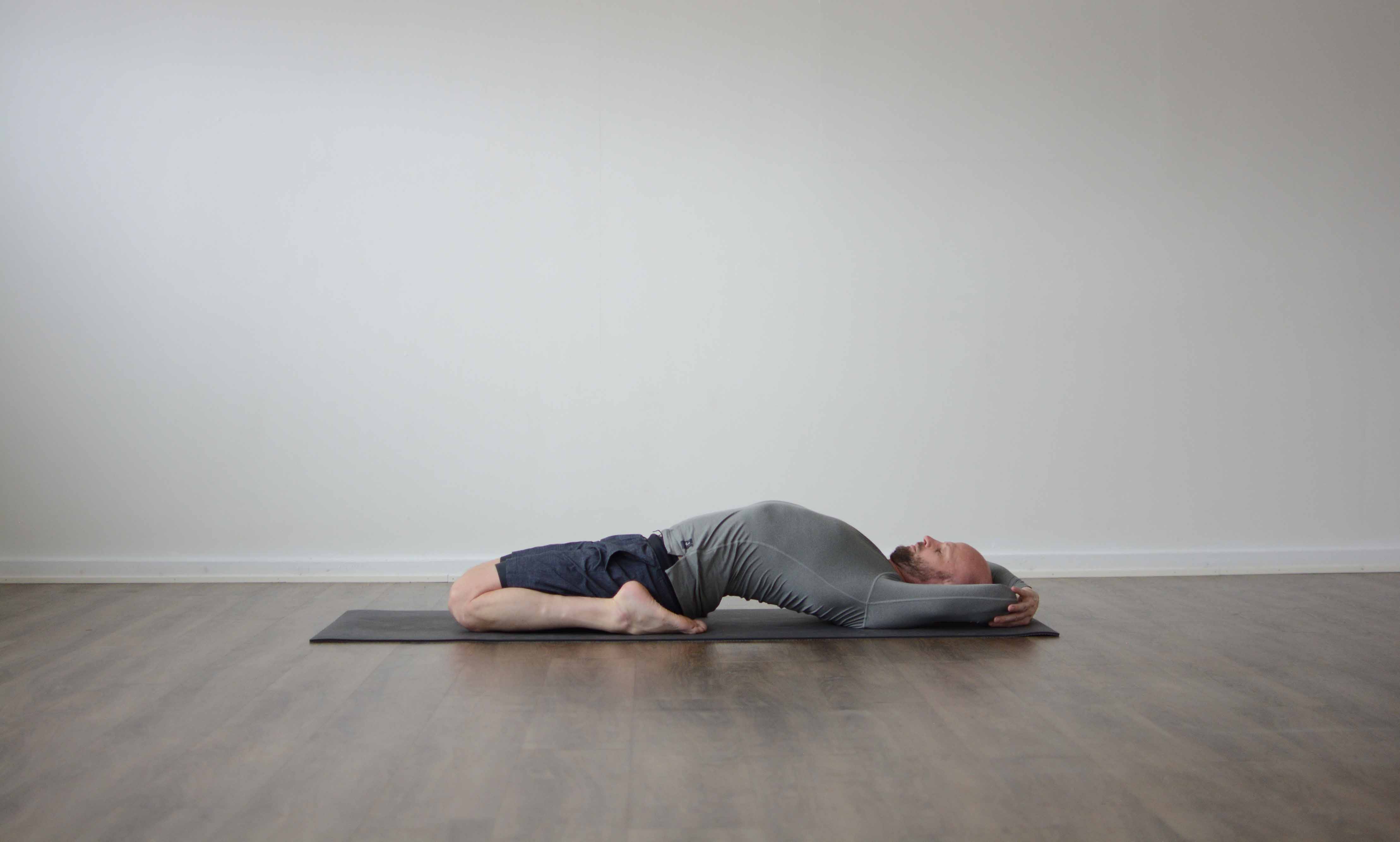
Supta Vajrasana (Fixed Firm Pose) is a reclined kneeling backbend: you sit on or between your heels and lower your back to the floor, so the fronts of the thighs, the hip flexors and the belly lengthen. It is one of the floor poses in the Bikram and hot yoga sequence of 26 postures, where it is called Fixed Firm Pose. The same name is used in other traditions for different shapes, so it helps to know which version your teacher means.
Pose type: reclined, kneeling, backbend and quad stretch. Level: beginner to intermediate, depending on your knees. Props: a bolster, blocks or a folded blanket under your back, and a thin blanket under the ankles if the tops of the feet hurt.
What Supta Vajrasana means
The name has three parts. Supta means lying down or reclined. Vajra is the thunderbolt, the weapon of the god Indra, and the word also means diamond, which is why you see the pose translated as Reclined Thunderbolt Pose or Reclining Diamond Pose. Asana means seat or posture. Vajrasana, the kneeling seat on the heels, is the base, and Supta Vajrasana is that seat taken down onto your back. "Fixed Firm" is the name Bikram Choudhury's sequence gave it in English.
How to do Supta Vajrasana, step by step
These steps follow the hot yoga version, with the hips between the heels. If your knees do not like that, sit on your heels instead. Both versions are described under variations.
- Kneel with your knees together, or hip-width apart if together is too much. Point your feet straight back, with the tops of the feet on the floor.
- Sit down between your heels. The inner edges of the feet touch the outer hips and the toes point to the back wall. If your sitting bones do not reach the floor, sit on a block or on your heels.
- Place your hands on the soles of your feet or on the floor beside them, fingers pointing forward.
- Lean back and lower one elbow to the floor, then the other. Stop here if the knees or the lower back complain. Resting on your elbows is the second stage of the pose.
- Slide your elbows out, one at a time, and lower your shoulders and the back of your head to the floor. Keep the knees down.
- Raise your arms overhead and hold the opposite elbows. Let your arms and shoulders rest on the floor behind your head.
- Lengthen the tailbone toward your knees and lift the ribs away from the belly. You feel the stretch along the fronts of the thighs, the front of the hips and the abdomen.
- Breathe slowly through the nose. In a hot yoga class you hold for about 20 seconds, twice. In a slower class you can stay for a minute or longer.
- To come out, bring your hands back to your feet and come up the way you went down: onto one elbow, then the other, then up to sitting. Lead with the chest, not the head.


The first stage is sitting upright between your heels. The second is leaning back onto your elbows. Many people spend weeks at each stage before the back reaches the floor, and that is fine.
Benefits of Supta Vajrasana
Most of what the pose does is mechanical, and you can feel it.
- Quadriceps: the knees are fully bent and the hips move toward extension, which lengthens rectus femoris, the one quad muscle that crosses both the knee and the hip. Our guide to the quadriceps in yoga explains why this muscle is often tight.
- Hip flexors and belly: the front of the hip and the abdominal wall stretch as the back lowers. Good after a day in a chair. More on this in the hip flexors, the psoas and yoga.
- Ankles and feet: the tops of the feet and the front of the ankles stretch as the feet point back.
- Chest and shoulders: with the arms overhead, the chest and the sides of the ribs open.
Older texts, including the previous version of this page, list a long row of further benefits: better digestion, a stronger spleen and lymph system, relief from gout, sciatica and varicose veins. None of these has research behind it for this pose, and we have taken them out. A slow breath in a steady pose can help you relax, and that is as far as we go.
Who should skip or modify Supta Vajrasana
This pose asks the knee to bend all the way. With the feet out to the sides, the shin also turns a little, and that is where the strain on the meniscus, the cartilage inside the knee, comes from.
- Skip it if you have a meniscus or ligament injury, a knee replacement or recent knee surgery, unless your physiotherapist has cleared deep knee bending.
- Come out if you feel sharp pain or pinching inside the knee. A stretch along the front of the thigh is what you want.
- Stay on your elbows or use a bolster if your lower back pinches. The arch should spread along the whole spine, not collect in the lower back.
- Pad the ankles or skip the pose with an ankle injury. A rolled blanket under the ankles takes pressure off the tops of the feet.
- Be careful in pregnancy, especially later on, when lying on the back and deep stretches of the belly may not feel right. Ask your midwife or a teacher trained in prenatal yoga.
For more on practising without getting hurt, read our 10 tips to avoid yoga injuries.
Common mistakes
- Feet turned out. When the feet splay to the sides, the knee twists. Keep the feet pointing straight back and the ankles in line with the shins.
- Knees lifting. If the knees come off the floor as you lie back, you have gone too far. Go back to the elbows, or lie on a bolster.
- Knees too wide. A little space between the knees is fine. Knees far apart take the stretch out of the thighs and put it into the inner knee.
- All the bend in the lower back. Tip the tailbone toward the knees so the arch moves up into the chest.
- Coming up head first. Use your elbows and lead with the chest, so the neck does not take the weight.
- Forcing it. The stretch builds over weeks. Pain in the knee means back off.
Preparatory poses
Open the fronts of the thighs and the hips before you lie back:
- Anjaneyasana (Low Lunge): the hip flexors of the back leg.
- Balasana (Child's Pose): the same kneeling fold at the knees, without the backbend.
- Dhanurasana (Bow Pose): the pose that comes right before Fixed Firm in the hot yoga sequence. It stretches the quads with the knees bent.
- Vajrasana (Thunderbolt Pose): sitting upright on your heels for a minute gets the knees and ankles used to the bend.
Follow-up poses
- Ustrasana (Camel Pose): a deeper kneeling backbend, a few poses later in the same sequence.
- Sasangasana (Rabbit Pose): rounds the spine forward and balances the backbends.
- Matsyasana (Fish Pose): another reclined backbend, lifting through the chest.
- Savasana (Corpse Pose): in the hot yoga sequence you lie flat for a moment after each floor pose.
After a long hold, straighten your legs in front of you and bend and stretch the knees a few times before you stand up. Our list of the 26 Bikram yoga poses shows where Fixed Firm sits in the full series.
Supta Vajrasana variations
- On the heels: sit on your heels instead of between them, then lie back. Many Indian schools teach the pose this way. The knees bend a little less and there is no twist in the shin.
- Supported: lie back onto a bolster or two blocks placed along the spine. The pose stays the same, you take less of the stretch.
- Saddle Pose: the Yin yoga version. Knees apart, a bolster under the back if you need it, and a hold of three to five minutes.
- The Lotus version: in Iyengar's Light on Yoga and in the Ashtanga intermediate series, Supta Vajrasana is done with the legs in Padmasana (Lotus Pose), arching back until the crown of the head reaches the floor. It is an advanced pose and a different shape.
Where the names disagree
Look up Supta Vajrasana in three books and you get three poses. In the hot yoga sequence it means lying back between the heels. Iyengar calls that shape Supta Virasana (Reclined Hero Pose), because Virasana is the seat between the heels and Vajrasana is the seat on them. In Iyengar and Ashtanga yoga, Supta Vajrasana is the Lotus backbend. None of them is wrong. The names grew up in different lineages in the 20th century, and your teacher's lineage decides which one you will hear. On the mat the rule is simple: know which shape you are in, and protect your knees in all of them.
If you want to work toward the pose slowly, the 45-minute class Yin Yoga for the Psoas holds long stretches for the psoas, hip flexors and quads.
Frequently asked questions
What is another name for Supta Vajrasana?
Supta Vajrasana is also called Fixed Firm Pose (in Bikram and hot yoga), Reclined Thunderbolt Pose and Reclining Diamond Pose. When the hips sit between the heels, many teachers call it Supta Virasana, Reclined Hero Pose. In Yin yoga a similar shape is called Saddle Pose.
What is the difference between Supta Vajrasana and Supta Virasana?
In most schools the difference is the seat: Vajrasana sits on the heels, Virasana sits on the floor between them. Supta means reclined, so each is its seated pose taken onto the back. The hot yoga sequence calls the between-the-heels version Supta Vajrasana, and in Iyengar and Ashtanga yoga the name belongs to a Lotus backbend.
What are the benefits of Supta Vajrasana?
It stretches the fronts of the thighs, the hip flexors, the abdomen, the tops of the feet and, with the arms overhead, the chest. Many people find a slow breath in the pose calming. Claims that it cures digestive problems, gout or sciatica have no research behind them.
Who should avoid Supta Vajrasana?
Skip it or ask a physiotherapist first if you have a meniscus or ligament injury, a knee replacement, recent knee or ankle surgery, or lower back pain that gets worse when you arch. Later in pregnancy, ask your midwife. Everyone else can build up to it in stages, from sitting to the elbows to lying back.
How long should you hold Supta Vajrasana?
In a hot yoga class the pose is held for about 20 seconds, done twice. In a Hatha class a minute is common, and the Yin version, Saddle Pose, is held for three to five minutes with support. Come out earlier if the knees hurt or the feet go numb.
Why do my knees hurt in Supta Vajrasana?
Usually because the knee is being twisted as well as bent, often from feet turned out to the sides or knees too wide. Point the feet straight back, sit on a block or on your heels, and stop at the elbows. Sharp pain inside the knee means come out.
Practise it with a teacher
Over 600 online yoga classes and programs for $4.99 a month. Cancel any time.
Become a member