Buddha Meaning: Who the Buddha Was and What He Taught

Buddha (Sanskrit and Pali: बुद्ध) means "the awakened one". It is a title, not a name. It is given to Siddhartha Gautama, the teacher from the north of ancient India whose teaching became Buddhism, and in Buddhist tradition to anyone who wakes up fully to how things are. When people say "the Buddha" they almost always mean Siddhartha.
What does Buddha mean?
The word comes from the Sanskrit verb root budh: to wake up, to become aware, to understand. Buddha is the past participle, "one who has woken up". The same root gives you several words you meet in yoga:
- Bodhi: awakening. The tree the Buddha sat under is called the Bodhi tree for this reason.
- Buddhi: the intellect, the part of the mind that knows and decides, in Samkhya and yoga philosophy.
- Bodhisattva: a being (sattva) on the way to awakening (bodhi).
So the title says what happened to him, in one word. He woke up.
His other names carry their own meaning. Siddhartha (Pali Siddhattha) joins siddha, accomplished, and artha, aim or goal: "one who has reached his aim". Gautama (Pali Gotama) is his clan name. Shakyamuni, "the sage of the Shakyas", names the people he was born into. Buddhist texts also call him Tathagata, "the one thus gone".
Who was the Buddha?
The story as Buddhist tradition tells it, in short:
- He was born in Lumbini, in today's southern Nepal, the son of Shuddhodana, leader of the Shakya people, and his wife Maya. He grew up in Kapilavastu.
- At 29 he left home, his wife Yashodhara and their young son Rahula, to find a way out of duhkha, suffering or dissatisfaction.
- He studied meditation with two teachers, Alara Kalama and Uddaka Ramaputta, and mastered what they taught. It did not end suffering, so he moved on.
- For about six years he practised harsh asceticism with five companions, fasting until he was close to death. He concluded that starving the body did not free the mind either, and he ate again.
- At Bodh Gaya, in today's Bihar in India, he sat under a pipal tree, a kind of fig, and resolved to stay until he understood. Tradition places his awakening there, at the age of 35.
- He gave his first teaching in the deer park at Sarnath, near Varanasi, to the five former companions. He taught for about 45 years and died at Kushinagar, around the age of 80.
The dates are less certain than the story. The traditional dates are 563 to 483 BCE. Many historians now place his death closer to 400 BCE. Most agree he was a real person who lived in the Ganges plain in the fifth century BCE, give or take a few decades.
What the Buddha taught
His first teaching set out the middle way: neither a life of pleasure nor punishing the body, but a path between the two. He had tried both ends himself. The core of it is two lists.
The Four Noble Truths
- Duhkha: life involves suffering and dissatisfaction.
- Samudaya: it has a cause, craving (trishna, Pali tanha).
- Nirodha: it can end. The ending is called nirvana.
- Marga: there is a path that leads there.
The Noble Eightfold Path
The fourth truth is the Eightfold Path. The old text on this page had the last three steps in the wrong order. The traditional order, in three groups:
- Wisdom (prajna): right view, right intention.
- Ethical conduct (shila): right speech, right action, right livelihood.
- Meditation (samadhi): right effort, right mindfulness, right concentration.
"Right" translates samyak (Pali samma), which also means complete or fitting. The eight are practised together, like strands of one rope, not climbed one at a time like steps.
Buddha and yoga
Buddhism and yoga grew up in the same place and time, among wandering ascetics who meditated, fasted and argued about how to be free. They share much of their vocabulary: duhkha, karma, dhyana (meditation), samadhi, nirvana.
You can see the overlap on the page. The 8 limbs of yoga in Patanjali's Yoga Sutras and the Buddha's Eightfold Path both start with ethics, like ahimsa, non-harming, and end in meditative absorption. Yoga Sutra 1.33 asks for friendliness, compassion, gladness and equanimity. Buddhists know those four as the brahmaviharas, practised as a meditation in their own right.
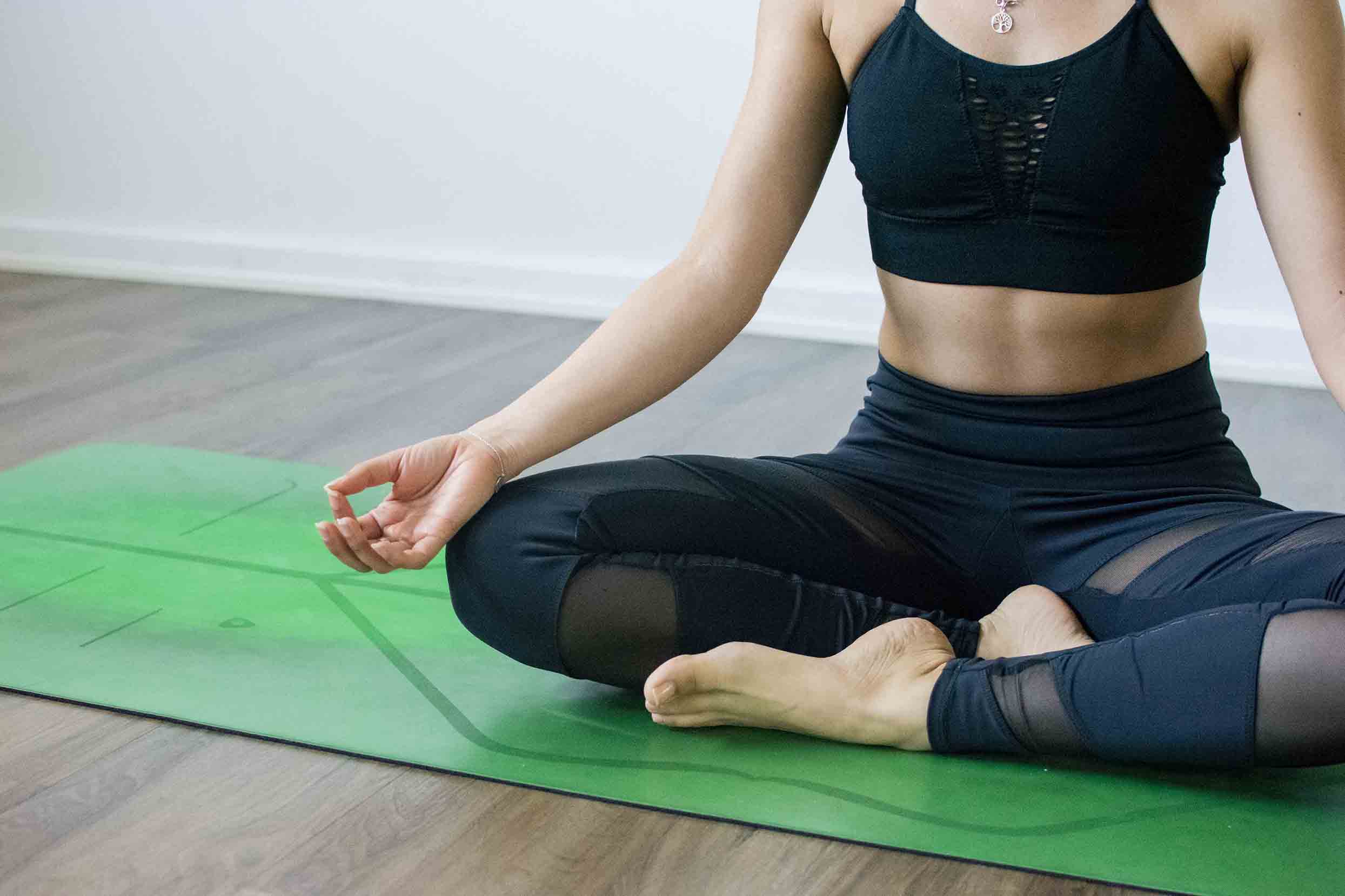
You will also recognise the posture. Buddha statues sit in Padmasana (Lotus Pose), usually with one of the hand gestures described in our guide to yoga mudras. Two are common: the right hand touching the ground (bhumisparsha mudra, calling the earth to witness his awakening) or both hands resting in the lap (dhyana mudra, the meditation gesture).
What the Buddha did not teach is a sequence of postures. His practice was seated and walking meditation, breath awareness and ethics. The flowing asana classes of modern studios come from a much later hatha tradition and from the 20th century.
Where sources disagree
Who borrowed from whom. Some scholars read the Yoga Sutras, compiled centuries after the Buddha, as drawing on Buddhist meditation theory. Others point to the two teachers the Buddha learned from and argue that yogic meditation came first and Buddhism grew out of it. Both traditions grew from a shared pool of practice, and the evidence is too thin to settle it. We present it as an open question.
Was the Buddha a Hindu? He was born before "Hinduism" existed as a name. He rejected the authority of the Vedas and the idea of a permanent self, Atman, which puts him outside the Vedic schools. Many Hindu texts later counted him as an avatar of Vishnu. Most Buddhists do not accept that reading.
What kind of Buddha. In the oldest Buddhist texts there were buddhas before Siddhartha and there will be one after him, Maitreya. In Mahayana Buddhism there are many buddhas, such as Amitabha, the Buddha of Infinite Light. So "Buddha" can mean one man or a whole class of awakened beings, depending on the school.
The life story. The palace, the four sights and the demon Mara attacking him under the tree are told in texts written down centuries after his death. Historians treat them as teaching stories built around a real life, and the details of that life as uncertain.
If the Sanskrit words on this page are new to you, our list of 50 Sanskrit yoga terms covers the ones you hear most in class.
To sit the way he sat, start with our beginner's guide to meditation and then the two-week meditation program, or browse all meditation classes.
Frequently asked questions
What does the word Buddha mean?
Buddha means "the awakened one". It comes from the Sanskrit root budh, to wake up or to understand. It is a title given to Siddhartha Gautama after his awakening, not his birth name. You will sometimes see it misspelled as "Buda".
Who was the Buddha?
Siddhartha Gautama, a teacher born in Lumbini in today's Nepal, probably in the fifth century BCE. He left home at 29, spent six years searching, reached awakening at Bodh Gaya at 35 and taught for about 45 years. His teaching is the root of Buddhism.
Is the Buddha a god?
No. The Buddha presented himself as a human being who had woken up, and early Buddhism does not teach a creator god. Buddhist cosmology includes gods (devas), but they are also bound by birth and death. Some later traditions treat buddhas with devotion close to worship.
Is the Laughing Buddha the same as the Buddha?
No. The fat, laughing figure is Budai (Hotei in Japan), a Chinese monk from around the 10th century who became a folk figure of good luck and contentment. Statues of Siddhartha Gautama show a slim man sitting in meditation.
What is the connection between the Buddha and yoga?
They grew from the same ancient Indian culture of meditation and share words like karma, dhyana and samadhi. The Buddha studied with meditation teachers before his awakening, and the Yoga Sutras overlap with Buddhist ideas in places. He taught meditation and ethics, not asana.
Did Jesus know about the Buddha?
There is no historical evidence that he did. The Buddha lived about five centuries before Jesus, and trade routes did link India and the Mediterranean, but theories that Jesus studied in India rest on later legends, not on sources historians accept.
What are the Four Noble Truths?
The Buddha's first teaching: life involves suffering (duhkha), suffering has a cause in craving, it can end, and the Noble Eightfold Path is the way to that end.
Practise it with a teacher
Over 600 online yoga classes and programs for $4.99 a month. Cancel any time.
Become a member