Urdhva Dhanurasana (Wheel Pose): How to Do It Step by Step

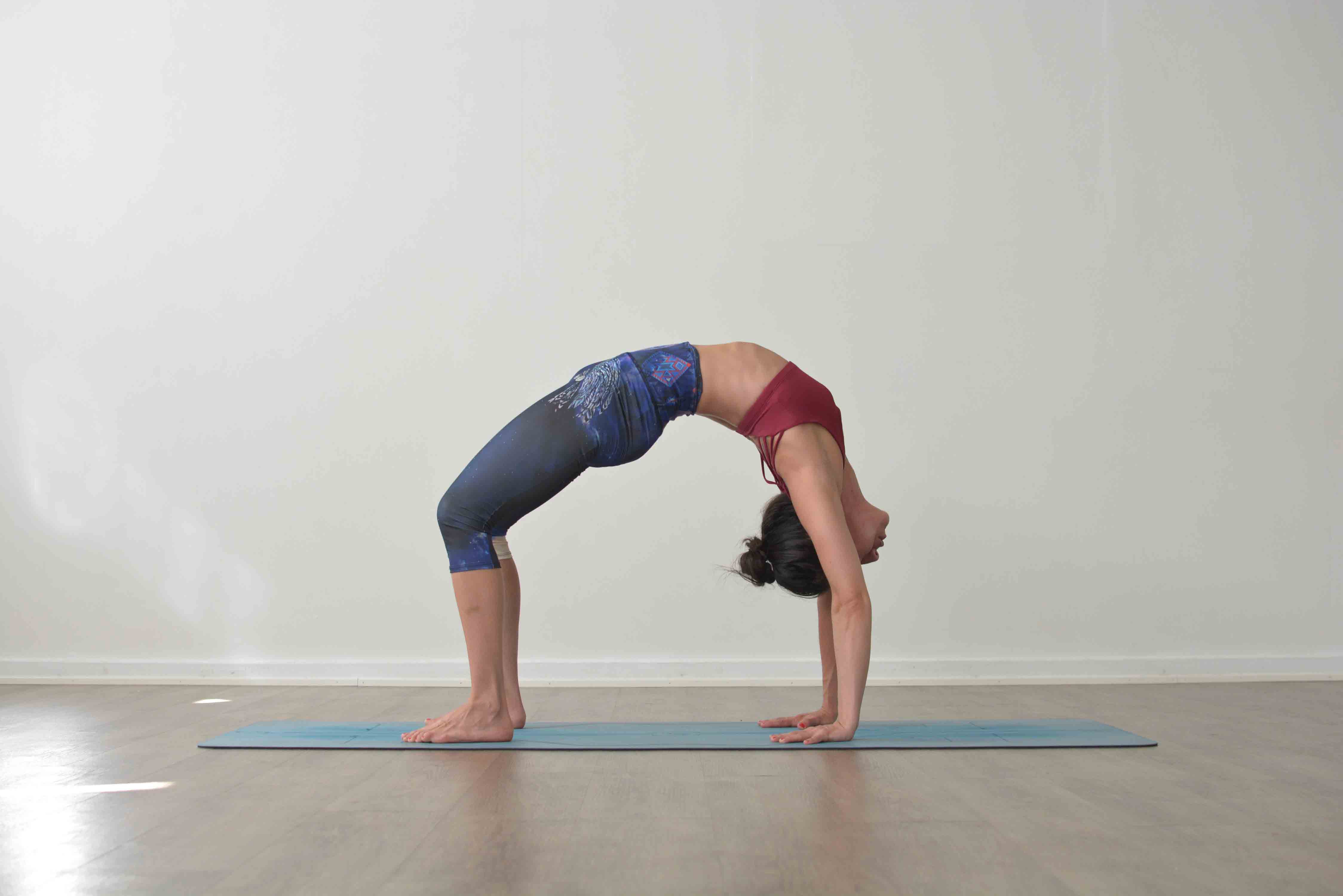
Urdhva Dhanurasana (Upward Bow Pose), also called Wheel Pose, is a deep backbend in which you lie on your back, place your hands by your ears and press up until only your hands and feet touch the floor. The whole front of the body opens in one long arch, from the wrists to the fronts of the hips. It asks for strength in the arms and legs as much as flexibility in the spine and shoulders, so most people build up to it with Bridge Pose and other backbends first.
Pose type: backbend, arm balance on hands and feet. Level: intermediate. Props: two blocks against a wall, optional.
What Urdhva Dhanurasana means
The name comes from three Sanskrit words: urdhva, upward, dhanu, bow, and asana, seat or posture. Your body is the bow, bent and strung, with the belly facing up. It is the upward partner of Dhanurasana (Bow Pose), where you lie on your belly and hold your ankles.
Many schools, especially in India, call the same shape Chakrasana, the wheel. In Ashtanga Yoga, though, Chakrasana is the name of a backward roll, so the two words do not always point to the same thing. In a class that says "wheel", expect this pose.
How to do Urdhva Dhanurasana, step by step
Warm up first. Ten minutes of Surya Namaskar A, a few rounds of Cat-Cow and two or three smaller backbends make a big difference. Wheel from a cold spine feels like pushing against a locked door.

- Lie on your back with your knees bent and your feet flat on the mat, hip-width apart. Walk your heels in until your fingertips can brush them. Keep the feet parallel, toes pointing forward.
- Bend your elbows and place your palms on the floor beside your ears, fingers pointing toward your shoulders. Spread the fingers wide. Draw the elbows in so they point up, not out to the sides.
- Press into your feet and lift your hips, as in Bridge Pose. Keep your knees in line with your feet.
- Press into your hands and lift your head, then set the crown of your head lightly on the floor. Pause here. Squeeze the elbows toward each other and check that they stack over the wrists. Most of the weight stays in the hands and feet, not the head.
- On an inhale, straighten your arms and lift your head off the floor. Let the head hang between the arms, neck soft.
- Press the inner edges of the feet down and move the chest toward the wall behind your hands. The arch should spread through the upper back and shoulders, not only the lower back.
- Stay for three to five slow breaths. To come down, tuck your chin, bend your elbows and lower the back of your head, then your upper back, one vertebra at a time. Rest on your back with your knees bent before you go again.
Two or three rounds are plenty. Each one usually opens a little more than the last.
Benefits of Wheel Pose
Wheel is one of the few poses that stretches the whole front body and works the whole back body at the same time.
- Front body: it stretches the hip flexors, the front of the thighs, the abdominal wall, the chest and the front of the shoulders.
- Shoulders: it takes the arms fully overhead under load, which asks for a lot of shoulder flexion and keeps that range.
- Strength: the triceps and shoulders straighten the arms, and the glutes and hamstrings hold the hips up.
- Spine: it moves the spine into extension, the opposite of the rounded shape most of us sit in all day.
People often say they feel awake and a bit giddy after Wheel. That fits a strong effort with the head below the heart, and it is a feeling, not a treatment. You will find claims online that Wheel ends depression, asthma or infertility. No study supports them.
Who should skip or modify Wheel Pose
Wheel puts a lot of weight through bent-back wrists, overhead shoulders and an arched lower back. Stay with Setu Bandha Sarvangasana (Bridge Pose) instead if any of these apply:
- Wrist, shoulder or lower back injuries, including spondylolisthesis or recent back surgery, unless your physiotherapist has cleared deep backbends.
- High blood pressure that is not under control, heart problems or headaches. The effort and the head-down position raise the pressure in the head.
- Pregnancy. If you did not practise Wheel before, do not start now. If you did, talk to your midwife, and expect to swap it for Bridge later in the pregnancy.
- Pain in the lower back while you are up. Come down. A stretch across the front of the body is what you want. A pinch in the lower back is not.
For more on practising without injury, read our 10 tips to avoid yoga injuries.
Common mistakes
- Elbows splaying out. The shoulders then collapse and the arms cannot straighten. Hug the elbows in, or practise with a strap around the upper arms.
- Feet turned out and knees wide. This squeezes the lower back. Keep the feet parallel and the knees over the ankles.
- Pushing straight up from the floor. Pausing on the crown of the head lets you set the elbows before you straighten the arms.
- All the bend in the lower back. If the chest stays behind the hands and the lower back aches, the shoulders and upper back need more work. Go back to the preparatory poses.
- Too much weight on the head. The neck is not made for it. If you cannot lift the head off the floor, stay in Bridge for now.
- Holding the breath. Breathe slowly through the nose. If you cannot, you are too deep.
Preparatory poses
Wheel needs open hip flexors, open shoulders and a warm spine. Work up through these:
- Bhujangasana (Cobra Pose) and Salabhasana (Locust Pose): a gentle extension of the spine and strength along the back body.
- Anjaneyasana (Low Lunge): opens the front of the back hip.
- Gomukhasana (Cow Face Pose) arms, sitting in Virasana (Hero Pose) on a block: opens the shoulders and the fronts of the thighs together.
- Ustrasana (Camel Pose): the same arch as Wheel, with the knees on the floor and less weight in the arms.
- Setu Bandha Sarvangasana (Bridge Pose): the lower half of Wheel. Hold it for five breaths, then try pressing up.
Most people are held back by their shoulders, not their spine. Our class Shoulder Mobility for Backbends is 25 minutes on exactly that, with a block.
Follow-up poses
- Knees to chest: hug both knees in and rock gently from side to side to release the lower back.
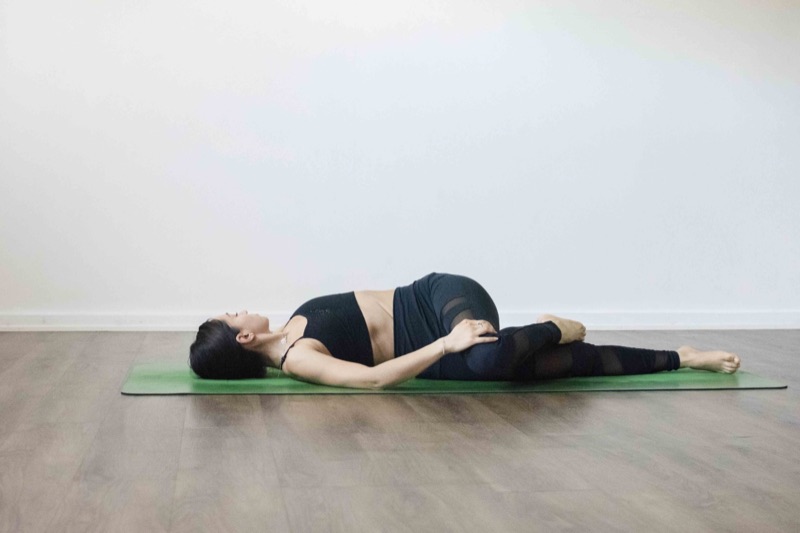
- A gentle supine twist on each side.
- Balasana (Child's Pose): a soft forward bend to settle the spine.
- Savasana (Corpse Pose): lie still and let the heart rate come down.
Skip a deep forward fold straight after Wheel. Move through a neutral spine first.
Urdhva Dhanurasana variations
- Hands on blocks at a wall: put two blocks against a wall, tilted up, and place your hands on them. The raised hands make it easier to straighten the arms and ease the wrists.
- Feet on blocks: raising the feet moves more of the bend into the upper back.
- Eka Pada Urdhva Dhanurasana: from Wheel, lift one leg straight up toward the ceiling. It asks for more strength and balance.
- Dwi Pada Viparita Dandasana: Wheel on your forearms, which asks for even more open shoulders.
- Camatkarasana (Wild Thing): a one-handed backbend from Side Plank, often taught as a lighter cousin of Wheel.
- Drop-backs: coming into Wheel from standing and back up again. Learn it next to a wall or with a teacher.
New to backbends? Start with Move into Backbends, a 20-minute level 1 class with two blocks. Once Wheel feels steady, Sofia Soori's Drop Into Backbends teaches you to drop back from standing.
Frequently asked questions
What are the benefits of Urdhva Dhanurasana?
Wheel stretches the front of the body, from the hip flexors to the chest and shoulders, and strengthens the arms, shoulders, glutes and hamstrings. It keeps the shoulders used to going fully overhead and moves the spine into extension. Claims that it cures depression, asthma or infertility have no evidence behind them.
Is Urdhva Dhanurasana the same as Chakrasana?
Usually, yes. Many Indian schools and books call Wheel Pose Chakrasana, the wheel. In Ashtanga Yoga, Chakrasana is a backward roll through the shoulders, and the backbend is always called Urdhva Dhanurasana. Check which one your teacher means.
What is the Sanskrit name for Wheel Pose?
Urdhva Dhanurasana, from urdhva (upward), dhanu (bow) and asana (posture). It is often also called Chakrasana, from chakra, wheel.
Can Dhanurasana or Wheel Pose reduce belly fat?
No pose burns fat from one chosen spot. Wheel and Bow Pose work and stretch the abdominal muscles, but the fat over them goes down only with an overall energy deficit, through food and total activity. A strong regular practice can be part of that.
Is Wheel Pose good for beginners?
Not as a first backbend. It needs open shoulders and hip flexors and enough arm strength to lift your body. Beginners do better with Cobra, Locust, Camel and Bridge first, and with Wheel against a wall once those feel easy.
How long should you hold Wheel Pose?
Three to five slow breaths is a good hold. Come down, rest for a few breaths and repeat two or three times. Several short rounds open the body more safely than one long hold.
Why can't I straighten my arms in Wheel Pose?
Most often the shoulders do not yet flex far enough overhead, so the elbows flare and the chest stays behind the hands. Hug the elbows in, try the hands on blocks at a wall, and work on shoulder openers such as Gomukhasana arms and Downward-Facing Dog.
Practise it with a teacher
Over 600 online yoga classes and programs for $4.99 a month. Cancel any time.
Become a member