Meditation for Self-Love: A Loving-Kindness Practice, Step by Step


A meditation for self-love is a short, repeated practice in which you sit still and direct kind wishes toward yourself, usually with a few silent phrases such as "May I be safe. May I be at ease." The best-known form is loving-kindness meditation, called metta bhavana in the Buddhist tradition. Ten minutes a day is enough to start, and nothing about it asks you to feel love on command.
What loving-kindness meditation means
The name comes from Pali, the language of the early Buddhist texts:
- Metta (Sanskrit maitri): friendliness, goodwill, loving-kindness. It comes from mitta, friend.
- Bhavana: cultivation, or bringing something into being, the way you grow a plant.
So metta bhavana is "cultivating friendliness". The word matters. Metta is the warmth you feel toward a good friend: steady and uncomplicated. Many people find that easier to aim for than "love", and much easier to aim at themselves.
Metta is the first of the four brahmaviharas, the "abodes of Brahma": friendliness, compassion (karuna), joy in the good fortune of others (mudita) and equanimity (upekkha). The same four qualities turn up in yoga. Patanjali's Yoga Sutra 1.33 names maitri, karuna, mudita and upeksha as the attitudes that keep the mind clear, and they sit close to ahimsa, the practice of non-harming, which starts with how you treat yourself.
How to do a self-love meditation, step by step
Time: 10-20 minutes. Level: beginner. You need: a chair, a cushion or a bolster, and a timer.
- Set a timer. Pick a time shorter than you think you need. Five or ten minutes you finish beats twenty you abandon.
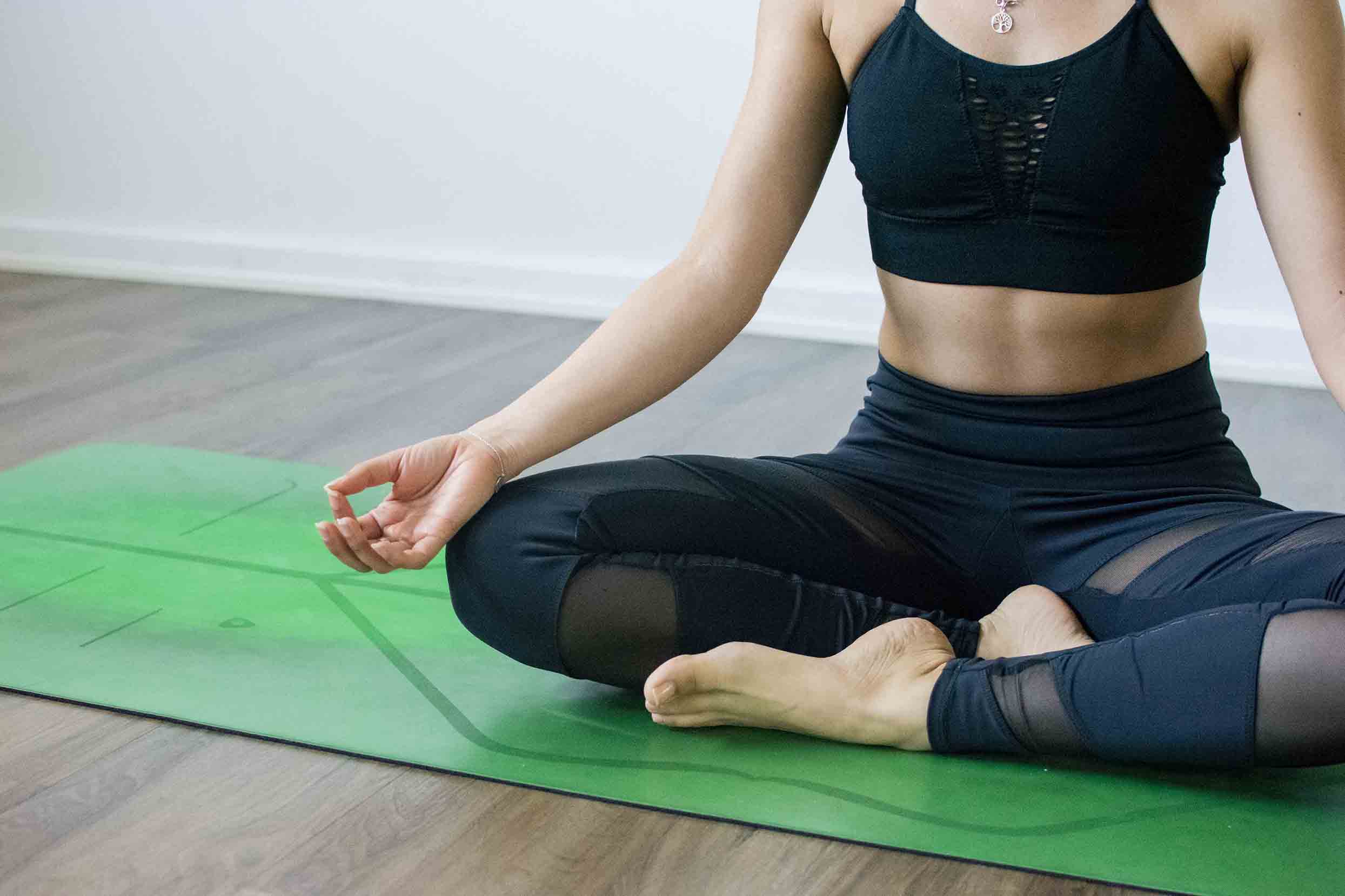
- Sit so you can forget your body. A chair with both feet flat on the floor works well. On the floor, sit in Sukhasana (Easy Pose) with a cushion under your sitting bones so your knees rest lower than your hips. Let your hands rest on your thighs.
- Settle with the breath. Close your eyes or lower your gaze. Take five slow breaths and let each exhale be a little longer than the inhale. A long exhale shifts the nervous system toward rest.
- Put a hand on your chest if it helps. The warmth and the light pressure give your attention somewhere to land.
- Repeat the phrases silently. Say them slowly, one per breath or one every few breaths:
May I be safe.
May I be healthy.
May I be at ease.
May I be kind to myself. - Bring back your attention, gently. Your mind will wander to a to-do list or an old conversation. Notice it and return to the next phrase. The return is the practice. Scolding yourself for drifting is the one habit this meditation asks you to drop.
- Widen the circle if you have time. Send the same wishes to someone you love, then to someone neutral, such as a person you pass on the way to work, and finally to everyone. Change "I" to "you" or "they".
- Close slowly. Let the phrases go, sit for three breaths, and notice how you feel without grading it. Then open your eyes.
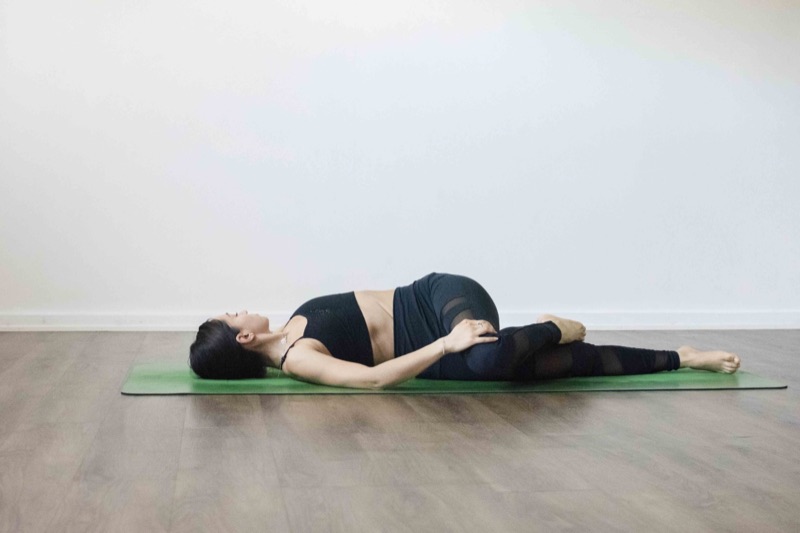
If you prefer to lie down, the same steps work on your back in Savasana (Corpse Pose). Lying down makes it easier to fall asleep, which is fine at night and less useful in the morning.
Choosing your own phrases
The words above are a common modern set. There is no correct version. A good phrase is short, true for you, and a wish rather than a claim. "May I be kind to myself" works for most people. "I am perfect as I am" often does not, because part of you argues back.
Some phrases people use:
- May I accept myself as I am today.
- May I be patient with myself.
- May I give myself the care I need.
- May I be free from fear.
Keep three or four and stay with them for weeks. Repetition is where the phrases stop being words and start being a habit of attention.
What the research says
Loving-kindness and self-compassion practices have been studied fairly often since the 2000s. The findings are encouraging and modest:
- A 2008 study by Barbara Fredrickson and colleagues found that people who practised loving-kindness meditation for several weeks reported more daily positive emotions than a waiting-list group.
- Reviews of compassion-based programmes, including a 2017 meta-analysis by James Kirby and colleagues, report moderate improvements in self-compassion and well-being, and smaller effects on depression and anxiety.
- The psychologist Kristin Neff describes self-compassion in three parts: kindness toward yourself, the sense that everyone struggles (common humanity), and mindful awareness of what you feel. A loving-kindness meditation practises the first part directly.
Most studies are small, many use waiting-list control groups rather than an active alternative, and results depend on people reporting their own feelings. So it is fair to say that regular practice helps many people treat themselves more kindly. It is too much to say it will fix low self-esteem, depression or trauma. For those, a therapist is the right place to start, and meditation can sit alongside it. You can read more in our overview of the benefits of meditation and what the science shows.
Where teachers disagree
Start with yourself, or start with someone else? The classic Buddhist manual, the Visuddhimagga (5th century), begins metta with yourself, then moves to a teacher or benefactor, a dear friend, a neutral person and finally someone difficult. Many modern teachers reverse the start for people who find self-directed kindness hard. They begin with someone easy to love, a grandparent, a child, even a pet, and turn the feeling toward themselves once it is there. Both work. If the self-directed phrases feel hollow, begin with someone else.
Self-love or loving-kindness? "Self-love" is a modern Western phrase. The tradition has no separate meditation for it. In metta, kindness to yourself is the first stage of a practice that widens to everyone. Some teachers see a meditation that stays with the self as missing the point. Others argue that people who are hard on themselves need to spend longer on that first stage. The traditional sequence and the modern focus answer different needs.
What if it feels bad? Some people feel sadness, grief or irritation when they first direct kindness to themselves. Christopher Germer, who developed the Mindful Self-Compassion programme with Kristin Neff, calls this "backdraft": old hurt surfacing when warmth lets it in. It is common and usually passes. Shorten the session, open your eyes, or go back to the breath. If it keeps overwhelming you, practise with a teacher or a therapist.
Common mistakes
- Trying to produce a feeling. The phrases are an intention. Some days warmth shows up, some days nothing does. Both count as practice.
- Sessions that are too long. Twenty minutes of forcing it teaches you to dread the cushion. Ten minutes on most days does more than an hour on Sunday.
- Grading yourself. "I did it wrong, my mind wandered the whole time" is the voice this practice slowly quiets. Notice it and return to the phrase.
- An uncomfortable seat. Aching knees pull every thought toward the body. Use a chair or raise your hips.
Other ways in
If sitting still with phrases does not suit you yet, start with the breath. Bhramari, the humming bee breath, gives a restless mind a sound to follow, and a few rounds make a good lead-in to metta. If meditation is new to you, our beginner's guide to meditation covers posture, timing and what to do with a busy mind. For a lying-down version, try a lying-down meditation from our meditation challenge, and for more guided sessions browse all our meditation classes.
To practise with a teacher, follow Sofia Soori's 20-minute Loving Kindness Meditation, level 1, seated or lying on a bolster, or build the habit day by day with the 21-day meditation challenge.
Frequently asked questions
Does meditation help with self-love?
For many people, yes. Studies of loving-kindness and self-compassion practices report moderate gains in self-compassion and positive emotions after a few weeks of regular practice. The effect builds slowly, and it works best alongside other support when self-criticism is severe.
What is a good mantra for self-love?
Short wishes work better than big claims. "May I be kind to myself", "May I be at ease" and "May I accept myself as I am today" are common choices. Pick three or four that feel true and repeat them silently, one per breath.
How do I teach myself self-love?
Through small, repeated acts of attention. A daily ten-minute loving-kindness meditation is one. Another is noticing the harsh voice during the day and answering it the way you would answer a friend. Change comes from repetition over weeks, not from one good session.
What are the four pillars of self-love?
There is no single agreed list. In the Buddhist and yoga traditions the closest match is the four brahmaviharas: friendliness (metta), compassion (karuna), joy (mudita) and equanimity (upekkha). Kristin Neff's model of self-compassion has three parts: self-kindness, common humanity and mindfulness.
How long should a self-love meditation be?
Start with 5-10 minutes a day. A short session you do most days builds the habit faster than a long one you skip. Once it feels familiar, 15-20 minutes gives you time to widen the phrases to other people.
Why do I feel sad during loving-kindness meditation?
It is common. When you turn kindness toward yourself, old hurt can surface, which Christopher Germer calls backdraft. Shorten the session, open your eyes or go back to the breath. If it keeps overwhelming you, practise with a teacher or talk to a therapist.
Can I do a self-love meditation lying down?
Yes. Lie on your back with a pillow under your knees and follow the same steps. You are more likely to fall asleep, so lying down suits an evening practice better than a morning one.
Practise it with a teacher
Over 600 online yoga classes and programs for $4.99 a month. Cancel any time.
Become a member