Hot 60: A 60-Minute Hot Yoga Sequence, Block by Block

Hot 60 is a 60-minute hot yoga sequence built on the 26 postures of Bikram yoga, with a few extra blocks: a kneeling warm-up, core work and Crow Pose, Bridge and Wheel, and a headstand series. You hold each pose still, in the same order as a Bikram class, and practise in a heated room if you have one. It fits in an hour because the standing poses are done once instead of twice.
Class card: hot Hatha yoga, level 2 (you should know the Bikram poses), 60 minutes, no props. A towel on the mat and water in the room.
How Hot 60 relates to Bikram yoga
A classic Bikram class is 26 postures and two breathing exercises in a fixed order, 90 minutes long, in a room heated to around 40°C (105°F). Each standing pose is done twice. The series is often called Hot 26 or 26+2 today, since many studios dropped the Bikram name.
Hot 60 keeps the order, the breathing and the static holds of the 26 Bikram yoga poses. To save time, most of the standing series runs once. The time you win goes into four additions the Bikram series does not have: a lunge warm-up, arm balance and core work, a full backbend, and inversions. If you have another 15-30 minutes, do the Cobra and Fixed Firm series twice and stay longer in Wheel.
For the differences between Bikram, Barkan, Baptiste and the other heated styles, see what hot yoga is and how the styles differ.
The Hot 60 sequence
The sequence below is the one we wrote down in the original version of this post. Each block has a note on how many sets and how to move between the poses.
1. Breathing
- Pranayama, standing deep breathing. 10 slow repetitions. Interlace the fingers under the chin, breathe in through the nose as the elbows lift, breathe out through the mouth as the elbows come together.
2. Warm-up: warrior salute, compression and backbend
Two rounds, right side then left side.
- Take a big step forward with the right foot into a lunge. Bring the palms together overhead, drop the head back and move the arms back into a backbend. Right hip forward, front heel over the toes.
- Stay for a few breaths, then come out slowly. Turn around on the mat and do the left side.
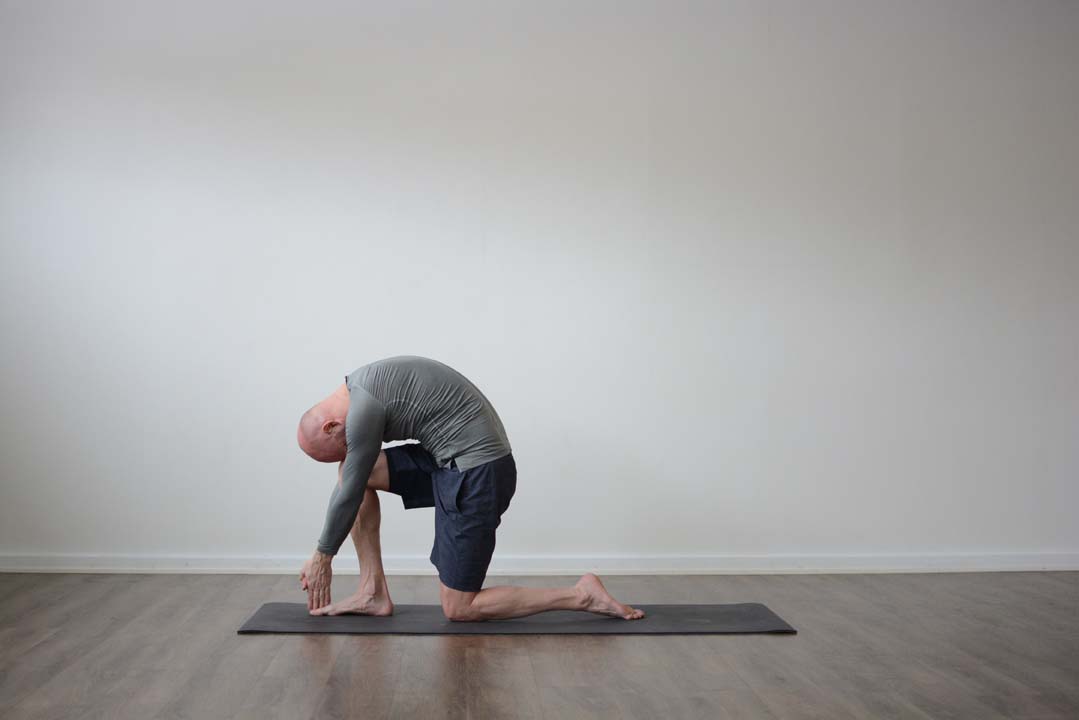
- Now lower the back knee to the mat about 20 cm behind the front heel. Tuck the chin, curl the spine down and bring the forehead to the front knee. Hands in prayer, fingertips on the floor between the big toe and the second toe. Stay a few breaths and breathe normally.
- On an inhale, sweep the arms up and back, drop the head back and come into a kneeling backbend. Stay up to 10 seconds.
- Hands to the floor, step the front foot back to meet the other foot, walk the hands to the feet and roll up to standing with a straight spine. Then the other side.


3. Standing series
One set of each pose.
- Half Moon, side bend to the right and to the left
- Half Moon backbend
- Pada Hastasana (Hands to Feet Pose), forehead toward the knees
- Utkatasana (Awkward Pose), all three parts
- Garudasana (Eagle Pose)
- Dandayamana Janushirasana (Standing Head to Knee Pose)
- Dandayamana Dhanurasana (Standing Bow Pulling Pose)
- Tuladandasana (Balancing Stick Pose)
The standing Half Moon here is the Bikram side bend with both arms overhead. It shares a name with the one-legged balance from other styles and has little else in common.
4. Separate leg series
One flow, both sides, without breaks between the poses.
- Dandayamana Bibhaktapada Paschimotthanasana (Standing Separate Leg Stretching Pose)
- Trikanasana (Triangle Pose), the Bikram version with the front knee bent to 90 degrees
- Dandayamana Bibhaktapada Janushirasana (Standing Separate Leg Head to Knee Pose)
5. Tree and Toe Stand
Both poses on one leg before you switch sides.
- Tree Pose. Bikram calls it Tadasana; in most other styles it is Vrksasana, and Tadasana is Mountain Pose.
- Padangusthasana (Toe Stand Pose). Skip it if your knee does not like deep bending, and stay in Tree.
6. Core and Crow
This is the first block that is not in the Bikram series. Two or three minutes of warm-up for the shoulders and the core first.
- Lolasana (Pendant Pose) lifts, 5 times. Hands on the floor, knees tucked, try to lift the whole body.
- Lolasana hold, 10 seconds.
- Navasana (Boat Pose) and Ardha Navasana (Half Boat), moving between the two.
- Kakasana or Bakasana (Crow Pose), two tries of 10 breaths. No lift yet: take one foot off the floor at a time.
- Savasana (Dead Body Pose)
- Pavanamuktasana (Wind-Removing Pose)
7. Cobra series
One flow, one set.
- Bhujangasana (Cobra Pose)
- Salabhasana (Locust Pose)
- Poorna Salabhasana (Full Locust Pose)
- Dhanurasana (Bow Pose)
- Savasana
8. Fixed firm series and seated stretch
One flow, one set.
- Supta Vajrasana (Fixed Firm Pose)
- Ardha Kurmasana (Half Tortoise Pose)
- Ustrasana (Camel Pose)
- Sasangasana (Rabbit Pose)
- Savasana
- Janushirasana (Head to Knee Pose), both sides
- Paschimotthanasana (Stretching Pose)
- Savasana
9. Bridge and Wheel
Two sets. If your back and shoulders are open, go from Bridge straight into Wheel. If Wheel is not there yet, do two sets of Bridge.
- Setu Bandha (Bridge Pose)
- Chakrasana or Urdhva Dhanurasana (Wheel Pose)
- Savasana. Then knees to the chest, roll up and sit in Vajrasana on your heels.
10. Headstand series
Step by step. Stay at the stage where you feel strong and steady, and only move on when you do. Child's Pose is always there if you need a rest. If headstand is already part of your practice, go straight to Sirsasana and stay for 20 breaths.
- Adho Mukha Svanasana (Downward-Facing Dog)
- Ardha Pincha Mayurasana (Dolphin Pose)
- Ardha Sirsasana (Half Headstand), knees bent, feet on the floor or lifted
- Sirsasana (Headstand)
- Balasana (Child's Pose)
11. Finish
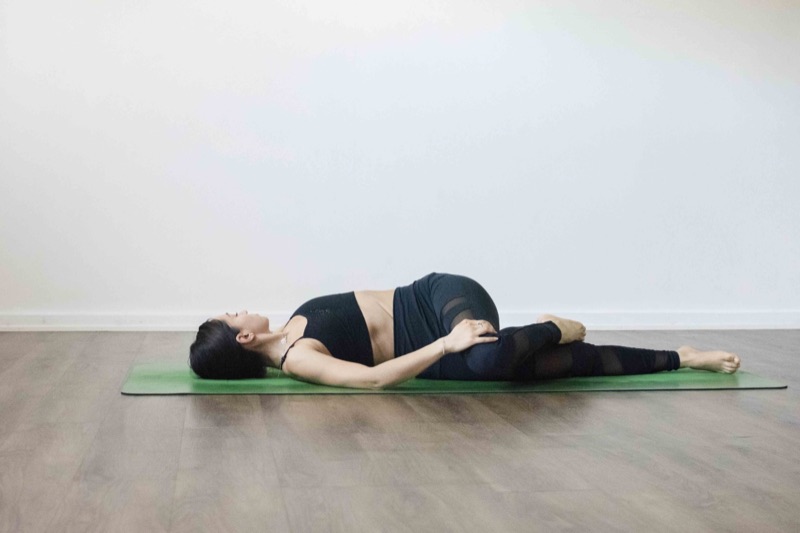
- Ardha Matsyendrasana (Spine Twisting Pose), both sides
- Kapalabhati, the blowing breath: short, sharp exhales through the nose, the belly snapping in
- Savasana, as long as you have left
What the sequence works
The standing series is mostly balance and leg strength. In Standing Head to Knee, Standing Bow and Balancing Stick you stay on one leg for long holds, and the muscles around the ankle, knee and hip do the work. The separate leg series stretches the hamstrings and the inner thighs.
The added core block works the abdominals, the wrists and the front of the shoulders. The belly-down backbends in the Cobra series work the muscles along the spine. Camel, Bridge and Wheel open the front of the body, from the hip flexors to the chest.
The headstand series puts weight on the forearms and the shoulders. Dolphin alone is a strong shoulder exercise, and many people stay there for months, which is fine.
Where the hot yoga claims disagree
Hot yoga comes with strong claims. Some hold up, some do not.
- Heat and flexibility. Warm muscles move more easily, and most people go deeper in a hot room. The same heat makes it easier to push past what the joints and tendons are ready for. A deeper stretch in the heat is not a safer one.
- Sweat. You sweat a lot. Sweat cools you down. It does not clear waste from the body; the liver and kidneys do that work, at any room temperature.
- Is the heat needed? Small studies comparing the Bikram series in a hot and in a room-temperature studio found similar results for most of what they measured. The heat changes how the class feels more than what it does. The sequence works in a normal room too.
- Locked knees. Bikram teachers traditionally ask you to lock the standing knee. Many teachers today prefer a straight knee with the thigh muscles engaged, without pushing the joint back. We teach the second.
- Tradition. The 26-pose series was put together by Bikram Choudhury in the 1970s. The poses come from Hatha yoga, and several of the names are his own, which is why Tree is called Tadasana and Triangle is called Trikanasana.
Who should skip or modify
- Pregnancy. Skip the heat. Obstetric guidelines advise against hot yoga in pregnancy. Deep backbends, belly-down poses and inversions also need a teacher who knows prenatal yoga.
- Heart problems, high or low blood pressure, or a history of heat illness. Ask your doctor before any heated class.
- Neck problems, glaucoma or uncontrolled high blood pressure. Leave out the headstand series and do Downward-Facing Dog and Child's Pose instead.
- Knee problems. Skip Toe Stand, and sit on a folded blanket or take one leg at a time in Fixed Firm.
- Wrist pain. Stay with the Lolasana and Navasana work and leave Crow.
- New to hot yoga. Learn the poses at room temperature first, or start with the 60-minute Bikram class below.
In the heat, stop and lie down if you feel dizzy, sick or stop sweating. Drink before the class, not only during it. Our guide to what to wear to hot yoga covers clothes, towel and water.
Common mistakes
- Rushing the standing series. With only one set, it is tempting to move fast. Keep the holds long and the breath through the nose.
- Going for the forehead to the knee. In Hands to Feet and the head to knee poses, bend the knees as much as you need to keep the spine long. The forehead comes later.
- Jumping into Wheel. If your arms bend and the shoulders collapse, stay in Bridge. Two good Bridges beat one crushed Wheel.
- Headstand on a tired neck. Most of the weight goes into the forearms. If you cannot lift the shoulders away from the ears in Dolphin, stay in Dolphin.
- Skipping Savasana. The short Savasanas between the series let the heart rate come down. They are part of the sequence.
If you want to learn the Bikram part of this sequence first, the Hot 26 Breakdown with Lauren Matters teaches it pose by pose, and the Hot 26 full class is the complete series in 60 minutes, level 1.
Frequently asked questions
What is the hot yoga sequence?
Most studios mean the Bikram series: 26 postures and two breathing exercises in a fixed order, in a room around 40°C. Hot 60 follows the same order and adds a warm-up, core work, Crow, Wheel and a headstand series, in 60 minutes instead of 90.
What is Bikram yoga called now?
Many studios teach the same series as Hot 26, 26+2 or Original Hot Yoga after they dropped the Bikram name, largely because of the legal cases against Bikram Choudhury. The poses and the order are the same.
Can I do this sequence without a heated room?
Yes. It works at room temperature. Warm up a little longer and take it easier in the forward folds, since your muscles will feel stiffer at the start.
Is 60 minutes enough for hot yoga?
For this sequence, yes, if you keep the transitions short. The time comes from doing the standing poses once. With 15-30 minutes more, repeat the Cobra and Fixed Firm series and spend longer in Wheel.
How hot should the room be?
Bikram rooms are heated to about 40°C (105°F) with around 40% humidity. Many hot yoga studios run cooler, around 30-35°C. At home, a warm room is enough. The sequence does not need the full heat.
Is hot yoga good for beginners?
The Bikram series is often taught to beginners, but Hot 60 adds Crow, Wheel and headstand. Start with the Bikram series, learn the poses, and add the extra blocks when they feel steady.
Practise it with a teacher
Over 600 online yoga classes and programs for $4.99 a month. Cancel any time.
Become a member
Former member