Manipura Chakra: Meaning, Location and How It Is Practised


Manipura (Sanskrit: मणिपूर, maṇipūra) is the third of the seven main chakras in yoga, placed at the navel and often called the solar plexus chakra in English. The name means "city of jewels". In the yoga tradition it is the seat of fire: digestion, heat and the will to act.
Manipura at a glance
- Position: third of seven, between Svadhisthana (sacral) below and Anahata (heart) above.
- Location: the navel in the classical texts. Modern books often move it up to the solar plexus, the soft area under the breastbone.
- Element: fire (agni or tejas).
- Seed sound (bija mantra): RAM.
- Petals: ten.
- Colour: yellow in modern Western books. The older Sanskrit source describes something else, see below.
- Deities: Rudra, a form of Shiva, with the goddess Lakini.
What does Manipura mean?
The word joins two Sanskrit nouns:
- Mani (मणि): a jewel or gem.
- Pura (पूर): a city, a town, a fortress.
Together: "city of jewels", sometimes "lustrous gem". Some schools use a different name, nabhi chakra, the navel wheel. Chakra itself means "wheel" or "disc".
The chakras belong to the subtle body of yoga: a map of energy centres that sit along the central channel, sushumna, one of the nadis, the channels prana is said to move through. If the seven centres are new to you, start with our beginner's guide to the seven chakras and come back here.
How the classical text describes it
Most of what is written about the chakras today goes back to one Sanskrit text, the Sat-Chakra-Nirupana ("Description of the Six Centres"), written by Purnananda in the 16th century. Arthur Avalon (Sir John Woodroffe) translated it into English in The Serpent Power in 1919, and Western yoga took its chakra picture from that book.
In that text Manipura is a ten-petalled lotus at the root of the navel. The petals are dark, the colour of heavy rain clouds, and each carries one Sanskrit syllable. In the centre sits a red triangle, the region of fire, with the seed syllable RAM. The ram, the animal that carries the fire god Agni, is its vehicle. The deity is Rudra, and the goddess of the centre is Lakini.
This is meditation imagery. The text gives you a picture to hold in the mind while you practise, one centre at a time. It does not describe an organ.
In hatha yoga the navel region is also where the digestive fire, jatharagni, is said to burn. That link runs through the practices below: many of them work the belly and are taught as ways to stoke that fire.
What does Manipura do? The modern reading
In modern yoga books, Manipura stands for will, confidence and self-esteem. The fire that digests food becomes the fire that turns an intention into action. Students are told that a strong third chakra shows up as the ability to start and finish things, and a weak one as doubt and stalling. Some teachers add an "excess" state: the need to be right, a harsh critic, a big ego.
This psychology is recent. The American author Anodea Judith built much of it in Wheels of Life (1987) and Eastern Body, Western Mind (1996), where each chakra gets a developmental stage, a right and a "demon". For Manipura the right is to act, the demon is shame, and the stage is roughly 18 months to four years. The affirmation "I can" comes from the same school. It is a useful framework for self-reflection. It is not found in the Sanskrit sources.
How Manipura is practised
Teachers who build a class around the third chakra usually reach for practices that work the belly, warm the body and ask for some effort. You do not need to believe in chakras to do any of them. They stand on their own as core work and breath work.
- Breath: Kapalabhati (Skull Shining Breath), short, sharp exhales driven by the lower belly.
- Belly locks and kriyas: Uddiyana Bandha, which draws the belly in and up after an exhale, and Agni Sara, "fire wash", which pumps the abdomen while you hold the breath out. Our 10-minute Agni Sara tutorial shows it step by step. Many teachers start with Mula Bandha, the root lock, first.
- Core poses: Paripurna Navasana (Boat Pose) and plank variations. Your abdominal wall works hard, and you feel heat in minutes.
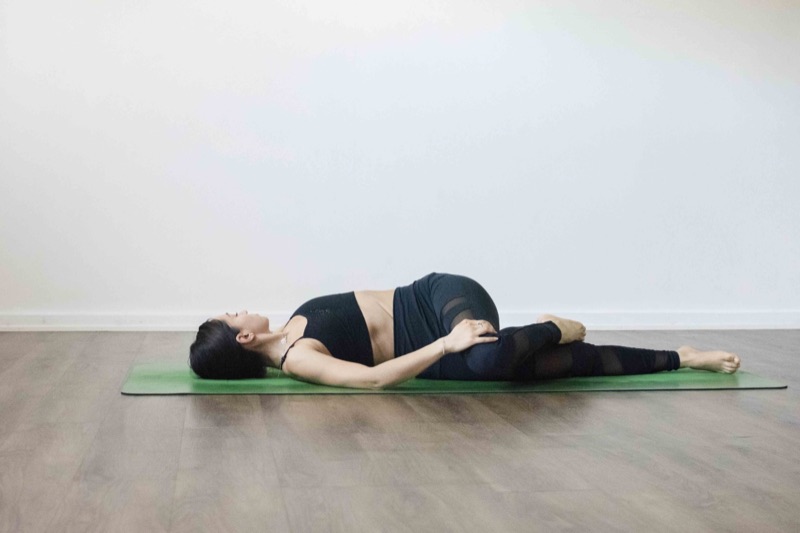
- Twists: Ardha Matsyendrasana (Half Lord of the Fishes) turns the ribs around the spine and presses the belly as you rotate.
- Backbends: Dhanurasana (Bow Pose) stretches the front of the belly and rocks you on it.
- Meditation: sit tall, rest your attention a hand's width above the navel and repeat the syllable RAM silently or aloud, with a long exhale on the mmm.
What you can expect, honestly: stronger abdominal muscles, a warm body and practice at staying with effort. Whether that also changes your confidence is up to you and harder to measure.
A caution for the breath practices. Skip Kapalabhati, Agni Sara and Uddiyana Bandha during pregnancy, on a full stomach, with high blood pressure, a hernia or recent abdominal surgery, and during menstruation if it feels wrong. Learn them from a teacher first.
Where sources disagree
Navel or solar plexus? The Sanskrit texts put Manipura at the navel. The solar plexus, or celiac plexus, is a real network of nerves behind the stomach, a few centimetres higher. Theosophist C. W. Leadbeater linked the chakras to nerve plexuses in The Chakras (1927), and the English name "solar plexus chakra" grew out of that habit. In class, most teachers point to the area between the navel and the lower tip of the breastbone and leave it there.
Yellow or dark blue? Yellow comes from the rainbow colour scheme, red at the root through violet at the crown, which spread through Western books in the 1970s. The Sat-Chakra-Nirupana gives dark, cloud-coloured petals around a red fire triangle. Neither is wrong as a meditation image. Only one is old.
Seven chakras or more? The seven-chakra list is one system among several. Other tantric texts count five, six, nine or more centres. Tibetan Buddhism works with a navel wheel of its own, with sixty-four channels. The granthis, the three knots of hatha yoga, are yet another map of the same body.
Are chakras real? Anatomy has found no structure that matches a chakra. The Skeptic's case is simple: there is nothing to "unblock". The Practitioner's answer is that the chakras were never offered as anatomy. They are a way to direct attention, and focused attention on the belly does change how you breathe and hold yourself. The gut and brain do talk, through the vagus nerve and the nerves in the gut wall, which is one reason stress shows up in the belly. That explains the "gut feeling". It does not prove a chakra.
"Unbalanced chakra" symptoms. Lists online tie a weak Manipura to indigestion, diabetes, liver problems and low self-worth. None of these links has been tested. If your digestion troubles you, see a doctor. Yoga can sit next to that, not replace it.
To feel the fire element in your own body, try the 20-minute Fire Core class, and for the wider ideas behind the chakras, our yoga philosophy classes start with the texts.
Frequently asked questions
What does Manipura chakra do?
In the yoga tradition, Manipura is the centre of fire: digestion, heat and energy for action. Modern books add willpower, confidence and self-esteem. These are ways of describing experience, not functions anatomy has found.
Where is the Manipura chakra located?
The classical Sanskrit texts place it at the navel. Modern books often put it a little higher, at the solar plexus below the breastbone. Most teachers point to the area between the two.
How do you unblock your Manipura chakra?
Teachers use practices that work the belly and build heat: Kapalabhati, Agni Sara, Uddiyana Bandha, Boat Pose, twists and Bow Pose, and meditation on the seed sound RAM. "Blocked" is a way of talking in the chakra tradition. What you can count on is a stronger core and steadier breath.
What happens when the Manipura chakra opens?
Tradition says the fire element becomes steady and the practitioner gains energy and clarity. Modern chakra books describe more confidence and follow-through. These are reports from within the tradition, not measured outcomes, so be wary of anyone who promises a set of experiences.
Which god is associated with Manipura chakra?
In the Sat-Chakra-Nirupana, the deity is Rudra, a fierce form of Shiva, and the goddess is Lakini. The ram, which carries the fire god Agni, is the animal of the centre.
What colour is the Manipura chakra?
Yellow in most modern books, from the rainbow scheme that spread in the 1970s. The 16th-century source describes ten dark petals, like rain clouds, around a red triangle of fire.
What is the mantra for Manipura chakra?
The seed sound, or bija mantra, is RAM, the syllable of fire. It is usually chanted on one long exhale, with the lips closing on the final m.
Is the solar plexus chakra the same as Manipura?
Yes. "Solar plexus chakra" is the common English name for Manipura. It comes from early 20th-century Western writers who linked the chakras to nerve plexuses. The Sanskrit texts place the centre at the navel.
Practise it with a teacher
Over 600 online yoga classes and programs for $4.99 a month. Cancel any time.
Become a member



Former member