Paripurna Navasana (Boat Pose): How to Do It Step by Step

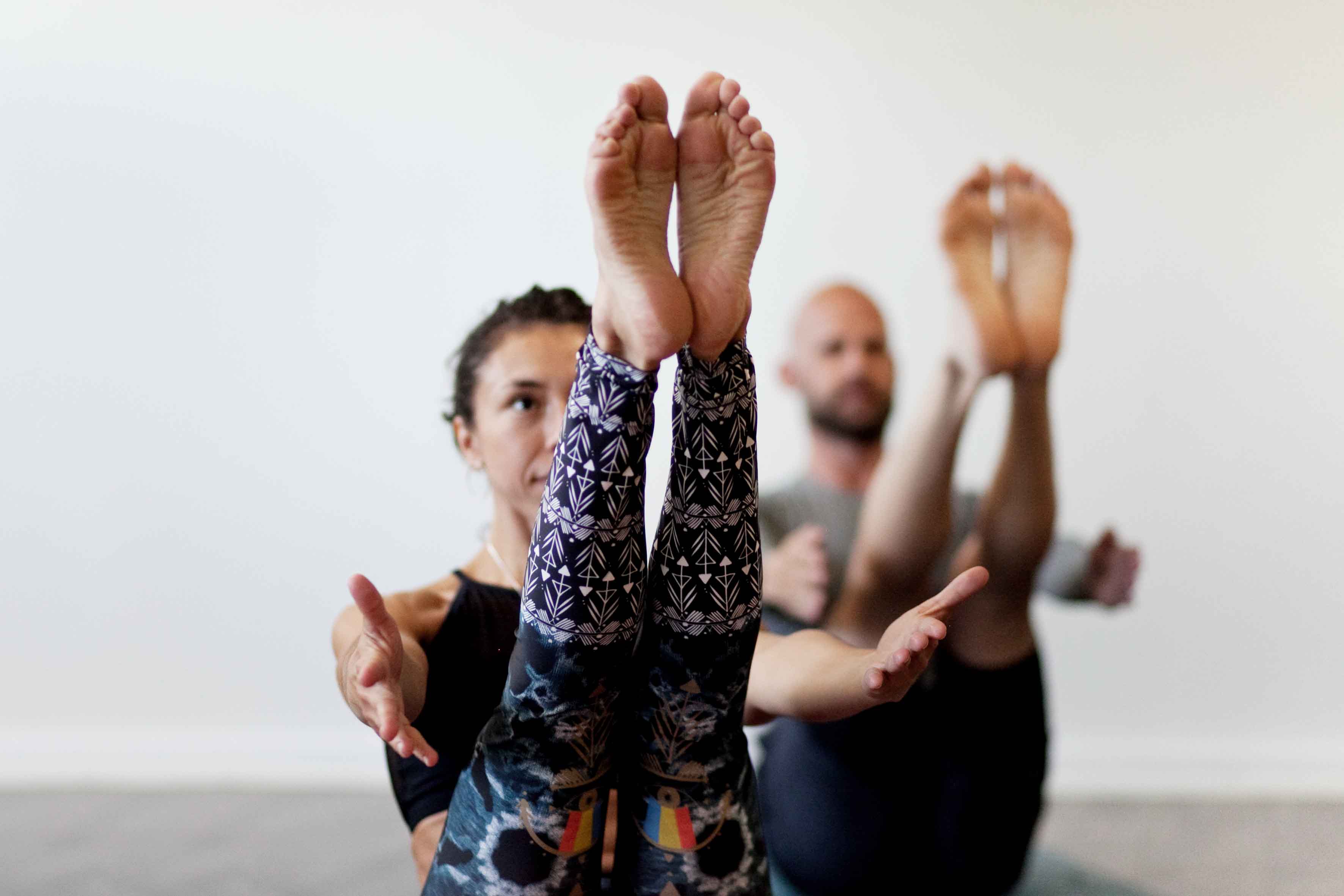
Paripurna Navasana (Boat Pose) is a seated balance in which you rest on your sitting bones, lean the torso back and lift the legs, so the body makes a V shape. It is a core pose: the hip flexors hold the legs up and the abdominal muscles hold the trunk steady against gravity. Most people start with bent knees and straighten the legs as the strength comes.
Pose type: seated balance, core strength. Level: beginner with bent knees, intermediate with straight legs. Props: optional folded blanket under the sitting bones, a strap around the feet.
What Paripurna Navasana means
The name is Sanskrit: paripurna, full or complete, nava, boat, and asana, posture. Full Boat Pose. Legs and torso form the two ends of the boat, the sitting bones are the keel. Say it par-ee-POOR-nah nah-VAHS-ah-nah. You will also hear plain Navasana, and some schools use the name Naukasana, from nauka, another word for boat.
How to do Boat Pose, step by step
- Sit on the mat with your knees bent and your feet flat on the floor, hip-width apart. Place your hands on the floor beside your hips or hold the backs of your thighs.
- Sit up tall. Lift your chest and roll slightly back, onto the front of your sitting bones, until you feel the weight come off the tailbone.
- Lean the torso back a little, keeping the spine long. You will feel the abdominal muscles switch on to hold you.
- Lift your feet off the floor, knees still bent, until your shins are parallel to the floor. This is the bent-knee version, and many people stay here for months.
- Reach your arms forward alongside the knees, palms facing each other or up, shoulders drawn away from the ears.
- If your back stays long, straighten your legs. Aim the toes at about eye level, so the legs and the torso make a V. The legs rise at roughly 60 degrees from the floor.
- Breathe steadily through the nose for 3 to 5 breaths. Hug your lower ribs in toward your hip bones as you breathe out. To come out, bend the knees, put your feet down and sit tall. Rest, then repeat two or three times.
The rule that matters: a long spine with bent knees beats straight legs with a rounded back. If your lower back curls and the weight slides onto the tailbone, bend the knees again.
Breath and gaze
Many people hold the breath here. Keep it moving. If you cannot breathe with a soft belly, the version you are in is too hard for today. In Ashtanga yoga, Navasana is held for five breaths, five times in a row, with the gaze on the toes. Other schools let the gaze rest forward, past the feet.
Benefits of Boat Pose
Boat Pose is a strength pose, held still. Its effects come from that.
- Hip flexors: the psoas, iliacus and rectus femoris hold the weight of the legs. Our guide to the psoas and yoga explains what these muscles do.
- Abdominal muscles: the rectus abdominis and the deeper transversus abdominis work to keep the torso from falling back and the lower back from rounding.
- Back of the legs: with straight legs, the hamstrings lengthen while the front of the thigh works.
It also trains balance, since the base is small and sits behind the centre of the body. Boat Pose does not burn belly fat. No exercise removes fat from one chosen spot. It builds the muscles under it.
Who should skip or modify Boat Pose
The hip flexors attach to the lumbar spine, so when they work hard they pull on the lower back. A strong trunk holds that pull. A tired one lets the back arch or collapse.
- Lower back pain or a disc problem: stay with bent knees and your hands behind the thighs, or skip the pose and work the core lying on your back. Stop if the pain spreads down a leg.
- Pregnancy: skip the full pose, especially after the first trimester, when the abdominal wall is stretching.
- Diastasis recti, a hernia or recent abdominal surgery: ask your physiotherapist first. If the belly bulges or domes along the midline, come out.
- Sore tailbone: sit on a folded blanket and shift forward onto the sitting bones.
- Neck strain: if the neck tightens, lower the arms and look a little further down.
More on practising without injury in our 10 tips to avoid yoga injuries.
Common mistakes
- Rounding the lower back. The weight rolls onto the tailbone and the abdominals give up. Bend the knees and lift the chest.
- Straight legs too soon. Lifting the legs higher at the cost of the spine turns a core pose into a back strain.
- Holding the breath. The belly goes rigid and you tire fast. Count your breaths and keep them even.
- Shoulders up by the ears. Draw them down and widen across the collarbones.
- Gripping the neck. The head follows the line of the spine, chin neither lifted nor tucked hard.
Preparatory poses
- Plank Pose: the same abdominal hold, face down.
- Paschimottanasana (Seated Forward Bend): lengthens the hamstrings so the legs can straighten in the V.
- Adho Mukha Svanasana (Downward-Facing Dog): the backs of the legs and a long spine.
- Dandasana (Staff Pose): sitting upright with straight legs, which is the top half of Boat Pose.
Our guide to yoga for core strength covers the muscles involved and more poses that build them.
Follow-up poses
After a long abdominal hold, move the spine the other way and then keep building strength.
- Setu Bandha Sarvangasana (Bridge Pose): a gentle backbend that opens the front of the hips after they have worked.
- Salabhasana (Locust Pose): strengthens the back of the body, the partner to Boat's front.
- Lolasana (Pendant Pose): an arm balance with the knees drawn in, close to the lift many Ashtanga students use between rounds of Navasana.
- Baddha Konasana (Bound Angle Pose): a seated hip opener that comes later in the Ashtanga Primary Series and lets the hip flexors rest.
Boat Pose variations
- Bent-knee Boat: shins parallel to the floor, hands behind the thighs or reaching forward. Many studios call this Half Boat.
- Ardha Navasana (Half Boat Pose): in B.K.S. Iyengar's Light on Yoga, a lower version with the hands clasped behind the head and the legs and trunk held closer to the floor. It is harder than it looks, because the lower back has to stay down while the legs are low.
- With a strap: loop a strap around the soles and hold both ends. It helps you keep the legs straight and the chest lifted.
- Boat to Low Boat: lower the legs and torso toward the floor on an exhale without touching down, then lift back into the V on an inhale. Repeat five times.
Practise it in a class: Core Flow is 20 minutes of core Vinyasa, level 1-2, with Navasana as part of the sequence.
Frequently asked questions
What is the Boat Pose good for?
Boat Pose strengthens the hip flexors and the abdominal muscles, which work together to keep the legs lifted and the spine long. It also trains balance on a small base and, with straight legs, lengthens the hamstrings. It is a useful building block for arm balances and for sitting upright.
How do you do Boat Pose as a beginner?
Keep the knees bent. Sit tall, hold the backs of your thighs, lean back a little and lift the feet until the shins are parallel to the floor. Stay for three breaths with a long spine. Let go of the thighs and reach the arms forward once that feels steady.
What is another name for Boat Pose?
In Sanskrit it is Paripurna Navasana, Full Boat Pose, often shortened to Navasana. Some schools call it Naukasana. The lower version with the hands behind the head is Ardha Navasana, Half Boat Pose.
Does Boat Pose reduce belly fat?
No. Boat Pose strengthens the abdominal muscles, but exercise does not burn fat from one chosen area. Body fat drops through overall activity and diet. What the pose gives you is a stronger and more stable trunk.
How long should you hold Boat Pose?
Start with three to five breaths and repeat two or three times with a short rest in between. The Ashtanga Primary Series uses five rounds of five breaths. Come out as soon as the lower back rounds or you start to hold your breath.
Is Boat Pose bad for your back?
Not when the spine stays long and the abdominals are doing their share. It can strain the lower back when the back rounds or arches under the pull of the hip flexors. With back pain, keep the knees bent and the hands on the thighs, or choose a core exercise lying down.
Practise it with a teacher
Over 600 online yoga classes and programs for $4.99 a month. Cancel any time.
Become a member