Ardha Chandrasana (Half Moon Pose): How to Do It Step by Step

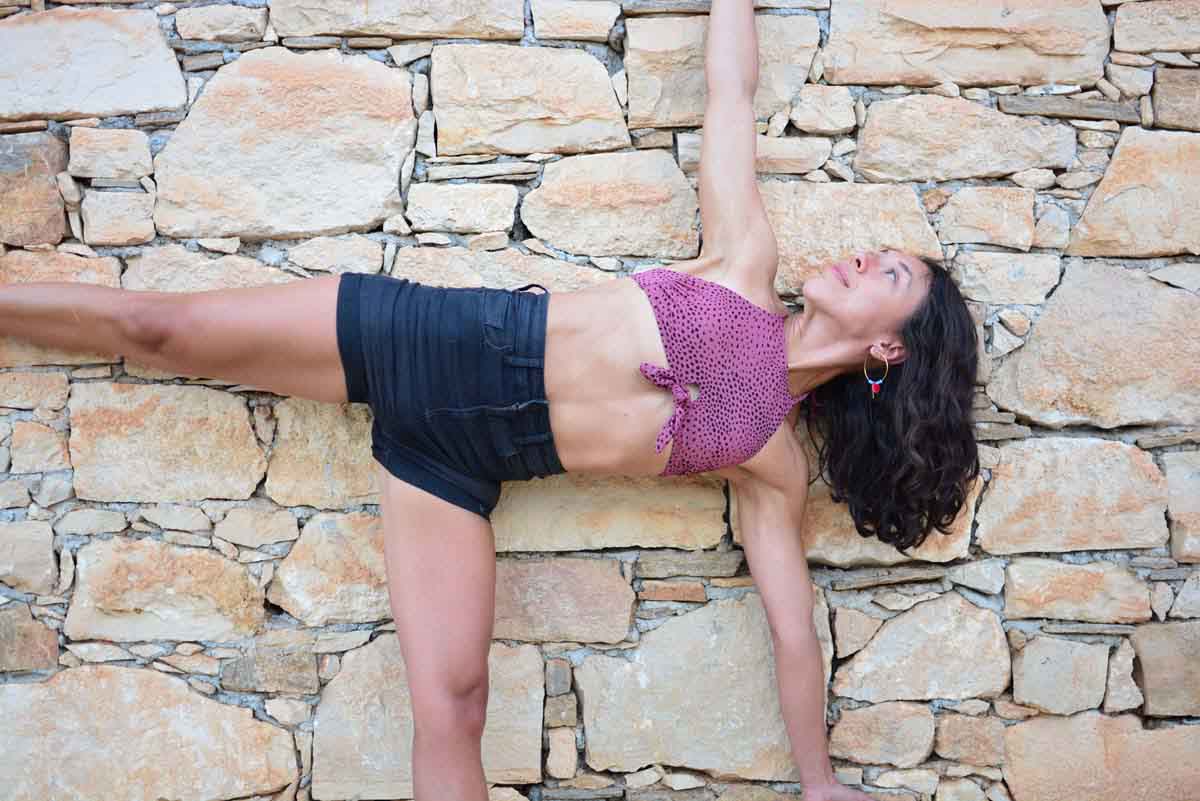
Ardha Chandrasana (Half Moon Pose) is a standing balance in which you stand on one leg, place one hand on the floor or a block, and lift the other leg level with the hips while the body opens sideways toward the ceiling. It works the standing leg, the outer hip and the core, and it trains balance with the body turned sideways, which most daily movement never asks for. Most people come into it from Trikonasana (Triangle Pose) and use a block under the hand for the first months.
Pose type: standing balance, side-facing. Level: intermediate, beginners with a block. Props: one block, and a wall if balance is new to you.
What Ardha Chandrasana means
The name joins three Sanskrit words: ardha, half, chandra, moon, and asana, seat or posture. Seen from the front, the arms and the lifted leg make a half circle around the standing leg, like a half moon. Be aware that the same name belongs to other poses in other schools. In Bikram yoga, Ardha Chandrasana is a standing side bend with the arms overhead, which we explain in Half Moon with Hands to Feet Pose. Some Indian schools use the name for a low lunge with a backbend. This guide is about the balancing pose, the form B.K.S. Iyengar taught in Light on Yoga (1966).
How to do Ardha Chandrasana, step by step
The instructions start on the right side, from Utthita Trikonasana (Extended Triangle Pose). Place a block by your right foot before you begin.
- Stand in Triangle Pose with the right foot turned out, the right hand on your shin or a block, and the left arm reaching up.
- Put your left hand on your left hip. Bend your right knee and look down at the floor in front of your right foot.
- Place your right fingertips, or the block, about 30 centimetres in front of the right foot and a little toward the little-toe side. The hand goes ahead of the foot, not beside it.
- Shift your weight into the right foot and the right hand. Step the left foot in a little, then lift it off the floor as you straighten the right leg. Lift slowly. It is a lever, and speed makes it harder to control.
- Bring the left leg up until it is level with the hip, parallel to the floor. Flex the left foot and point the toes forward, the same way your chest faces.
- Turn your chest and your left hip open toward the side, so the left hip sits over the right hip. Press out through the left heel.
- When you feel steady, reach your left arm straight up. The two arms make one line from the floor to the ceiling.
- Keep your gaze on the floor at first. When you are stable, turn your head and look forward, and later up at your top hand.
- Stay for 5 breaths, or 20-30 seconds. To come out, bend the right knee, lower the left foot back to the floor and return to Triangle Pose. Then do the left side.
Keep the standing knee straight but soft. If you tend to push the knee backward, keep a hair of a bend in it. A locked knee puts the load on the back of the joint instead of on the thigh muscles.

Benefits of Half Moon Pose
Half Moon trains balance where it is hardest: on one leg, with the body turned sideways and the eyes off the horizon. The muscles that keep you up are specific:
- Outer hip of the standing leg: gluteus medius and minimus hold the pelvis level so it does not sag toward the lifted leg. These are the same muscles that steady you with every step you take.
- Thigh, ankle and foot of the standing leg: the quadriceps keep the knee straight, and the small muscles around the ankle make constant corrections. You can feel them working.
- Lifted leg and back: the glutes, hamstrings and back muscles hold the leg up against gravity.
- Core: the obliques and deep abdominal muscles keep the torso from rolling down toward the floor.
- Stretch: the inner thigh and hamstrings of the standing leg lengthen, and the chest opens as the top arm reaches up.
Research on single-leg balance training in general supports better balance with regular practice. We have not found a study on Half Moon Pose on its own. Claims that it relieves stress or helps digestion come from the tradition and from studio culture, and nothing we have found tests them. Iyengar recommends the pose for people with weak legs, which fits what the pose asks of the standing leg. Our post on core strength in yoga explains the abdominal muscles in more detail.
Who should skip or modify Half Moon Pose
- Dizziness or low blood pressure: keep your gaze on the floor, and practise with your back against a wall.
- Neck pain: look down or straight ahead. Turning the head up is optional.
- Recent injury to the ankle, knee or hip of the standing leg: wait until you can stand on that leg without pain, and ask your physiotherapist.
- Pregnancy: balance changes as the body changes. Many teachers keep the pose in pregnancy with the back against a wall and a block under the hand. Follow the advice of your midwife or doctor.
- Hamstring strain: bend the standing knee a little and raise the block to its tallest height.
For more on practising without injury, read our 10 tips to avoid yoga injuries.
Common mistakes
- Hand beside the foot. If the bottom hand lands next to the standing foot, you tip forward. Place it about 30 centimetres ahead of the foot.
- Weight in the hand. The bottom hand steadies you. The standing leg carries you. Test it: can you lift the hand a centimetre off the block?
- Locked standing knee. Keep the thigh muscles working and the knee soft.
- Toes turned to the ceiling. When the lifted foot rolls up, the hip usually opens too far and the pelvis twists. Point the toes forward, like your chest.
- Chest turned to the floor. Without a block, many people fold down to reach the floor. Bring the floor up to you with a block and turn the chest open.
- Leg too high. Above hip height the lower back arches and the balance gets shaky. Level with the hip is the pose.
- Rushing the gaze. Looking up is the last step, not the first.
Preparatory poses
Half Moon asks for balance, strong outer hips and open hamstrings. These poses build each part:
- Utthita Trikonasana (Extended Triangle Pose): the same side-facing opening, with both feet on the floor.
- Utthita Parsvakonasana (Extended Side Angle Pose): the bent standing leg and the long line from heel to fingertips.
- Vrksasana (Tree Pose): the first standing balance, on one leg with the hip opening to the side.
- Virabhadrasana III (Warrior III): the same lifted leg, with the hips facing the floor.
- Utthita Hasta Padangusthasana (Extended Hand to Big Toe Pose): balance on one leg with the other leg out to the side.
Our hip-strengthening yoga exercises build the outer hip muscles that hold the pelvis level.
Follow-up poses
- Parivrtta Ardha Chandrasana (Revolved Half Moon): the twisted form, described below.
- Utkatasana (Chair Pose): Half Moon to Chair is a common transition in Vinyasa, and it asks for control on the way down.
- Parivrtta Trikonasana (Revolved Triangle): a twist on two feet that balances the side opening.
- Tadasana (Mountain Pose): stand on both feet for a few breaths between sides and let the standing leg rest.
Ardha Chandrasana variations
- With a block: the hand on a block at its lowest, middle or tallest height. The standard way to learn the pose.
- At the wall: stand with your back against a wall, or press the sole of the lifted foot into a wall behind you. Both take the fear of falling out of the pose so you can work on the shape.
- Hand hovering: lift the bottom hand a few centimetres off the floor and balance on the leg alone.
Parivrtta Ardha Chandrasana (Revolved Half Moon)
Here the hips face the floor and the chest turns the other way, toward the standing leg. On the right leg:
- From Tadasana, fold forward and place your fingertips or a block under your shoulders.
- Shift your weight into the right foot and lift the left leg back until it is level with the hip, toes pointing down.
- Place the left hand on the floor or block under the left shoulder and the right hand on your right hip.
- On an exhale, turn your belly and ribs to the right, and stack the right shoulder over the left.
- Reach the right arm up. Look down, or up if your neck is comfortable. Stay for a few breaths and come out the way you came in.

Baddha Parivrtta Ardha Chandrasana (Bound Revolved Half Moon)
A demanding bind. From Revolved Half Moon on the right leg, lean further forward so the right shoulder comes next to the right thigh. The lifted leg rises a little, which is fine. Thread the right arm back between the legs toward the outside of the right hip. Reach the left arm behind the back and let the hands meet. Keep the gaze on the floor.

Chapasana (Sugarcane Pose)
From Half Moon on the right leg, bend the left knee, reach back with the left hand and hold the left foot. Draw the foot toward the buttock or kick it into the hand to open the front of the left thigh and the chest. The bent leg and the arm make a bow shape. Keep the standing knee soft.

To practise the pose in a class, try Lizette's 60-minute Vinyasa class Block It Up (level 2-3), with a Half Moon to Chair sequence on blocks, or Step Into Balance, a 50-minute class for the outer hips and glutes. More classes are in our Vinyasa Flow library.
Frequently asked questions
What does Ardha Chandrasana mean?
Ardha Chandrasana means Half Moon Pose. In Sanskrit ardha means half, chandra means moon and asana means posture. In most yoga today it is the standing balance on one leg and one hand. In Bikram yoga the same name is used for a standing side bend.
What are the benefits of Half Moon Pose?
Half Moon Pose trains balance on one leg and strengthens the standing leg, the outer hip muscles that hold the pelvis level, and the core. It also stretches the hamstrings and inner thigh of the standing leg and opens the chest. Claims about stress relief and digestion come from tradition, not from studies.
Is Half Moon Pose good for beginners?
Yes, with a block under the hand and the back against a wall. Learn Tree Pose and Triangle Pose first. Many beginners fall out of Half Moon because the hand is too close to the foot or they look up too early.
Why do I keep falling out of Half Moon Pose?
Usually for one of three reasons: the bottom hand is beside the foot instead of about 30 centimetres ahead of it, the weight is in the hand instead of the standing leg, or the gaze moves up before you are steady. Use a block, look at the floor and build from there.
How long should you hold Half Moon Pose?
Start with 3-5 breaths on each side, about 20-30 seconds. Hold longer as the standing leg gets stronger. Come out while you still have control, not when you fall.
What is the difference between Half Moon in Bikram and in Hatha yoga?
In Bikram yoga, Ardha Chandrasana is a side bend on two feet with the arms overhead and the palms together. In Iyengar, Hatha and Vinyasa yoga it is the one-legged balance with the body turned to the side. Same name, different poses.
Which pose is called the queen of yoga?
Salamba Sarvangasana (Shoulderstand) is often called the queen of asanas, and Sirsasana (Headstand) the king. In Light on Yoga, Iyengar calls Headstand the king and Shoulderstand the mother of asanas. Read our guides to Shoulderstand and Headstand.