Virabhadrasana III (Warrior III): How to Do It Step by Step

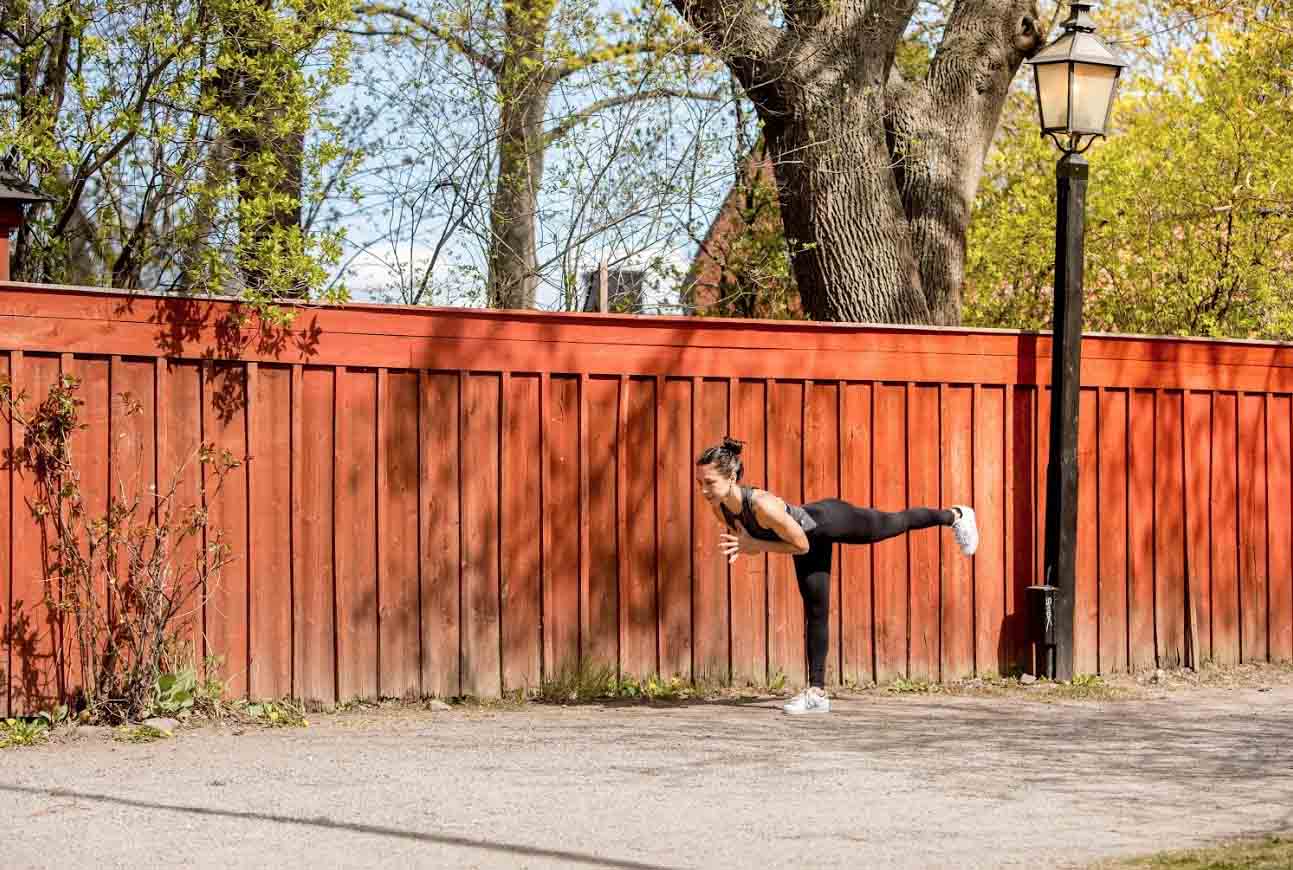
Virabhadrasana III (Warrior III) is a standing balance in which you stand on one straight leg and tip your torso forward until the body, the lifted leg and the arms form one long line, roughly parallel to the floor. It works the standing leg, the glutes and the back of the body, and it asks your ankle and hip to keep you steady on a single foot. Most people meet it in Vinyasa classes, often straight after Warrior I.
Pose type: standing, one-leg balance. Level: intermediate; beginners can do it with hands on a wall, a chair or two blocks. Props: none needed; blocks, a chair or a wall help while you learn.
What Virabhadrasana III means
The name joins three Sanskrit words: vira, hero or warrior, bhadra, auspicious or friend, and asana, seat or posture. Virabhadra is a fierce form of Shiva. In the Puranas, Shiva's wife Sati dies at the fire sacrifice of her father Daksha, who had insulted Shiva, and Virabhadra rises from Shiva's rage to storm the sacrifice. Many teachers tell the three Warrior poses as three moments of that story, with Warrior III as the warrior leaning forward, sword held out, at the moment he strikes.
The story is old. The poses are not. None of the Warriors appears in the medieval hatha texts such as the Hatha Yoga Pradipika. They show up in the 20th century, in the lineage of Krishnamacharya, and B.K.S. Iyengar's Light on Yoga (1966) made Virabhadrasana I, II and III widely known. The reading of the three poses as scenes from the myth is a modern teaching image, and a good one to hold in mind while you balance.
How to do Warrior III, step by step
There are two common ways in. From Virabhadrasana I (Warrior I), which is how Iyengar teaches it, or from a high lunge. The steps below start from a lunge, which is easier to learn.
- Stand in Tadasana (Mountain Pose) at the front of your mat. Step your left foot back into a high lunge, right knee bent over the ankle, back heel lifted.
- Bring your hands to your hips. Lean your chest forward over the front thigh so your weight moves into the right foot. Keep the back leg long and active.
- Press down through the whole right foot, the big toe mound and the heel both. On an exhale, start to straighten the right leg and let the left foot float off the floor.
- Keep lifting the back leg until it is about level with your hips, while your torso comes forward toward level with the floor. Your body pivots around the standing hip like a seesaw.
- Point the toes of the lifted foot straight down at the floor, so both hip points face the mat. Reach back through the lifted heel.
- When you feel steady, reach your arms forward, parallel to each other, palms facing in. Or keep the hands on your hips, or stretch the arms back along your sides.
- Keep your neck long: look at the floor a little in front of the mat, not straight ahead. Pick one point and let your eyes rest there.
- Stay for 3-5 breaths, up to 30 seconds. To come out, bend the standing knee and step the lifted foot back down into the lunge, or bring it forward to meet the standing foot. Repeat on the other side.
Leave a micro-bend in the standing knee if it tends to lock. A soft knee lets the thigh muscles do the work instead of the back of the joint.
Benefits of Warrior III
Warrior III is a strength pose disguised as a balance. Holding the torso and the leg out in a line means the back of the body works hard against gravity.
- Standing leg and hip: the quadriceps hold the knee straight, and the glutes on the outside of the hip, gluteus medius above all, keep the pelvis from dropping to one side. Studies measuring muscle activity have found single-leg poses like this one among the more demanding for the glutes.
- Lifted leg and back: the glutes, the hamstrings and the muscles along the spine lift the leg and hold the torso level.
- Ankle and foot: standing on one foot trains the small muscles and reflexes of the ankle that keep you upright.
- Core: the belly and the deep trunk muscles hold the ribs and pelvis in line, so the lower back does not sag. See core and yoga for more on this.
The standing leg also gets a hamstring stretch as the hips fold over it. You will often read that Warrior III tones the stomach and fixes your posture. Stronger trunk muscles help you hold your posture. No single pose changes the way you stand.
Who should skip or modify Warrior III
- Balance problems or dizziness: practise with both hands on a wall or the back of a chair, or skip the pose. Coming out quickly when you tip is part of the practice, but only when falling is safe.
- High blood pressure or heart conditions: keep the holds short, breathe steadily and do not hold your breath while you balance.
- Ankle, knee or hip injury on the standing side: skip it, or keep the lifted foot lightly on the floor until the joint can take your full weight.
- Lower back pain: keep the lifted leg lower, at hip height or below, and hands on blocks, so the back does not have to hold the full lever.
- Pregnancy: balance changes as the belly grows. Use a wall or a chair, or choose standing poses with both feet on the ground.
Our 10 tips to avoid yoga injuries cover the general rules.
Common mistakes
- Opening the hip of the lifted leg. The lifted hip rolls up toward the ceiling and the foot turns out. Point the toes at the floor and draw that hip down until both hip points face the mat.
- Locking the standing knee. The knee pushes backward into hyperextension. Keep a soft bend and lift the kneecap with the thigh muscles.
- Lifting the leg too high. A leg above hip height usually means the pelvis has twisted open or the back is arching. Lower it to hip height or below.
- Cranking the head up. Looking straight ahead compresses the back of the neck. Keep the gaze on the floor a little in front of you.
- Rounding the back. If you cannot reach the torso forward without rounding, bring your hands to blocks or a chair and lengthen from the tailbone to the crown.
- Holding your breath. A held breath makes the balance stiff. Keep breathing slowly through the nose.
Why Warrior III feels so hard
You balance on one foot with your weight far from the ground contact, on a long lever. Small shifts at the head or the lifted foot are magnified at the ankle. At the same time the back of the body holds a position it rarely holds in daily life. It is normal to wobble. Balance improves quickly with practice, because the nervous system learns which small corrections to make. A fixed gaze point helps: our guide to drishti, the yoga gaze, explains why.
Preparatory poses
- Vrksasana (Tree Pose): a simpler one-leg balance with the body upright.
- Utkatasana (Chair Pose): strength in the thighs and glutes, and the forward tilt of the torso.
- Anjaneyasana (Low Lunge): the lunge you come out of, and a stretch for the front of the back hip.
- Prasarita Padottanasana (Wide-Legged Forward Bend): lengthens the hamstrings for the fold over the standing leg.
- Virabhadrasana II (Warrior II): builds leg strength before you take the weight onto one foot.
Follow-up poses
- Ardha Chandrasana (Half Moon Pose): from Warrior III, open the hips and chest to the side.
- Urdhva Prasarita Eka Padasana (Standing Split): fold the torso down and lift the back leg higher.
- Dandayamana Janushirasana (Standing Head to Knee): another balance on one straight leg, with the stretch in the back of the lifted leg.
- Garudasana (Eagle Pose): a balance with a bent standing leg, good to pair with Warrior III.
After a round of balances, stand in Tadasana for a few breaths with both feet on the floor and let the standing legs rest.
Warrior III variations
- Hands on blocks or a chair: the torso and the lifted leg stay level while the hands take some weight. The best way to learn the shape.
- Hands on a wall: stand an arm's length from a wall, tip forward and press your palms into it at shoulder height.
- Back foot on a wall: stand a leg's length from a wall, facing away, and press the sole of the lifted foot into it. Good for feeling the line of the back leg.
- Hands on hips or arms back: less lever than arms forward, so easier to hold.
- Hands in prayer at the chest: a middle step between hips and arms forward.
- Arms overhead, from Warrior I: the classic Iyengar form, and the hardest, because the arms add length to the lever.
Amaranta's class Impossible Possible Warrior is a 50-minute ladder flow that builds from Utkatasana to a strong Warrior III, and Balance and Strength works the muscles that keep you steady on one leg.
Frequently asked questions
What is Warrior III pose?
Warrior III, Virabhadrasana III in Sanskrit, is a standing yoga balance on one straight leg. The torso tips forward and the other leg lifts behind you until body, leg and arms form a line roughly parallel to the floor. It strengthens the standing leg, the glutes and the back.
What are the benefits of Warrior 3 pose?
Warrior III strengthens the thigh and outer hip of the standing leg, the glutes, hamstrings and back muscles that hold the lifted leg and torso, and the core that keeps them in line. It also trains balance on one foot and stretches the hamstrings of the standing leg.
Why is Warrior 3 so hard?
You stand on one foot while your body forms a long lever out to the front and back, so every small shift has to be caught at the ankle and hip. The back of the body also has to hold its weight against gravity. Practise with hands on blocks or a wall, keep the gaze on one point, and it gets steadier within a few weeks.
How long should you hold Warrior III?
Start with 3-5 breaths on each side. As you get stronger, stay up to 30 seconds or around 8 breaths. Come out when your form falls apart, for example when the lifted hip rolls open or you start to hold your breath.
Is there a Warrior 4 pose?
Not in the classical system. Light on Yoga and most traditions have three Warrior poses. Some modern teachers and studios use the name Warrior IV for their own shapes, but they do not agree on which pose it is. Humble Warrior and Reverse Warrior are common additions to the family with their own names.
Is Warrior III good for beginners?
Yes, with support. Put your hands on blocks, a chair or a wall and lift the back leg only as high as you can keep both hips facing the floor. Build the full pose after you are steady in Tree Pose and Chair Pose.
What is the difference between Warrior III and Half Moon?
Both balance on one straight leg with the torso tipped forward. In Warrior III the hips and chest face the floor. In Ardha Chandrasana, Half Moon, the hips and chest open to the side, one hand usually rests on the floor or a block, and the other arm reaches up.
Practise it with a teacher
Over 600 online yoga classes and programs for $4.99 a month. Cancel any time.
Become a member