Padangustasana (Toe Stand Pose): How to Do It Step by Step

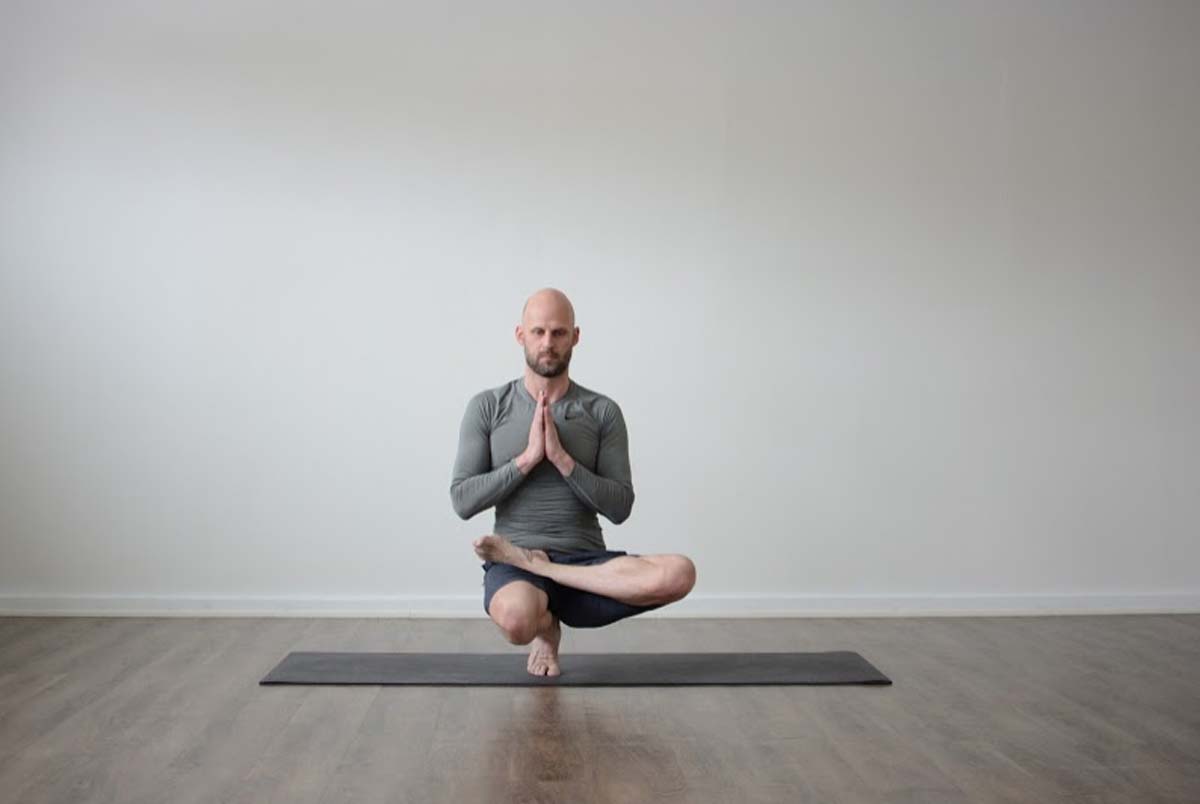
Padangustasana (Toe Stand Pose) is a balancing squat on the ball of one foot, with the other foot resting in half lotus on top of the standing thigh and the hands together in front of the chest. It is the last pose of the standing series in Bikram and Hot 26 yoga, right before the first Savasana. Most students find it hard, because it asks for open hips, knees that tolerate a deep bend and steady balance on a small base.
Pose type: standing balance, squat, hip opener. Level: intermediate. Props: none, a block under the hands while you learn.
What Padangustasana means
The name comes from Sanskrit: pada, foot, angustha, big toe, and asana, posture. In the Bikram sequence it is spelled Padangustasana and names this balance on the toes. Outside the hot room you will see other names for the same shape, such as Half Lotus Tiptoe Pose.
The name also causes a mix-up. In Ashtanga and most Hatha classes, Padangusthasana (Big Toe Pose) is a standing forward fold where you hold your big toes. Same root words, different pose. If a teacher says "Padangusthasana", check which class you are in.
How to do Toe Stand, step by step
Do Toe Stand when your hips and knees are warm. In a Bikram class it comes after the Tree Pose, and the Tree is how you enter it.
- Stand on your left leg. Lift your right foot with both hands and place it high on the left thigh, in half lotus, sole turned up. This is the Bikram version of Tree Pose (Vrksasana). Let the right knee point down toward the floor.
- Bring your palms together in front of your chest. Fix your gaze on one point on the floor a little in front of you and keep it there for the whole pose.
- Keep the standing leg straight and fold forward from the hips until your fingertips touch the floor in front of your foot.
- Now bend the standing knee. Lower your hips slowly, using your fingertips for balance, until you sit down on your left heel. The heel lifts as you go, and you end up on the ball of the foot.
- With the fingertips still on the floor, lift your chest and lengthen your spine. Let the right knee drop toward the floor so the thigh of the lotus leg moves toward horizontal.
- Bring one hand to your chest, then the other, and press the palms together in front of the sternum. Firm your belly. Breathe slowly.
- Stay for a few breaths. To come out, put the fingertips back on the floor, lift your hips off the heel, straighten the standing leg and rise up the way you came down. Release the lotus foot and change sides.
The order matters. Fold with a straight leg first, and bend the knee only once your hands are on the floor. Bending the knee first makes it take your full weight at a twisted angle.
Benefits of Toe Stand Pose
Toe Stand is a balance on a small base. Your weight sits on the ball of one foot, so the muscles of the foot, ankle and calf keep making small corrections the whole time.
- Feet and ankles: the toes, the arch and the calf of the standing leg work to hold you up on the ball of the foot.
- Balance: standing on one foot with a narrow base and a lowered centre of gravity trains your balance in a position few other poses use.
- Hips: the half lotus leg asks for outward rotation at the hip, as in Padmasana (Lotus Pose).
- Knees: the standing knee moves into full flexion, a range many adults rarely use.
- Focus: you cannot hold it while your mind wanders. Holding one gaze point, the drishti, is part of the pose.
Bikram's teaching attached medical claims to several poses in the series, this one included. No study supports them. What the pose trains is balance, foot strength and hip mobility, and that is enough.
Who should skip or modify Toe Stand
Both knees work hard here. The standing knee takes your weight in a full squat, and the lotus knee depends on how far the hip rotates outward. When the hip does not rotate far enough, the twist goes into the knee.
- Skip it with a knee injury, meniscus problem or knee surgery behind you, unless your physiotherapist has cleared deep squats and half lotus.
- Stay in the Tree if the lotus foot will not rest high on the thigh without pulling.
- Use a wall or a chair for one hand if your ankle is weak or you have sprained it recently.
- Take care when pregnant. Balance shifts as the belly grows, and a fall from a squat is still a fall. Practise near a wall or leave it out.
- Come out straight away with sharp pain in either knee or pain in the front of the ankle.
For more on practising without injury, read our 10 tips to avoid yoga injuries.
Common mistakes
- Bending the knee before the hands reach the floor. Fold first, then sit.
- Dropping onto the heel. Lower slowly with your fingertips taking some of the weight. Landing hard strains the knee.
- Lotus foot too low. A foot resting on the middle of the thigh twists the knee more. Bring it up toward the hip crease, or keep it in a lower Tree.
- Looking around. The moment your eyes leave the gaze point, the balance goes.
- Collapsing the chest. Lift the spine before you take the hands off the floor.
- Letting the standing heel roll out. Keep the weight over the big toe and the second toe.
Preparatory poses
- Vrksasana (Tree Pose): the entry to Toe Stand, and the place to build the half lotus leg.
- Malasana (Garland Pose): a deep squat on both feet, for the knee and ankle bend.
- Baddha Konasana (Bound Angle Pose): outward rotation in the hips.
- Ardha Padmasana (Half Lotus) seated: learn the lotus leg without having to balance.
- Utkatasana (Chair Pose): the tiptoe variation builds the calves and the balance on the balls of the feet.
The class Knees and Ankles Mobility works on the lower leg rotation that a deep squat needs.
Follow-up poses
- Savasana (Dead Body Pose): in the Bikram sequence, Toe Stand is followed by the first Savasana and then the floor series.
- Stand in Tadasana and shake out both legs before you move on, if you practise outside the fixed sequence.
Our overview of the 26 Bikram yoga poses shows where Toe Stand sits in the series. In Bikram it is one of the few poses done once on each side instead of twice.
Toe Stand variations
- Toe Stand with a block: keep the fingertips on a block or two until you find the balance.
- Toe Stand with the hands down: stay with the fingertips on the floor and skip the prayer hands.
- Squat on the toes of both feet: both feet down, heels lifted, sitting on the heels. The same balance without the half lotus.
- Tree only: stand in the Bikram Tree and practise the forward fold with a straight leg.
The Fierce Grace Classic sequence also ends its standing series with Toe Stand, after the Bikram Tree.
Lauren Matters' class Hot 26 Standing Series takes you through the standing series of the Bikram sequence, the part that finishes with the Tree and Toe Stand.
Frequently asked questions
What is the Toe Stand Pose in yoga?
Toe Stand, or Padangustasana, is a balance where you squat on the ball of one foot with the other foot in half lotus on the standing thigh and the palms together in front of the chest. It is the last pose of the standing series in Bikram and Hot 26 yoga.
What are the benefits of the Toe Stand Pose?
It trains balance on a narrow base and strengthens the toes, arch, ankle and calf of the standing leg. It also asks for outward rotation in the hip of the lotus leg and a full bend in the standing knee. Claims that it cures specific illnesses have no support in research.
Is Toe Stand bad for your knees?
It is demanding for both knees. The standing knee carries your weight in a full squat, and the lotus knee twists if the hip does not rotate far enough. Fold forward before you bend the knee, lower slowly, and stay in the Tree if the lotus foot will not rest high on the thigh.
How long should you hold Toe Stand?
Start with three to five slow breaths on each side and come out before your form breaks. In a Bikram class the pose is held for a short time and done once per side. Longer holds add load to the knees and do little for the balance.
What is the difference between Padangustasana and Padangusthasana?
In Bikram yoga, Padangustasana is the Toe Stand balance. In Ashtanga and most Hatha classes, Padangusthasana is Big Toe Pose, a standing forward fold holding the big toes. Both names come from the Sanskrit for foot and big toe, which is why they get mixed up.
What is the hardest yoga pose?
There is no agreed answer, because it depends on your body. Deep backbends, arm balances and full Lotus variations are often named. Toe Stand is one of the hardest in the Bikram series for most students, because it combines balance, a deep knee bend and a half lotus.

Former member