Vrksasana (Tree Pose): How to Do It Step by Step

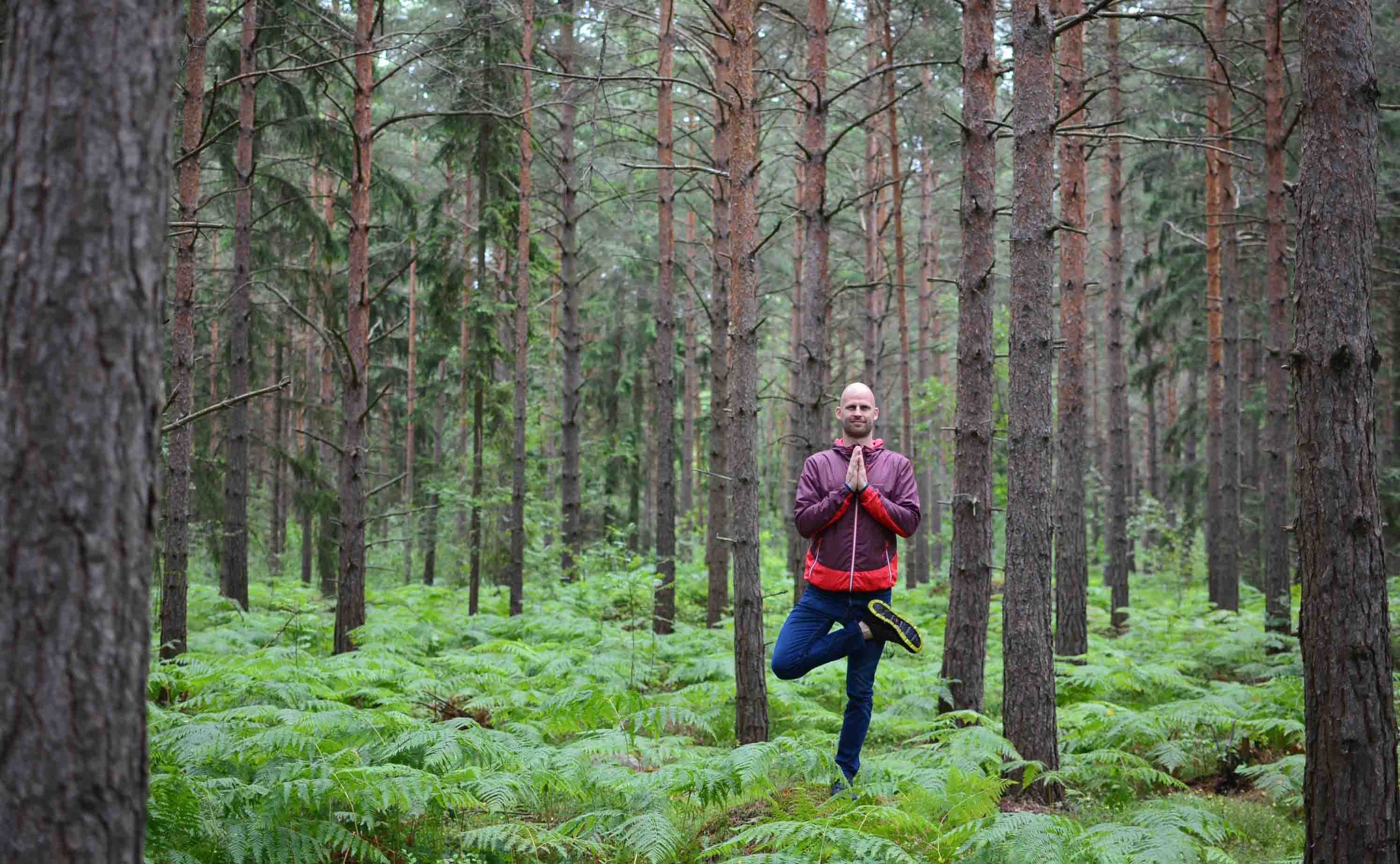
Vrksasana (Tree Pose) is a standing balance in yoga: you stand on one leg and place the sole of the other foot against the inner thigh or calf of the standing leg, with the knee turned out to the side. It trains balance, strengthens the standing foot, ankle and hip, and opens the inner thigh of the bent leg. It is one of the first balancing poses most beginners learn, because you can make it as easy or as hard as you need.
Pose type: standing balance, hip opener. Level: beginner. Props: none, a wall or a chair for support if you need it.
What Vrksasana means
The name comes from the Sanskrit vrksa (also written vriksha), tree, and asana, seat or posture. You will see it spelled Vrksasana, Vriksasana and Vrikshasana. They are the same pose. The image is simple: the standing leg is the trunk and the roots, the arms are the branches.
How to do Tree Pose, step by step
- Stand in Tadasana (Mountain Pose), feet together or hip-width apart, arms by your sides. Spread your toes and feel the weight on the heel, the ball of the big toe and the ball of the little toe.
- Shift your weight onto your left foot. Keep a small softness in the left knee so it does not lock backward.
- Bend your right knee and turn it out to the side. Take hold of the right ankle and place the sole of the foot on the inside of the left thigh, as high as it goes comfortably, toes pointing down. If it will not stay there, place the foot on the inner calf instead. Keep it off the side of the knee.
- Press the foot into the thigh and the thigh back into the foot with the same force. This two-way press is what holds the pose steady.
- Level your hips. The right hip tends to hike up and forward. Let it drop and draw it back a little, so the pelvis faces the front.
- Bring your palms together in front of your chest. If you feel steady, raise the arms overhead, shoulder-width apart or with the palms together, and keep the shoulders away from the ears.
- Fix your gaze on one point in front of you at eye level or on the floor a few metres ahead. Breathe slowly through the nose.
- Stay for 5-10 breaths. Lower the arms, release the foot back to the floor with control and stand in Tadasana for a breath. Then repeat on the other side.
Wobbling is part of the pose. The small movements in your foot and ankle are the muscles doing their work. If you fall out, come back in and continue.

Benefits of Tree Pose
The main thing Tree Pose trains is balance on one leg. With a narrow base, the body keeps correcting itself through small movements in the foot, ankle and hip, and practice makes those corrections quicker and smaller.
- Feet and ankles: the small muscles of the standing foot and the muscles around the ankle work the whole time you are in the pose.
- Hips: the gluteus medius on the side of the standing hip keeps the pelvis from dropping to the other side. You will feel it after a long hold.
- Inner thigh: the bent leg turns out from the hip, which stretches the inner thigh and groin of that leg.
- Attention: it is hard to balance while your mind wanders. Many people use the pose to practise holding their focus on one point and one breath.
Balance on one leg also matters as we get older. In a large study published in 2022, middle-aged and older adults who could not stand on one leg for 10 seconds had a higher risk of dying in the following years. That is an association, and it does not show that Tree Pose makes anyone live longer. It does show that one-leg balance is worth keeping, and Tree Pose is a simple way to practise it.
Who should skip or modify Tree Pose
Tree Pose is gentle, and the main risk is a fall.
- If you feel dizzy, or have low blood pressure, vertigo or an inner ear problem, practise next to a wall or a chair and keep your hands at your chest.
- If you are pregnant, your centre of gravity shifts. Use a wall for support, especially later in pregnancy.
- If you have a recent ankle, knee or hip injury on the standing side, ask your physiotherapist before you balance on it.
- If raising the arms makes your neck or shoulders tense, keep them at your chest or on your hips.
For more on practising without injury, read our 10 tips to avoid yoga injuries.
Common mistakes
- Foot pressing on the knee joint. Place the foot above or below the knee, never on its side.
- Hip pushed out to the side. When the standing hip sags outward, you hang in the joint instead of holding it. Draw the outer hip in toward the midline.
- Locked standing knee. Keep a micro-bend so the muscles, and not the back of the knee, carry you.
- Hiked hip on the bent leg. Let it drop until both hip bones are level.
- Chasing a higher foot. A foot on the calf with a steady pelvis is better than a foot in the groin with the hips twisted.
- Moving eyes. Choose one point and keep it. Looking around is the quickest way out of the pose.
Where teachers disagree: the foot and the knee
Almost every class says "never put your foot on your knee". Some anatomy teachers push back. They point out that the knee is not fragile and that the foot on the side of the knee is unlikely to injure a healthy joint. Both sides have a point. The knee is strong in bending and straightening, and weaker against a sideways push, which is what a foot pressing into its inner side creates. The press is also less stable, because the foot sits on a rounded surface. So the cue stays: place the foot above or below the knee. It costs nothing, and the pose is steadier.
Teachers also differ on how far to tuck the tailbone. The old advice was to tuck it firmly. Most teachers today ask for a neutral pelvis: a light lift of the lower belly, with the natural curve of the lower back left in place.
Where Tree Pose comes from
Tree Pose is often called ancient, and the evidence is thinner than that. Standing on one leg as an ascetic practice is old in India, and figures on one leg appear in temple carvings. The pose as it is taught today, with the foot on the inner thigh and the arms overhead, was made widely known through B.K.S. Iyengar's Light on Yoga (1966). It is not one of the core postures of the Hatha Yoga Pradipika.
Preparatory poses
- Tadasana (Mountain Pose): the standing foundation Tree Pose grows from.
- Baddha Konasana (Bound Angle Pose): opens the inner thighs and the outward turn of the hip, lying or seated.
- Virabhadrasana II (Warrior II): strengthens the legs with the front knee turned out, like the bent leg in Tree.
- Trikonasana (Triangle Pose): stretches the inner thighs and teaches you to keep the pelvis open.
Our guide to drishti, the yoga gaze, explains why a fixed point makes such a difference in balancing poses.
Follow-up poses
- Garudasana (Eagle Pose): another one-leg balance, with the legs and arms wrapped.
- Ardha Chandrasana (Half Moon Pose): balance on one leg with the body turned to the side.
- Virabhadrasana III (Warrior III): balance with the torso and lifted leg level with the floor.
- Dandayamana Janushirasana (Standing Head to Knee): a harder balance that adds a hamstring stretch.
Tree Pose variations
- Kickstand Tree: the heel of the bent leg rests on the ankle of the standing leg, toes on the floor. The easiest version.
- At the wall: stand with your back or one side close to a wall and touch it when you need to.
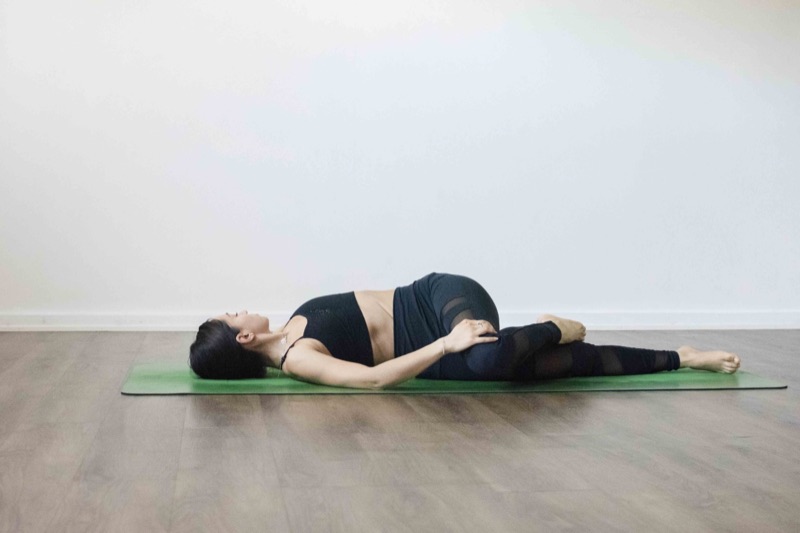
- Lying down: lie on your back and make the shape on the floor, with the sole against the inner thigh. Good for checking a level pelvis and a long spine without the balance.
- Swaying tree: with the arms overhead, lean the upper body a little to one side, then the other, while the hips stay over the standing foot.
- Half Lotus Tree: the top of the foot rests high on the opposite thigh, as in Half Lotus. Only if Half Lotus is comfortable for your knee when seated.
- Eyes closed: without a point to look at, the feet and inner ear have to do all the work. Try it for three breaths, close to a wall.
The old root lock cue still helps some students: a light lift of the pelvic floor and the lower belly. Read more in our guide to Mula Bandha, the root lock.
To practise Tree Pose in a full class, try Balance and Strength, 35 minutes of Vinyasa for the hips, inner thighs, calves and core that keep you steady, or Stand Strong, standing postures for beginners from the feet up.
Frequently asked questions
What is the real name of Tree Pose?
The Sanskrit name is Vrksasana, from vrksa, tree, and asana, posture. It is also spelled Vriksasana or Vrikshasana. All three names refer to the same standing balance on one leg.
Which asana is known as Tree Pose?
Vrksasana is known as Tree Pose. You stand on one leg with the sole of the other foot on the inner thigh or calf, palms together at the chest or arms raised overhead like branches.
What is Tree Pose good for?
Tree Pose trains balance on one leg, strengthens the foot, ankle and the muscles on the side of the standing hip, and stretches the inner thigh of the bent leg. It also asks you to hold your attention on one point and one breath.
How do you do Tree Pose as a beginner?
Stand next to a wall. Put your weight on one foot, turn the other knee out and rest that heel on the standing ankle, toes on the floor. Hands at the chest, eyes on one point. When that is steady, move the foot to the calf, and later to the inner thigh.
Who should not do Tree Pose?
Almost anyone can do some version of it. If you get dizzy, have vertigo or low blood pressure, are pregnant or have a fresh injury in the standing leg, practise at a wall or a chair, keep the arms low, or ask your physiotherapist first.
Why can't I balance in Tree Pose?
Usually the gaze moves, the standing hip sags out to the side, or the foot is placed higher than the hips allow. Fix your eyes on one point, press foot and thigh into each other and lower the foot to the calf. Balance also changes from day to day with sleep and fatigue.
How long should you hold Tree Pose?
Five to ten slow breaths on each side is a good start, about 30-60 seconds. Hold both sides for the same time, even if one side is steadier.
Can you put your foot on your knee in Tree Pose?
Place it above or below the knee instead. A foot on the side of the knee pushes the joint sideways, the direction it resists least, and the rounded surface makes the pose less stable. The inner calf works well until the hip opens enough for the thigh.