Ardha Bhekasana (Half Frog Pose): How to Do It Step by Step

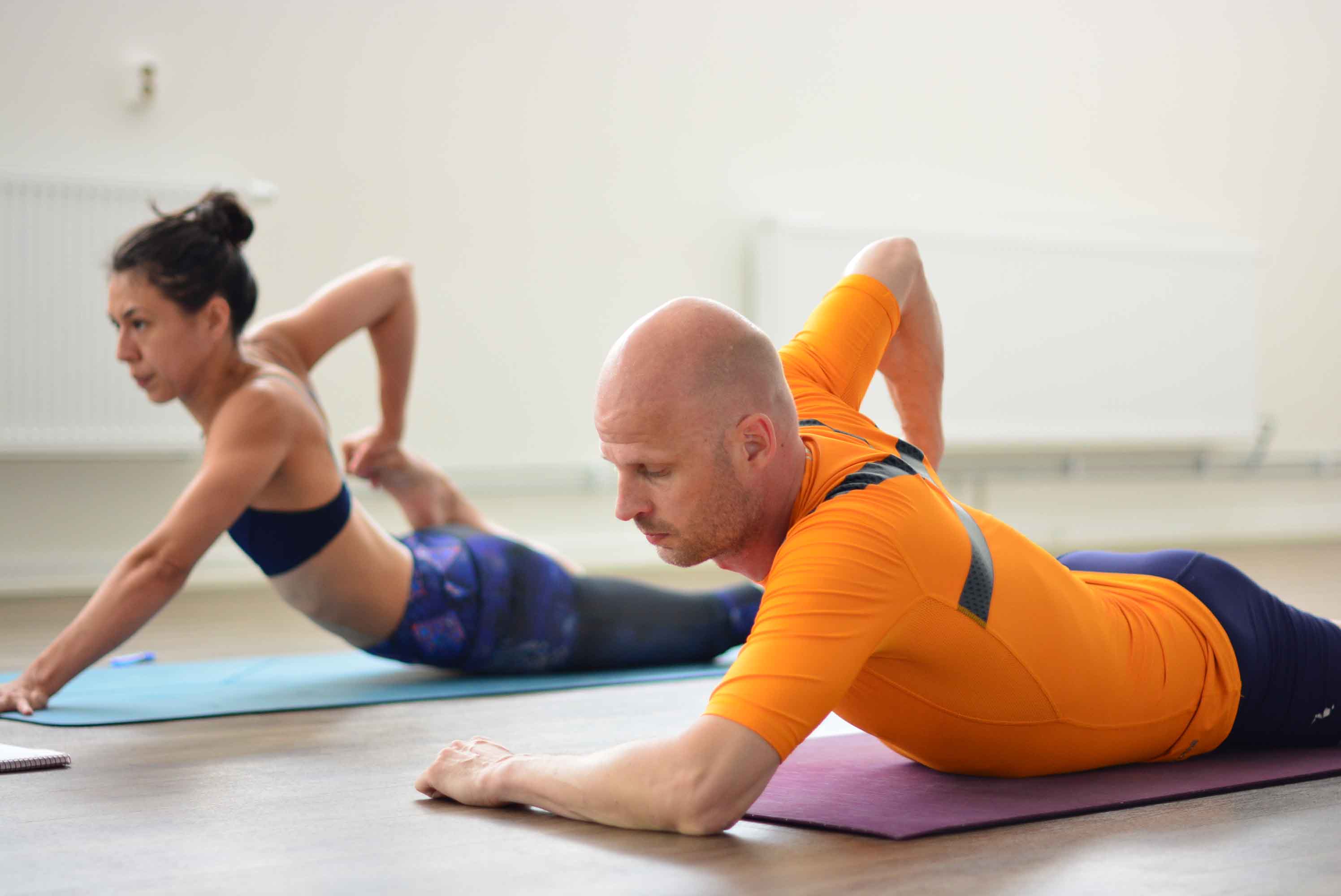
Ardha Bhekasana (Half Frog Pose) is a prone yoga pose: you lie on your belly, prop yourself up on one forearm, bend the other knee and press that foot down beside the hip with your hand. It stretches the front of the thigh and the hip flexor on the bent-leg side while the upper back works in a low backbend. It is the one-legged step toward full Bhekasana (Frog Pose), where both feet are pressed down at once.
Pose type: prone backbend, quadriceps and hip flexor stretch. Level: beginner to intermediate. Props: a strap if you cannot reach your foot, a folded blanket under the hips or the forearm if the floor is hard.
What Ardha Bhekasana means
The Sanskrit name has three parts: ardha, half, bheka, frog, and asana, seat or posture. In full Bhekasana both knees are bent and both hands press the feet down, and the bent legs and lifted elbows look like a frog crouched to jump. Since only one leg is bent here, the pose is also called Eka Pada Bhekasana, One-Legged Frog Pose.
Do not mix it up with the Frog Pose you meet in Yin yoga. That one, often called Mandukasana, is a wide-kneed hip opener done on all fours, with the chest lowered toward the floor. Same animal, different pose.
How to do Half Frog Pose, step by step
Warm up the thighs and the spine first. A few rounds of Bhujangasana (Cobra Pose) and a low lunge are enough.
- Lie on your belly with your legs straight and hip-width apart. Place your elbows under your shoulders and lift your chest into Sphinx Pose, forearms parallel.
- Press your pubic bone lightly into the floor and draw your belly in. This keeps the lower back long before the leg does anything.
- Shift your weight onto your left forearm. Turn it slightly inward so the chest stays square to the front of the mat.
- Bend your right knee and bring the heel toward your right buttock. Reach back with your right hand and hold the top of the foot.
- Turn the hand so your fingers point forward, the same way as your toes, with the heel of the hand on the top of the foot. Your elbow now points up toward the ceiling.
- Press the foot down and slightly out, so the heel moves beside the hip and not onto the buttock. Go only as far as the knee is comfortable. You should feel a stretch along the front of the right thigh.
- Keep both hip points on the floor and lift your chest forward and up, shoulders away from the ears. Breathe slowly through the nose for 30 seconds to a minute.
- Release the foot slowly, straighten the leg and rest for a breath with your forehead on your hands. Then do the left side.
Let the foot go slowly. A quad that has been held in a deep stretch does not like being snapped straight.
Benefits of Half Frog Pose
This pose puts the knee in full flexion and the hip in extension at the same time. That is the combination that stretches the whole length of the front thigh, including the rectus femoris, the one quad muscle that crosses both the hip and the knee.
- Front of the thigh: a long stretch of the quadriceps, stronger than most standing quad stretches because the hip stays extended against the floor.
- Hip flexors: with the pelvis pressed down, the front of the hip lengthens too. Our guide to the hip flexors and psoas explains why that matters after a day in a chair.
- Upper back and chest: propping up on the forearm works the muscles along the spine and opens the front of the chest and shoulder on the bent-leg side.
Runners and cyclists often like it, because both sports shorten the front of the thigh over hours of repetition. Older descriptions of the pose, including our own earlier version of this page, credit it with better digestion and stronger knees. There is no study behind either claim, so we have left them out.
Who should skip or modify Half Frog Pose
The knee takes the most load in this pose. When the thigh is tight, the hand can press the foot further than the knee joint wants to go.
- Knee injuries: skip the hand press if you have a meniscus or ligament injury, or knee surgery behind you, unless your physiotherapist has cleared deep knee bending. A strap around the foot, held loosely, gives you the thigh stretch with less pressure on the joint.
- Sharp pain in the knee: come out. A stretch in the thigh is what you want. Pain in the joint is not.
- Lower back pain: stay on the forearm, keep the chest low, and draw the belly in so the stretch goes into the hip and not into the lumbar spine.
- Shoulder injury: the turned hand and lifted elbow put the shoulder in internal rotation. Use a strap instead.
- Pregnancy: lying on the belly becomes uncomfortable and is not advised later in pregnancy. Stretch the quads in a low lunge or on your side instead.
More on practising without injury in our 10 tips to avoid yoga injuries.
Common mistakes
- Heel pressed onto the buttock. Guide it beside the hip, slightly outward. Pressing straight down onto the buttock often twists the knee.
- Hip lifting off the floor. When the bent-leg hip lifts, the stretch leaves the hip flexor. Press both hip points down, even if the foot goes less far.
- Chest collapsing toward the floor. Keep the supporting forearm active and lift the breastbone forward.
- Shoulder hunching. The shoulder of the pressing arm creeps up toward the ear. Draw it back and down.
- Pulling with force. Press gradually on the exhale and let the thigh give way over several breaths.
Preparatory poses
- Bhujangasana (Cobra Pose): the same prone position and the same lift through the upper back.
- Salabhasana (Locust Pose): strengthens the back body you use to hold the chest up.
- Anjaneyasana (Low Lunge): opens the hip flexor of the back leg.
- Supta Vajrasana (Fixed Firm Pose): a deep quad stretch with both knees bent, similar to Supta Virasana.
- Setu Bandha Sarvangasana (Bridge Pose): extends the hips with the knees bent.
Follow-up poses
- Bhekasana (Frog Pose): both knees bent, both hands pressing the feet, chest lifted.
- Dhanurasana (Bow Pose): holds both feet from behind and lifts the chest and thighs.
- Eka Pada Rajakapotasana (One-Legged King Pigeon): in the full form, the back foot is drawn toward the head, the same thigh stretch taken much further.
- Adho Mukha Svanasana (Downward-Facing Dog): lengthens the back of the legs and the spine after a prone backbend.
After backbends, rest in Balasana (Child's Pose) for a few breaths before moving on.
Half Frog Pose variations
- With a strap: loop a strap around the ankle and hold it over your shoulder. The foot moves toward the hip without the wrist turn.
- Supported: lie with a folded blanket or a bolster under the chest and belly. Useful when the arms tire before the thigh has let go.
- Straight-arm version: push up onto the straight supporting arm, as in Cobra, for a deeper backbend.
- Side-lying: lie on your side and draw the top heel toward the buttock. The easiest version for the knees and the lower back.
For the same muscles in long holds, try the class Yin Psoas: 45 minutes for the psoas, hip flexors and quads with a bolster and a block.
Frequently asked questions
What is Half Frog Pose good for?
Half Frog Pose stretches the quadriceps and the hip flexor of the bent leg, and it works the upper back as you hold the chest up on one forearm. It suits people with tight thighs from running, cycling or long hours of sitting.
How do you do Ardha Bhekasana?
Lie on your belly and come up onto your forearms. Shift your weight onto the left forearm, bend the right knee and hold the top of the right foot with the right hand, fingers pointing forward. Press the heel down beside the hip, keep both hips on the floor and breathe for 30 seconds to a minute. Change sides.
Who should not do Frog Pose?
Skip or modify Bhekasana and Half Frog Pose if you have a knee injury or knee surgery behind you, acute lower back pain, a shoulder injury, or if you are pregnant. Use a strap or a side-lying quad stretch instead, and stop if you feel pain in the knee joint.
What is the difference between Half Frog and Frog Pose?
In Half Frog Pose one knee is bent and one arm supports the chest. In full Frog Pose, Bhekasana, both knees are bent and both hands press the feet down, so the chest has to lift on the strength of the back alone. Half Frog lets you work one side at a time.
Is Half Frog Pose the same as Frog Pose in Yin yoga?
No. The Yin Frog Pose, often called Mandukasana, is done on all fours with the knees wide apart and stretches the inner thighs. Ardha Bhekasana is done lying on the belly and stretches the front of the thigh. They share an animal name and little else.
Why does Half Frog Pose hurt my knee?
Usually because a tight thigh makes the hand push the foot further than the knee wants to bend, or because the heel is pressed straight onto the buttock. Guide the heel beside the hip, press less, or use a strap. If the pain is sharp or stays after the pose, stop and have the knee checked.
Practise it with a teacher
Over 600 online yoga classes and programs for $4.99 a month. Cancel any time.
Become a member