Fierce Grace Classic: The Hot Yoga Sequence, Pose by Pose


Fierce Grace Classic is the entry-level class in Fierce Grace, the hot yoga system Michèle Pernetta built in London after she brought Bikram Yoga to the UK in 1994. It keeps the backbone of the Bikram series (standing poses, balances, spine strengtheners, a seated finish) and adds core work, hip openers and a few upper body poses. Fierce Grace lists it at 75 or 90 minutes, for all levels, in a heated room.
Class card: hot yoga, all levels and beginners, 75 or 90 minutes, no props. Bring a mat, a towel and water.
What Fierce Grace is
Michèle Pernetta opened the first Bikram studio in London in 1994 and taught the 26-pose Bikram series for years. She later left the Bikram brand and built her own system under the name Fierce Grace. The studios still run in London, and the method is taught through their own teacher training.
The idea is a family of classes that share the same core poses. Each class leans a different way: one slow and deep, one strong and fast, one for the hips and lower back. Fierce Grace describes its classes as a blend of Hatha yoga, Bikram and Ashtanga. You can see the Bikram roots in the Classic sequence below. Many pose names are the Bikram names, and the order follows the same logic: standing work while you are fresh, floor work once you are warm.
If you know the 26 Bikram yoga poses, most of the first half will feel familiar. The additions come in the floor series: pigeon, happy baby, plank, dolphin, ab curls, a straddle and a cobbler.
The Fierce Grace Classic sequence
This is the Classic sequence as it was taught when we first wrote this post in 2019. Teachers adapt it, and Fierce Grace updates its classes, so treat it as a map of the class, not a fixed script.
Warm-up and standing series
- Standing deep breathing
- Half moon, feet apart. The Bikram version is a side bend with both arms overhead, not the balance Ardha Chandrasana (Half Moon Pose) from other styles.
- Backbend, feet apart
- Hands to feet, feet apart
- Half moon, feet together
- Backbend, feet together
- Hands to feet, feet together
- Awkward pose in three parts
- Chair pose, feet and knees together. Close to Utkatasana (Chair Pose).
- Twisted chair pose
- Chair table top
- Garudasana (Eagle Pose)
- Standing pigeon
- Standing big toe pose
- Standing head to knee pose
- Standing bow pulling pose, outside grip
- Standing bow pulling pose, inside grip
- Balancing stick
- Airplane
- Standing separate leg stretching A
- Standing separate leg stretching C, fingers interlaced behind the back
- Triangle, Bikram version with the front knee bent
- Triangle with the front leg straight
- Bound revolved side angle pose
- Standing separate leg head to knee
- Tree, Bikram version
- Toe stand
The standing series is where the heat and the effort are highest. The balances come in pairs of sides, so you spend long stretches on one leg. Your standing knee stays straight but not locked in most of them, and that detail matters more in a hot room, where the joints feel looser than they are.
Floor series
- Pavanamuktasana (Wind-Removing Pose)
- Reclined pigeon
- Happy baby
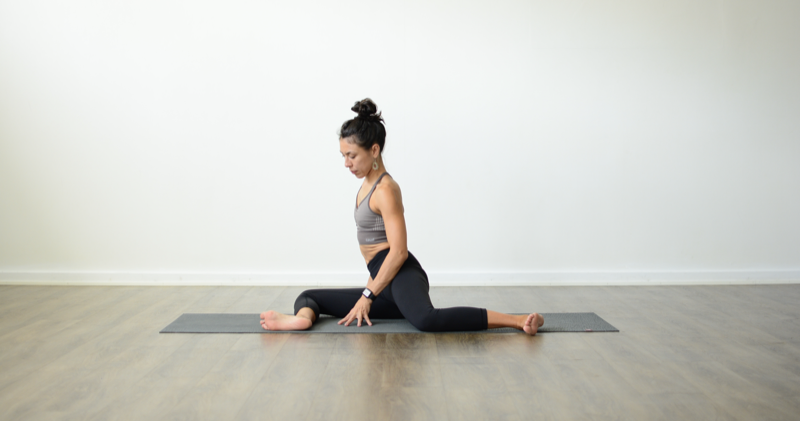
- Pigeon
- Bhujangasana (Cobra Pose)
- Rattlesnake
- Reaching locust, or spine balancing
- Gondola
- Dhanurasana (Bow Pose), outside grip
- Bow, inside grip
- Plank pose
- Dolphin pose
- Foot opening with a shoulder stretch
- Fixed firm pose
- Ab curls
- Criss cross
- Half tortoise
- Ustrasana (Camel Pose)
- Head to knee
- Half cow
- Spine twist
- Stretching
- Cobbler
- Straddle
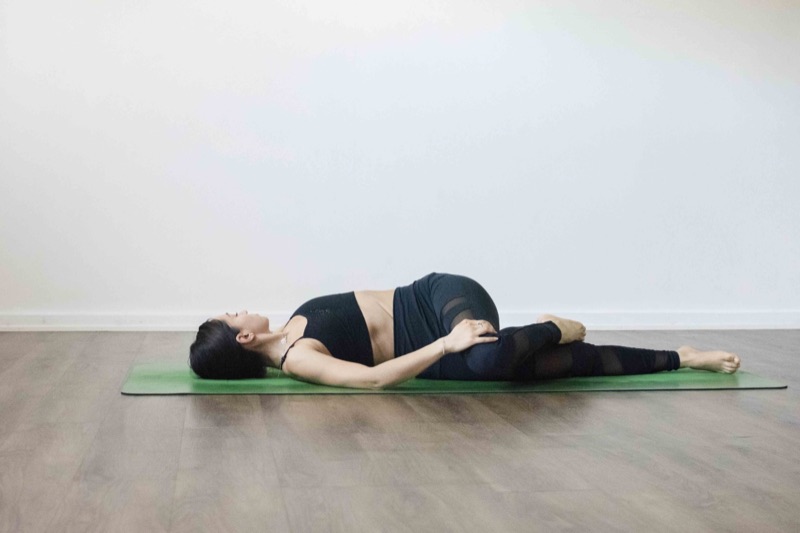
- Supine spine twist
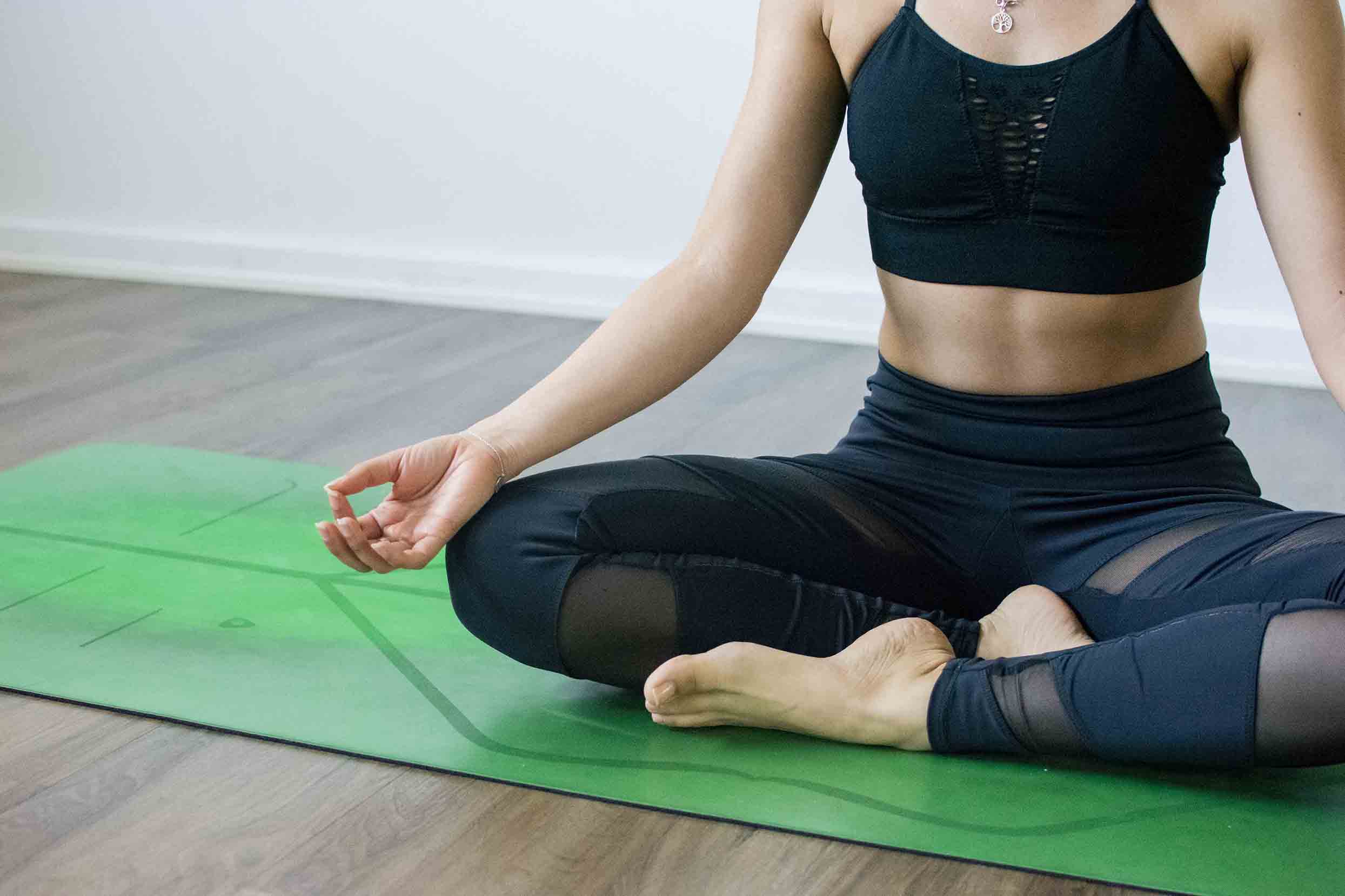
- Kapalabhati in Lotus or Half Lotus
- Savasana (Dead Body Pose)
The floor series runs in waves. Backbends on the belly (cobra, locust, bow) build heat along the back of the body. Plank, dolphin and the ab curls work the front. Then the hips open in pigeon, cobbler and straddle, and the class slows down toward the breath and Savasana.
How Classic differs from Bikram
Bikram Yoga is one fixed class: 26 poses and two breathing exercises, 90 minutes, the same words from the teacher every time. Fierce Grace Classic keeps that order for most of the standing series and changes the floor.
- More core and upper body. Plank, dolphin, ab curls and criss cross. Bikram has almost no arm strength work.
- More hip opening. Reclined pigeon, pigeon, happy baby, cobbler and straddle.
- Two lengths. 75 or 90 minutes, where Bikram is always 90.
- Teachers can adapt. Fierce Grace teachers are trained to give modifications, where the Bikram format is fixed.
For a wider look at heated classes, see our guide to hot yoga styles: Bikram, Barkan, CorePower, Baptiste and Moksha.
What the class works
A long session of standing balances builds strength in the legs, feet and the muscles around the hips. You hold one leg steady while the other one moves, and that is balance training in its plainest form. The belly-down backbends work the muscles along the spine. The core block works the abdominals and the shoulders. The seated poses at the end stretch the hamstrings, the inner thighs and the hips.
Heat changes how the class feels. Muscles warm up faster, you sweat a lot, and your heart rate climbs more than it would in the same poses in a cool room. That makes the class feel harder. It does not make the stretch safer.
Where the claims disagree
The old version of this post repeated some of the marketing around hot yoga. Here is what holds up and what does not.
- "Ancient principles plus cutting-edge research." The sequence comes from Bikram's 1970s series and Pernetta's own teaching experience. That is a practical tradition, a few decades old. We have not seen published research on the Fierce Grace sequence itself.
- Heat and flexibility. Studio teachers say heat lets you go deeper. Warm muscles do move more easily. The risk is the same one: you can go past the range your joints control. Research on heated yoga is small and mixed, and the studies we know of found hot and room-temperature classes gave similar results for most measures.
- Sweat. You lose water and salt. The liver and kidneys clear the body. Sweating more does not add to that.
- How many classes. Our 2019 post said eight classes, a quote in it said five, and the Fierce Grace site today lists twelve. The system has grown and changed, which is why we do not give a fixed list here.
Who should skip or modify
- Pregnancy. Most guidance advises against hot yoga in pregnancy because of the raised body temperature. Talk to your midwife or doctor.
- Heart conditions, blood pressure problems or a history of fainting. Ask your doctor before a heated class.
- Knee injuries. Skip the full Lotus for Kapalabhati. Sit cross-legged or on your heels instead.
- Lower back pain. Take the backbends small. In camel, keep your hands on your lower back.
- Your first class. Stay in the room, drink before class, and sit down when you feel dizzy. Nobody will mind. Our guide on what to wear to hot yoga covers the rest.
Yogateket does not stream Fierce Grace classes. The closest thing on the site is the full 60-minute Hot 26 class with Lauren Matters, the Bikram series that Classic grew out of.
Frequently asked questions
What is Fierce Grace yoga?
Fierce Grace is a hot yoga system created by Michèle Pernetta in London. It grew out of the Bikram series and adds core work, hip openers and upper body strength. It is taught as a family of classes that share the same core poses, each with a different pace and focus.
What is the Fierce Grace Classic class?
Classic is the entry-level class in the system. It follows the Bikram standing series closely, then adds plank, dolphin, ab work and hip openers on the floor. Fierce Grace lists it at 75 or 90 minutes, for all levels and beginners.
Who founded Fierce Grace?
Michèle Pernetta. She opened the first Bikram Yoga studio in London in 1994 and later built Fierce Grace as her own system, with its own classes and teacher training.
Is Fierce Grace Classic good for beginners?
Yes. It is the class Fierce Grace itself points beginners to. The heat is the hard part. Take breaks, drink before class, and sit down when you need to.
How is Fierce Grace different from Bikram yoga?
Bikram is one fixed 26-pose class of 90 minutes. Fierce Grace keeps much of the Bikram standing series and adds core, arm and hip work, offers several classes with different focus, and trains teachers to give modifications.
What should I bring to a hot yoga class?
A mat, a large towel to lay over it, a water bottle and light clothes that you can sweat in. Eat lightly two hours or more before class.
Practise it with a teacher
Over 600 online yoga classes and programs for $4.99 a month. Cancel any time.
Become a member