Ardha Kurmasana (Half Tortoise Pose): How to Do It Step by Step

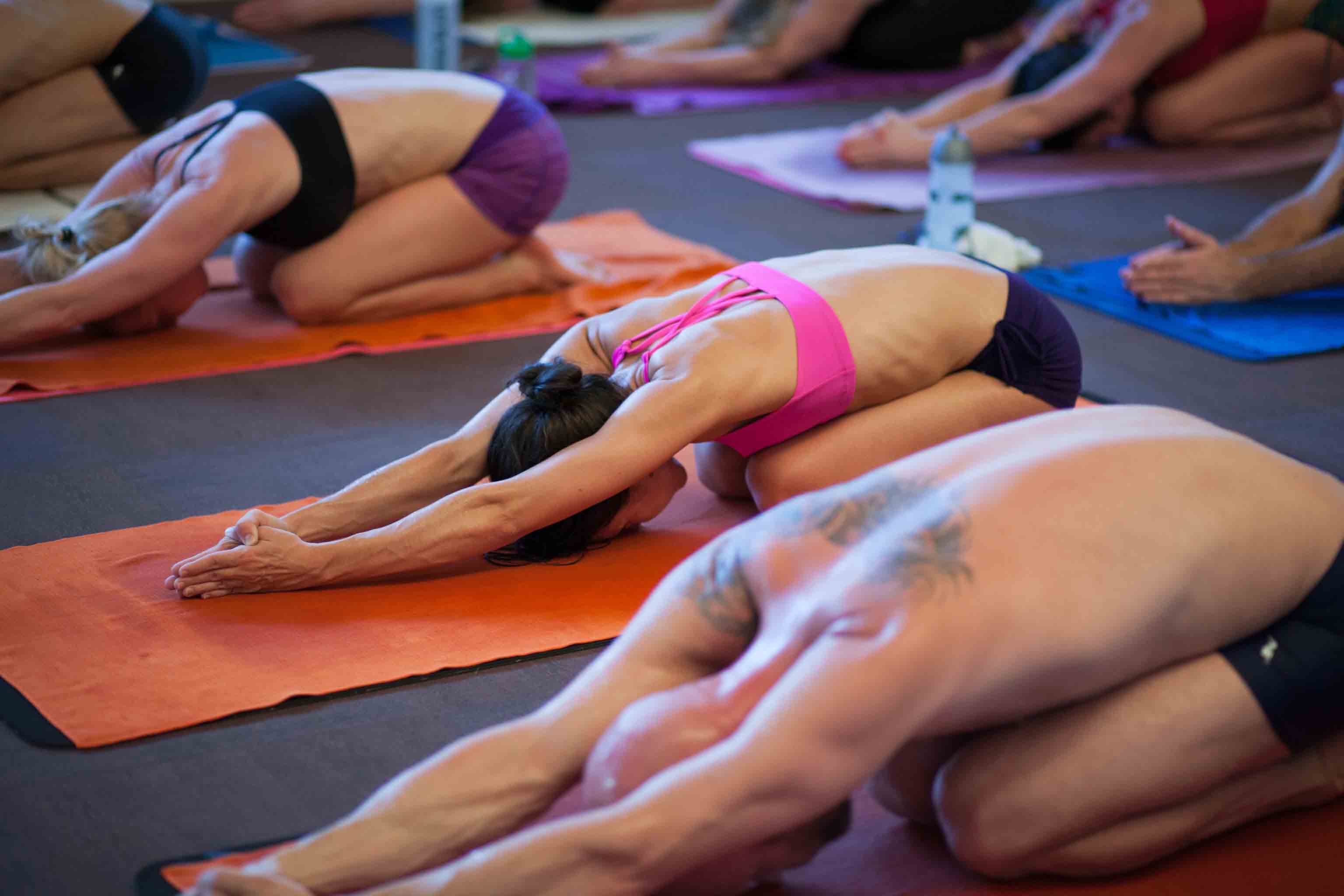
Ardha Kurmasana (Half Tortoise Pose) is a kneeling forward bend: you sit on your heels, stretch your arms overhead with the palms together and fold forward until the little fingers and the forehead rest on the floor. It is one of the 26 poses of the Bikram (Hot 26) sequence, where it comes between Supta Vajrasana and Ustrasana. It lengthens the back, the sides of the waist and the shoulders, and it gives the spine a rest between two backbends.
Pose type: kneeling forward bend, resting pose. Level: beginner. Props: none, or a folded blanket under the knees.
What Ardha Kurmasana means
The name joins three Sanskrit words: ardha, half, kurma, tortoise, and asana, seat or posture. Folded over the knees with the arms stretched out, the body looks like a tortoise with its head drawn in under the shell. Kurmasana, the full Tortoise Pose, is something else: a seated pose with the legs wide and the arms threaded under the knees, from the Ashtanga primary series. The two share a name and a rounded shape. They do not share much else.
The half version is best known from Bikram Choudhury's sequence of 26 Bikram yoga poses, put together in the 1970s. The shape is older: kneeling folds with the arms forward appear in many Hatha schools, sometimes under other names such as Shashankasana, the hare or moon pose.
How to do Ardha Kurmasana, step by step
- Kneel with your knees and feet together and sit back on your heels. The tops of the feet rest flat on the floor.
- Bring your palms together and stretch your arms straight up. Cross the thumbs, lock the elbows and let the upper arms come close to your ears.
- Breathe in and lengthen up through the fingertips. Breathe out and fold forward from the hips, keeping the arms beside the ears and the back long. Move slowly, so the muscles along the spine lower you rather than gravity.
- Let the little fingers touch the floor first, then the rest of the hands and wrists. Keep reaching forward as far as you can.
- Rest the forehead on the floor, chin a little away from the chest, so the back of the neck stays long. Keep your hips down on your heels.
- Stay for 20 seconds, or 5 to 8 slow breaths through the nose. With each breath, reach the hands a little further forward and draw the hips back.
- To come up, press the arms toward the ears, firm the belly and lift the torso back to kneeling with a straight back, the same way you came down. Lower the arms.
In a Bikram class the pose is done twice. Between the two sets many teachers have you rest in Savasana (Corpse Pose).
Benefits of Half Tortoise Pose
The pose is a long stretch in two directions at once: the hands pull forward, the hips pull back. What you feel is along that line.
- Back and sides: it lengthens the muscles along the spine and the latissimus dorsi, the broad muscles that run from the lower back to the upper arms.
- Shoulders: the arms stay overhead with locked elbows, which takes the shoulder joints to full flexion and stretches the underside of the upper arm.
- Knees and ankles: sitting on the heels bends the knees fully and stretches the tops of the feet.
- A rest for the spine: in the Hot 26 sequence it follows Supta Vajrasana and comes before Camel, so the back folds forward between two deep backbends.
Many people find the pose calming. The forehead rests on the floor, the belly rests on the thighs and the breath slows down, much as in Balasana (Child's Pose).
Older texts on Bikram yoga, including our own earlier version of this post, list more: extra blood to the brain, better memory, relief from migraines, better digestion, a balanced Manipura chakra. None of these have been studied for this pose. The head sits only a little below the heart, and the brain keeps its own blood flow steady in almost any position. We leave those claims out.
Who should skip or modify Half Tortoise Pose
- Knee problems: if sitting on your heels hurts your knees, put a folded blanket between the calves and the thighs, or skip the pose and fold forward from a chair.
- Shoulder injury: if the arms cannot go overhead without pain, bend the elbows and rest the forearms on the floor, or place the hands beside the knees.
- Pregnancy or a large belly: open the knees wide, keep the big toes together and fold between the thighs.
- High blood pressure, glaucoma or dizziness: keep the head at the level of the hips with a block or a cushion under the forehead, and come up slowly.
- Recent back injury: go down with the hands on the floor and walk them forward, rather than lowering with the arms overhead.
Our 10 tips to avoid yoga injuries cover the general rules.
Common mistakes
- Hips lifting off the heels. The stretch comes from the hands and hips pulling apart. If the hips rise, you lose half of it.
- Bent elbows. Keep the arms straight and beside the ears. If you cannot, separate the hands to shoulder width.
- Rounding from the upper back. Fold from the hip joints with a long spine. The back rounds a little at the end, and that is fine.
- Crown of the head on the floor. The forehead goes down, not the top of the head. Too much weight on the crown compresses the neck.
- Pushing up with the hands. Come up with the arms by the ears and the belly engaged. The way up is where the back muscles work.
Preparatory poses
- Supta Vajrasana (Fixed Firm Pose): the pose before it in the Bikram sequence. It opens the knees and the front of the thighs for sitting on the heels.
- Balasana (Child's Pose): the same shape with the arms resting, a softer way into the fold.
- Adho Mukha Svanasana (Downward-Facing Dog): arms in line with the ears and a long back, the same shoulder position.
- Garudasana (Eagle Pose): stretches the upper back and the space between the shoulder blades.
Follow-up poses
- Ustrasana (Camel Pose): the next pose in the Bikram sequence, a kneeling backbend.
- Sasangasana (Rabbit Pose): comes right after Camel, a deeper round of the spine with the crown of the head on the floor.
- Paschimottanasana (Seated Forward Bend): the forward fold with straight legs, for the hamstrings.
Ardha Kurmasana variations
- Wide knees: the knees apart, the big toes together, the torso folds between the thighs. Better for pregnancy, a large belly or tight hips.
- Side stretch: from the fold, walk both hands to the right and stay for a few breaths, then to the left. You feel it along the side of the waist.
- Forearms down: bend the elbows and rest the forearms on the floor, for sore shoulders.
- Kurmasana and Supta Kurmasana: the full and the reclining Tortoise Pose, seated with the legs wide and the arms under the knees. These are advanced poses from Ashtanga yoga, taught in our Ashtanga classes.


Read more about the sequence the pose comes from in what hot yoga is and how the styles differ.
Lauren Matters teaches every pose of the sequence in Hot 26 Full Class, 60 minutes, level 1, no props.
Frequently asked questions
How do you do Ardha Kurmasana?
Kneel and sit on your heels. Stretch your arms overhead with the palms together and the arms by your ears. Fold forward from the hips until the little fingers and then the forehead touch the floor, hips on the heels. Stay for about 20 seconds, then come up with a straight back.
What are the benefits of Ardha Kurmasana?
It stretches the back, the sides of the waist and the shoulders, and it bends the knees and ankles fully. In a Bikram class it gives the spine a forward fold between two backbends. Claims that it improves memory or cures headaches have not been studied.
What is the difference between Kurmasana and Ardha Kurmasana?
Ardha Kurmasana is a kneeling forward fold with the arms stretched forward, suitable for beginners and part of the Bikram sequence. Kurmasana, the full Tortoise Pose, is seated with the legs wide and the arms threaded under the knees. It asks for open hamstrings and hips and belongs to the Ashtanga primary series.
How long should you hold Ardha Kurmasana?
In a Bikram class you hold it for about 20 seconds, twice. At home you can stay for 5 to 10 slow breaths, or longer if you use it as a resting pose. Come out if your knees or shoulders start to hurt.
Is Half Tortoise Pose the same as Child's Pose?
The shape is close. In Child's Pose the arms rest, forward or beside the body, and you relax. In Half Tortoise the arms stay active, straight and pressed together, and you keep reaching forward, so the shoulders and the back stretch more.
Is Ardha Kurmasana good for beginners?
Yes, with care for the knees. If sitting on your heels hurts, place a folded blanket behind the knees. If the arms cannot stay overhead, separate the hands or rest the forearms on the floor.
Practise it with a teacher
Over 600 online yoga classes and programs for $4.99 a month. Cancel any time.
Become a member