Sivananda Yoga: The 12 Poses, the 5 Points and the Styles From His Lineage

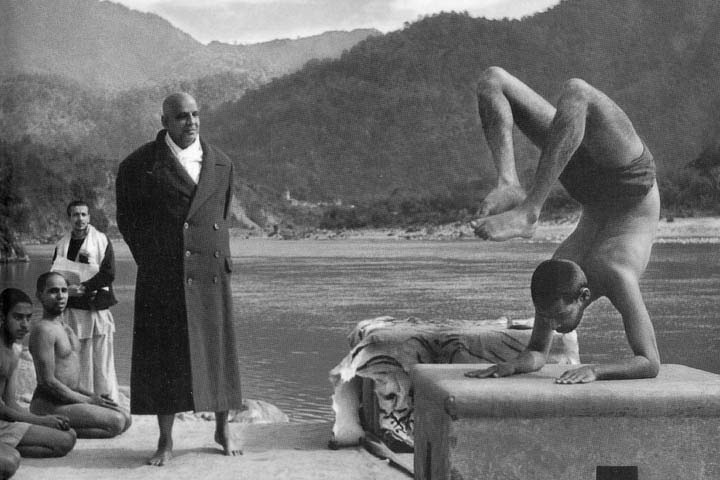
Sivananda Yoga is a classical, slow form of Hatha yoga built on the teachings of Swami Sivananda Saraswati (1887-1963) and brought to the West by his disciple Swami Vishnudevananda. A class follows a fixed shape: Savasana, breathing exercises, a 12-round Sun Salutation, the same 12 basic postures in the same order, and a long final relaxation. Several other styles, among them Integral Yoga, Satyananda Yoga and ISHTA Yoga, also trace back to Sivananda's students.
Who was Swami Sivananda?
Sivananda was born Kuppuswami in 1887 in Pattamadai, Tamil Nadu. He trained as a doctor and worked for about ten years in British Malaya, treating plantation workers. In 1923 he left medicine, went to Rishikesh in the Himalayan foothills and took vows as a renunciate monk. The name says what he stood for: Shiva plus ananda, bliss.
In 1936 he founded the Divine Life Society, and his ashram on the Ganges, now called Sivanandanagar, became a school for monks and visitors from all over the world. He wrote a huge amount, more than 200 books, in plain English meant for ordinary readers. His motto was short: "Serve, love, give, purify, meditate, realise." He died in Rishikesh on 14 July 1963, at 75.
His teaching was never only postures. He called it the Yoga of Synthesis: the four paths of Hatha and Raja yoga for body and mind, Karma yoga (selfless service), Bhakti yoga (devotion) and Jnana yoga (knowledge, in his case the Vedanta philosophy). Every style below takes some share of that mix.
Sivananda Yoga: the 5 points and the 12 poses
Swami Vishnudevananda left Rishikesh for the West in 1957, sent by his teacher with ten rupees, as the story goes, and opened the first Sivananda Yoga Vedanta Centre in Montreal in 1959. The International Sivananda Yoga Vedanta Centres now run centres and ashrams on several continents. They are a separate organisation from the Divine Life Society in Rishikesh, which is why you will see both names.
Vishnudevananda summed up the teaching in five points:
- Proper exercise: the asanas.
- Proper breathing: pranayama, mostly Kapalabhati and alternate nostril breathing.
- Proper relaxation: Savasana (Corpse Pose), at the start, between poses and at the end.
- Proper diet: vegetarian, and in the tradition's word sattvic, simple and fresh.
- Positive thinking and meditation.
The 12 basic postures come in this order, each followed by its counter-pose:
- Sirsasana (Headstand)
- Sarvangasana (Shoulderstand)
- Halasana (Plough)
- Matsyasana (Fish)
- Paschimottanasana (Seated Forward Bend)
- Bhujangasana (Cobra)
- Salabhasana (Locust)
- Dhanurasana (Bow)
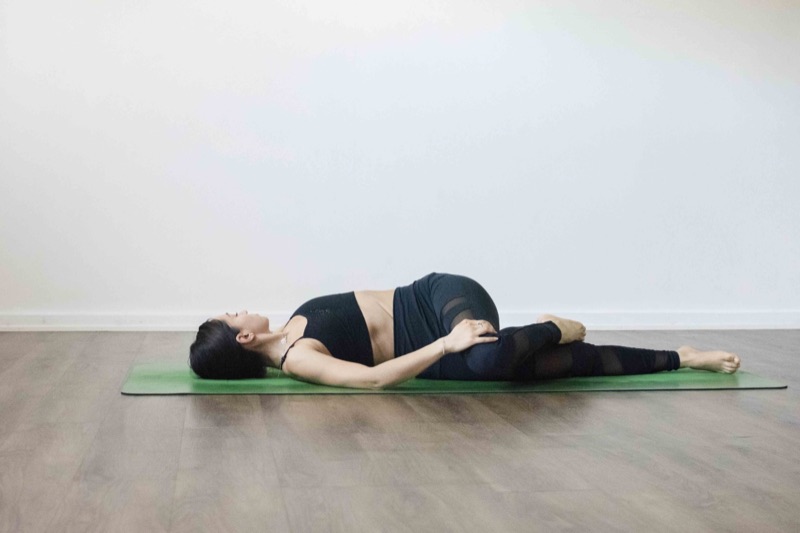
- Ardha Matsyendrasana (Half Spinal Twist)
- Kakasana or Bakasana (Crow)
- Pada Hastasana (Standing Forward Bend)
- Trikonasana (Triangle)
Inversions first, then the back and front of the spine, then a twist, an arm balance and two standing poses. Beginners do not start with a free headstand: teachers give preparations, and Shoulderstand and Plough are often done with a folded blanket under the shoulders.
What a Sivananda class is like
Slow. A standard class runs 90 minutes. You lie in Savasana, chant a short opening mantra, then do Kapalabhati and alternate nostril breathing (called Anuloma Viloma in this school). The Sun Salutation is a 12-step sequence, different from the Surya Namaskar A of Ashtanga. Then the 12 poses, each held for several breaths, with a short rest between them. Final relaxation takes ten minutes or more. There is no music. Chanting, usually Om and a closing prayer, is part of the class.
Compared with a Vinyasa class, it moves little and stays long. You work the spine in every direction, you stand on your head, and you lie still more than you expect. Physically it is level 1-2 in most poses, with Headstand and Crow as the demanding ones.
Sivananda's students and the styles they founded
Sivananda initiated hundreds of monks. Some of them started their own schools, and those schools grew into styles.
Integral Yoga (Swami Satchidananda)
Swami Satchidananda (1914-2002) took his vows from Sivananda in 1949 and came to New York in 1966, where he founded the Integral Yoga Institute. He opened the Woodstock festival in 1969 with a talk from the stage. Integral Yoga teaches six branches, close to Sivananda's synthesis: Hatha, Raja (meditation), Bhakti (devotion), Karma (service), Jnana (self-inquiry) and Japa (repeating a mantra). Hatha classes are gentle and include breathing, chanting and deep relaxation. Dean Ornish used Integral Yoga teachers in his heart disease programme. Do not confuse it with Sri Aurobindo's "Integral Yoga", a separate philosophy with the same English name.
Satyananda Yoga and the Bihar School of Yoga (Swami Satyananda)
Swami Satyananda Saraswati (1923-2009) lived with Sivananda in Rishikesh for about twelve years. In 1964 he founded the Bihar School of Yoga in Munger, India. Outside India the method is taught as Satyananda Yoga. His 1969 manual Asana Pranayama Mudra Bandha is still one of the most used reference books in teacher training.
Satyananda Yoga is gentle and systematic. It includes asana, pranayama, the shatkarmas (the six purification practices of the Hatha Yoga Pradipika), mudra and bandha, and meditation, alongside Karma and Bhakti yoga for daily life. The school's best known contribution is Yoga Nidra, a guided relaxation lying in Savasana that Satyananda systematised in the 1960s. You can try it in our Yoga Nidra classes.
ISHTA Yoga (Mani and Alan Finger)
ISHTA stands for the Integrated Science of Hatha, Tantra and Ayurveda. Ishta is also a Sanskrit word for what is personal or chosen, and the name echoes Yoga Sutra 2.44, svadhyayad ishta devata samprayogah: through self-study comes connection with your chosen ideal. Mani Finger studied with Sivananda in Rishikesh and, according to ISHTA's own account, with Paramahansa Yogananda before that. He and his son Alan Finger started teaching the method in South Africa in the 1960s. Alan later took it to the United States, where ISHTA Yoga is based in New York.

The idea is that there is no one right practice: a strong vinyasa class, a slow yin class, a therapeutic class and meditation can all serve the same aim, depending on the person. The class matches the student, which is where the word ishta comes back in.
Other students worth knowing
- Swami Chidananda led the Divine Life Society after Sivananda's death.
- Swami Venkatesananda taught widely in South Africa and Australia and translated the Yoga Vasishtha.
- Swami Sivananda Radha, born in Germany, founded Yasodhara Ashram in British Columbia, Canada, and wrote on Kundalini and Hatha as symbolic practice.
Where sources disagree
Lists of "Sivananda styles" online, including the earlier version of this article, often add Kundalini Yoga and ParaYoga. Neither belongs in the lineage. Kundalini Yoga as most people know it was taught by Yogi Bhajan from 1969 and draws on Sikh practice. Sivananda did write a book called Kundalini Yoga, and the Bihar School teaches kundalini kriyas, which is probably where the mix-up starts. ParaYoga was founded by Rod Stryker and comes from the Himalayan tradition of Swami Rama and Pandit Rajmani Tigunait.
The claims made for the practice need the same care. Sivananda's books say that Headstand and Shoulderstand regulate the glands and that yoga cures a long list of illnesses. There is no good evidence for that. What holds up is plainer: slow holds work strength and mobility through the whole spine, and a long relaxation with slow breathing helps many people calm down. The tradition's language about prana and chakras is best read as the tradition's own map, not as anatomy.
For the other big family tree of modern yoga, read Krishnamacharya's lineage and the styles it produced.
To feel the Sivananda pace on your own mat, try the 45-minute Traditional Hatha Class: static poses held longer, with rest between them, level 1-2.
Frequently asked questions
What is Sivananda Yoga?
A classical form of Hatha yoga from the teachings of Swami Sivananda, spread by Swami Vishnudevananda from 1959. Classes follow a fixed order: relaxation, pranayama, Sun Salutations, 12 basic postures and a long final relaxation, with chanting and no music.
How is Sivananda Yoga different from other styles?
It uses the same 12 poses in the same order every class, holds them for several breaths and rests in Savasana between them. It also includes chanting, pranayama and a vegetarian lifestyle as part of the method. Vinyasa and Ashtanga move faster and link poses with the breath.
What are the 12 poses of Sivananda Yoga?
Headstand, Shoulderstand, Plough, Fish, Seated Forward Bend, Cobra, Locust, Bow, Half Spinal Twist, Crow, Standing Forward Bend and Triangle, in that order.
What are the 5 points of Sivananda Yoga?
Proper exercise, proper breathing, proper relaxation, proper diet and positive thinking with meditation. Swami Vishnudevananda formulated them as a simple summary of his teacher's approach.
How old was Swami Sivananda when he died?
He was 75. Swami Sivananda was born on 8 September 1887 and died in Rishikesh on 14 July 1963.
Is Sivananda Yoga good for beginners?
Yes, for most people. The pace is slow and the poses are held with rest in between. Headstand is the demanding one, and a good teacher gives you preparations and a modified version until you have the strength in your shoulders and core.
Is Kundalini Yoga part of the Sivananda lineage?
No. Kundalini Yoga as taught today mostly comes from Yogi Bhajan, who brought it to the United States in 1969. Sivananda wrote about kundalini, and the Bihar School teaches kundalini practices, but the two are separate traditions.
Practise it with a teacher
Over 600 online yoga classes and programs for $4.99 a month. Cancel any time.
Become a member