Krishnamacharya: Who He Was and the Yoga Styles of His Lineage

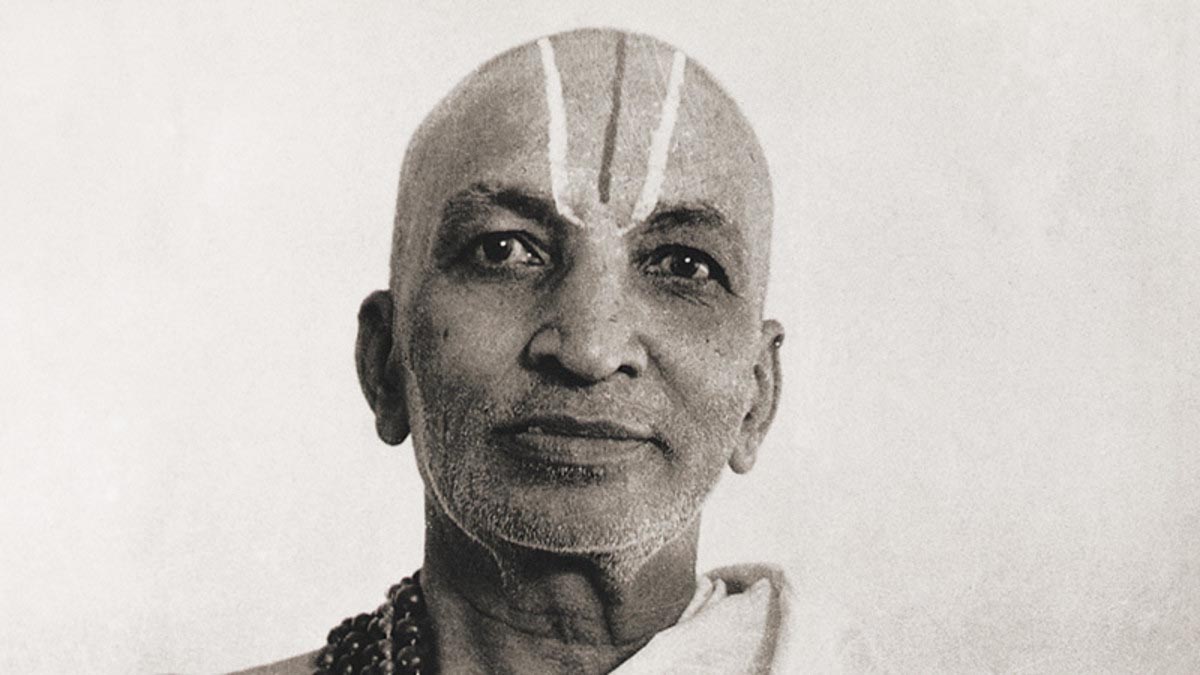
Tirumalai Krishnamacharya (1888-1989) was an Indian yoga teacher and scholar, often called "the father of modern yoga". Most of the posture-based yoga taught in studios today traces back to him through his students: Ashtanga Vinyasa (K. Pattabhi Jois), Iyengar Yoga (B.K.S. Iyengar), Viniyoga (T.K.V. Desikachar) and Vinyasa Krama (Srivatsa Ramaswami). Power Yoga, Rocket Yoga, Jivamukti and most vinyasa flow classes grew out of those.
Who was Krishnamacharya?
Krishnamacharya was born on 18 November 1888 in Muchukundapuram, in today's Chitradurga district of Karnataka, and died in Chennai on 28 February 1989, at 100. He trained as a Sanskrit scholar. His family's biography says he studied all six classical schools of Indian philosophy (the darshanas) and spent several years with a yoga teacher in the Himalayas. Those early years come to us almost entirely through his own family, so read the details as his story rather than a record.
The part we can document starts in Mysore. From the early 1930s the Maharaja of Mysore, Krishna Raja Wadiyar IV, supported his work, and in 1933 Krishnamacharya opened a yoga school (yogashala) in the Jaganmohan Palace. He taught the boys of the palace, toured India giving public demonstrations and wrote his first book, Yoga Makaranda (1934). Accounts from the period describe him slowing his pulse until it could hardly be felt, a feat later retold as "stopping his heart".

Krishnamacharya's yoga school for the boys of the Mysore palace, opened in 1933 (photo from Yoga Makaranda, Mysore 1934).
After the school closed in the early 1950s, he moved to Madras (now Chennai). There he taught mostly one to one, often people who came to him because they were ill, and he drew on Ayurveda as well as yoga. In India he is remembered as much for this therapeutic work as for the postures. He never taught outside India. His students took his methods to the rest of the world.
What he taught
Three ideas run through everything his students passed on:
- Breath leads movement. You move into and out of a posture on a counted inhale or exhale. This linking of breath and movement is what vinyasa means in his teaching, and it is why he is called the architect of vinyasa. The slow, audible breath many of his students use is Ujjayi, the victorious breath.
- Sequencing matters. Postures follow an order that prepares the body for what comes next, and a practice ends with something that settles you. Vinyasa krama means "step-by-step progression".
- Teach the person in front of you. His son Desikachar summed up his father's approach as teaching what is right for each individual: age, health, the time of life. A strong teenager and a sick older man got different practices.
Asana was one part of it. He taught pranayama, chanting, meditation and study of the Yoga Sutras alongside the postures, following the 8 limbs of yoga. He wrote several books, among them Yoga Makaranda, Yogasanagalu (around 1941) and Yoga Rahasya, a text he said he received from the 9th-century sage Nathamuni.
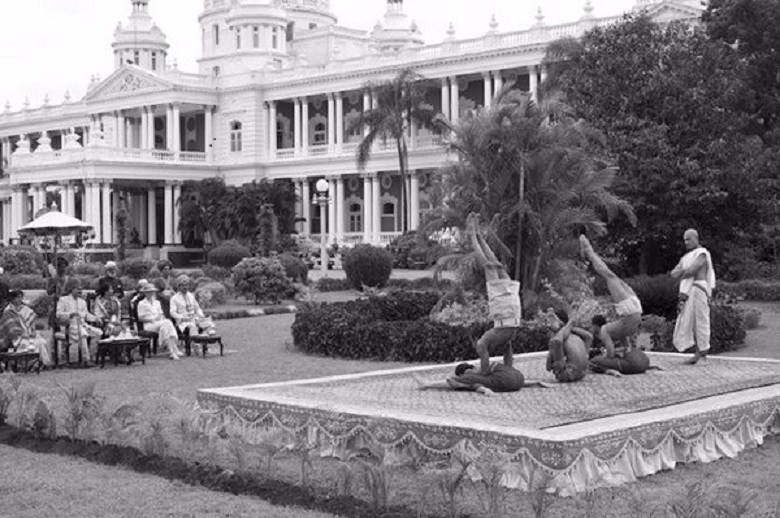
Students demonstrating advanced postures at the Jaganmohan Palace in Mysore. Photo: KYM archives.
His best-known students
- K. Pattabhi Jois (1915-2009) studied with him from 1927 and developed Ashtanga Vinyasa Yoga in Mysore.
- B.K.S. Iyengar (1918-2014), Krishnamacharya's brother-in-law, studied with him in Mysore in the mid-1930s before moving to Pune in 1937. He founded Iyengar Yoga.
- Indra Devi (1899-2002), born in Latvia as Eugenie Peterson, was one of his first Western students, in the late 1930s. She later taught in Hollywood and in Argentina.
- T.K.V. Desikachar (1938-2016), his son, studied with him for close to three decades in Chennai and founded the Krishnamacharya Yoga Mandiram in 1976.
- Srivatsa Ramaswami (born 1939) studied with him in Chennai for more than 30 years and teaches Vinyasa Krama.
- A.G. Mohan (born 1945) studied with him for about 18 years and wrote Krishnamacharya: His Life and Teachings.
These students met different versions of the same teacher. Jois and Iyengar knew the young, demanding teacher of the Mysore palace. Desikachar, Ramaswami and Mohan knew the older man in Chennai who adapted everything to one student at a time. That is a large part of why the styles look so different.
The yoga styles in Krishnamacharya's lineage
Ashtanga Vinyasa Yoga

R. Sharath Jois and K. Pattabhi Jois (picture from Ashtanga Yoga Brooklyn).
Pattabhi Jois opened his own school in Mysore in 1948. Ashtanga yoga is a set sequence: you practise the same postures in the same order every time, each one held for about five breaths, with a counted vinyasa between them. It opens with Sun Salutations, Surya Namaskar A and B. Then come the standing postures, one of six series and a fixed closing sequence. The Primary Series, Yoga Chikitsa, is where everyone starts. A teacher adds postures one at a time as you are ready for them. Breath, Mula Bandha and a fixed gaze point, drishti, hold the practice together.
It is demanding. Beginners do well to learn a shortened version first and to leave out anything that hurts.
Iyengar Yoga

B.K.S. Iyengar was sickly as a child and came to yoga as a teenager in his brother-in-law's school. His book Light on Yoga (1966) became the standard posture manual in the West. He also wrote Light on Pranayama, Light on the Yoga Sutras of Patanjali and Light on Life.
Iyengar Yoga works with three things:
- Alignment. Precise instructions for the feet, knees, pelvis and spine in every posture.
- Timing. Postures are held longer than in a vinyasa class, often a minute or more, and deepened once you are steady.
- Sequencing. Classes build step by step toward a demanding posture or a theme.
Iyengar made props part of yoga: blocks, straps, blankets, chairs and ropes on the wall. They let a stiff or injured student get the shape of a pose without forcing it. Teachers train for years before they are certified.
B.K.S. Iyengar giving a yoga demonstration in 1976.
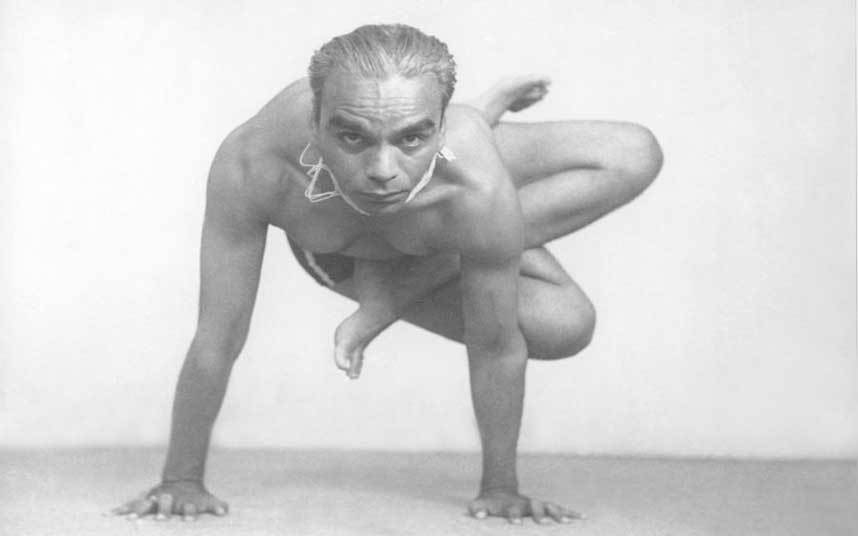
Iyengar could move fast too. In this film from 1977 he teaches, demonstrates and then practises with a small advanced group, jumping from Adho Mukha Svanasana (Downward-Facing Dog) straight into Bakasana (Crow Pose).
Viniyoga
Viniyoga is a Sanskrit word from the Yoga Sutras (3.6) that means "application": vi and ni are prefixes, and yoga here means use. Krishnamacharya used it for his principle of fitting yoga to the person. Desikachar taught under that name for years, and Gary Kraftsow later built the American Viniyoga Institute on it.
A Viniyoga session is often private. The teacher looks at your body, your breath, your age and what you want, and gives you a short practice to do at home. Postures are often repeated several times, moving in and out on the breath, before you stay in one. Breathing, chanting and meditation are part of it. Viniyoga is widely used as yoga therapy, for example for back pain. Desikachar himself later stopped using "Viniyoga" as a label, because he felt it had turned a principle into a brand.
Vinyasa Krama
Srivatsa Ramaswami teaches Vinyasa Krama, the step-by-step method he learned from Krishnamacharya in Chennai. Each posture comes with a set of variations, linked by movement and slow Ujjayi breathing, so you approach the full pose in stages. Where Ashtanga fixes one sequence, Vinyasa Krama is a large library of sequences grouped around families of postures, with pranayama and meditation built in. It is slower and quieter than a flow class and closer to how Krishnamacharya taught in later life.
Power Yoga
Power Yoga appeared in the United States in the mid-1990s. Beryl Bender Birch in New York and Bryan Kest in Los Angeles both took the flowing, heat-building structure of Ashtanga and dropped the fixed sequence, so each teacher builds their own class. Today "power yoga" is a broad label for vigorous vinyasa, much of it taught in gyms. Expect to sweat, and expect little chanting or meditation. Baron Baptiste's style, covered in our guide to hot yoga styles like Baptiste and CorePower, grew from the same roots.
Rocket Yoga

Larry Schultz studied Ashtanga with Pattabhi Jois and developed Rocket Yoga at his studio, It's Yoga, in San Francisco in the 1980s. The name is usually credited to Bob Weir of the Grateful Dead, who said it "gets you there faster". Rocket keeps the breath and structure of Ashtanga but mixes postures from the Primary and Intermediate Series, and you may modify or skip what does not work for you yet. There are three sequences:
- Rocket 1: built on the Primary Series. Forward bends, hip openers and core work, with arm balances and inversions added.
- Rocket 2: built on the Intermediate Series. Backbends and twists.
- Rocket 3: a mix of 1 and 2, often shorter and faster.
Jivamukti Yoga

Sharon Gannon and David Life founded Jivamukti Yoga in New York in 1984. Pattabhi Jois was one of their teachers, and the physical practice is a strong vinyasa flow. What sets it apart is everything around the postures: every class has a theme, with chanting, music, a reading and meditation. Ethics are central. Jivamukti asks students to take ahimsa, non-harming, literally, which in practice means a vegan diet and animal rights.
Anusara Yoga
John Friend, an American teacher trained mainly in Iyengar Yoga, founded Anusara in 1997. The name is usually translated "flowing with grace". Classes combine Iyengar-style alignment, taught through a set of "Universal Principles of Alignment", with an upbeat, heart-centred tone and plenty of props. Anusara grew fast. In 2012 Friend stepped away from the school, and many teachers left with him. The method carries on through the Anusara School of Hatha Yoga, on a smaller scale.
Vinyasa flow
Most classes called vinyasa flow today have no single founder. They borrow the breath-linked transitions and Sun Salutations of Ashtanga, the alignment cues of Iyengar and whatever the teacher adds. If you practise flow, you are practising a distant descendant of the Mysore palace classes. Other modern lineages grew up alongside this one, for example the Sivananda lineage and its yoga styles.
Where sources disagree
"Father of modern yoga." The title fits the posture-based yoga of today's studios. Other teachers of the same era shaped modern yoga too, among them Swami Sivananda, Swami Kuvalayananda and Paramahansa Yogananda. Krishnamacharya's claim rests mainly on how many influential teachers came out of his classes.
How old is the practice? Pattabhi Jois said the Ashtanga sequences came from an old text, the Yoga Korunta, which Krishnamacharya read in a Calcutta library. No copy has ever been found. Historians such as Norman Sjoman (The Yoga Tradition of the Mysore Palace, 1996) and Mark Singleton (Yoga Body, 2010) argue that the jumping sequences also drew on the gymnastics taught at the Mysore palace and on the physical culture movement of the time. Many teachers in the lineage reject that reading. Both sides agree that the fast, flowing style took its shape in Mysore in the 1930s. Older texts such as the Hatha Yoga Pradipika describe far fewer postures and no vinyasa.
Fixed sequence or individual practice? Ashtanga teachers say the set series is what Krishnamacharya taught. Desikachar, Ramaswami and Mohan say he always adapted the practice to the student. Both are probably describing him accurately at different times: a group of energetic boys in the 1930s, single students with health problems in Chennai decades later.
The miracle stories. The slowed heartbeat, the years in the Himalayas and Yoga Rahasya received in a vision all reach us through the family and devoted students. We have no way to check them. The teaching stands without them.
To feel the Mysore side of the lineage in your own body, start with our Ashtanga Fundamentals program, which builds the Sun Salutations and standing postures one class at a time.
Frequently asked questions
What is Krishnamacharya yoga?
It is the yoga taught by Tirumalai Krishnamacharya: postures linked to a counted breath, careful sequencing and a practice adapted to each student, with pranayama, chanting and meditation alongside. The Krishnamacharya Yoga Mandiram in Chennai teaches it under his name, and it lives on in other forms through Ashtanga, Iyengar and Viniyoga.
How did Krishnamacharya influence modern yoga?
Through his students. Pattabhi Jois, B.K.S. Iyengar, Indra Devi and T.K.V. Desikachar took his methods to the West, and their styles led to Power Yoga, Rocket, Jivamukti, Anusara and most vinyasa flow classes. His idea of linking each movement to the breath is now standard in yoga studios everywhere.
What are Krishnamacharya's most famous teachings?
Vinyasa, moving in and out of postures with the breath. Vinyasa krama, building a practice step by step. And the principle that yoga must fit the individual, which Desikachar called viniyoga. His best-known books are Yoga Makaranda (1934) and Yoga Rahasya.
Who founded the Krishnamacharya Yoga Mandiram?
T.K.V. Desikachar, Krishnamacharya's son, founded the Krishnamacharya Yoga Mandiram (KYM) in Chennai in 1976 to preserve and teach his father's work. It offers classes, yoga therapy and teacher training.
Who were Krishnamacharya's students?
The best known are K. Pattabhi Jois (Ashtanga), B.K.S. Iyengar (Iyengar Yoga), Indra Devi, T.K.V. Desikachar (Viniyoga), Srivatsa Ramaswami (Vinyasa Krama) and A.G. Mohan.
Did Krishnamacharya teach in the West?
No. He taught his whole life in India, first in Mysore and from the early 1950s in Chennai. His students brought his yoga to Europe and America from the late 1940s onward, starting with Indra Devi.
Is Ashtanga or Iyengar closer to what Krishnamacharya taught?
Each is close to one period of his teaching. Ashtanga keeps the flowing, demanding style of his Mysore classes in the 1930s. Iyengar kept the precision and developed it much further with props and long holds. His later, individual style lives on in Viniyoga and Vinyasa Krama.