Padahastasana (Hand to Foot Pose): How to Do It Step by Step

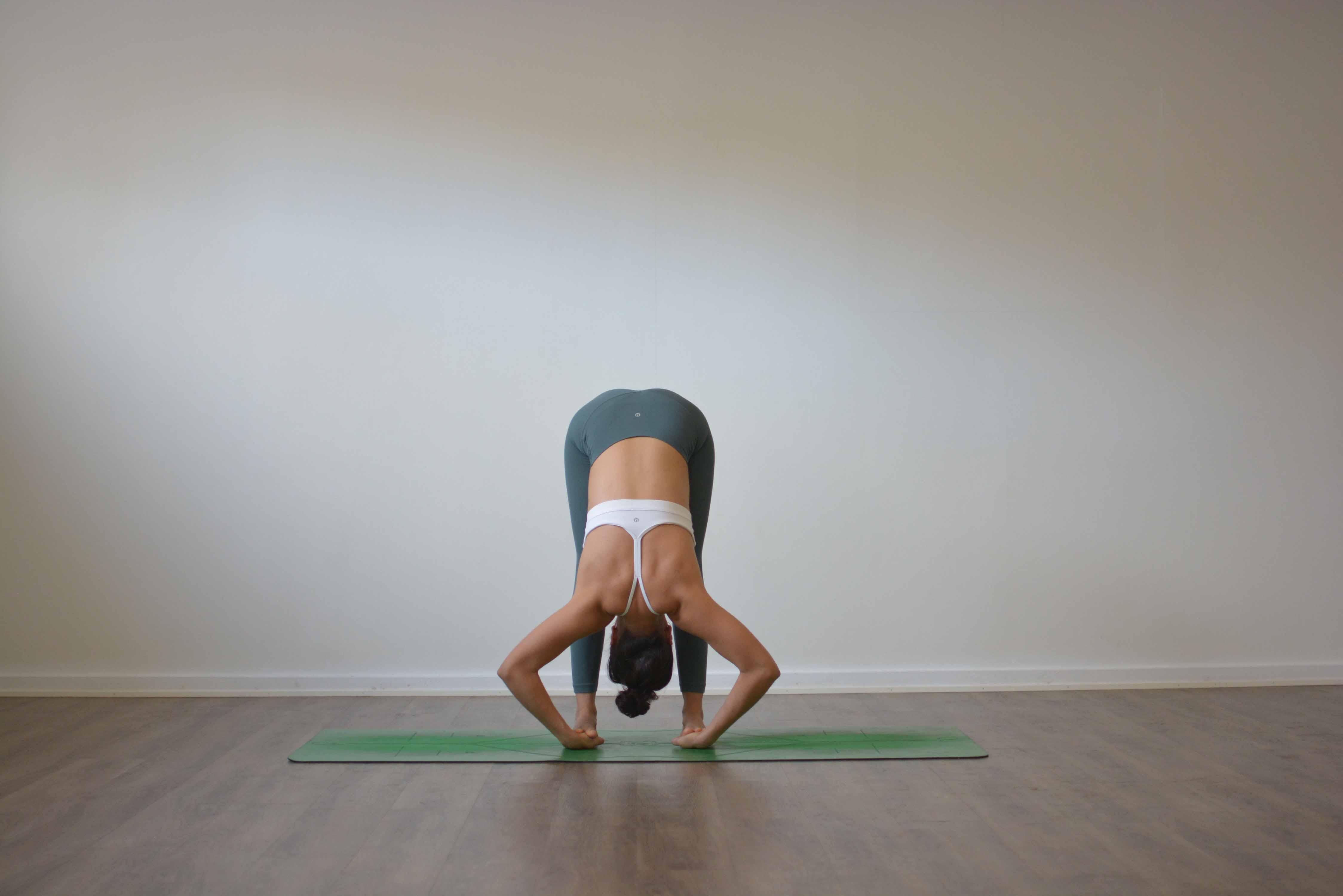
Padahastasana (Hand to Foot Pose) is a standing forward bend in which you fold from the hips and slide your hands, palms up, under the soles of your feet. The weight of the body presses down on the hands, and that grip lets you draw the chest toward the legs for a deep stretch of the hamstrings and calves. In Ashtanga Vinyasa it follows Padangusthasana (Big Toe Pose), and it is also called Hand Under Foot Pose.
Pose type: standing forward bend. Level: beginner to intermediate. Props: none needed; blocks under the hands if the floor is far away.
What Padahastasana means
The name has three parts: pada, foot, hasta, hand, and asana, posture. Foot and hand: the name describes the contact, not the exact grip, and that is why different schools teach the pose in different ways. More on that further down.
How to do Padahastasana, step by step
This is the Ashtanga and Iyengar form, with the hands under the feet. Warm up first with a few rounds of Surya Namaskar A. A deep fold on cold hamstrings is where strains happen.
- Stand in Tadasana (Mountain Pose), then step the feet hip-width apart with the outer edges parallel. Put your hands on your hips.
- Breathe out and fold forward from the hip joints. Let the pelvis tip forward over the thighs and keep the front of the body long. Bend the knees as much as you need to reach the floor.
- Lift the front of one foot and slide that hand under it, palm up. The toes come as far in as the crease of the wrist. Do the same on the other side. The balls of the feet now stand on your palms.
- Breathe in and lift the chest and head halfway, arms straight, spine long. Look forward.
- Breathe out and fold again. Bend the elbows out to the sides and let the crown of the head move toward the floor. The pressure of the feet on the hands gives you something to pull against, so the arms help the fold instead of the lower back.
- Stay for five slow breaths. On the inhale, lengthen the front of the body. On the exhale, fold a little more from the hips.
- To come out, breathe in and lift halfway with straight arms. Breathe out, step off your hands and bring them to your hips. Breathe in and come up to standing with a long back.
Firm the front thighs so the kneecaps lift, but keep the knees soft if your legs tend to push back past straight. The stretch belongs in the muscles, not in the back of the knee joint.
Padahastasana in Ashtanga
In the Ashtanga Primary Series the pose comes straight after Padangusthasana (Big Toe Pose). From the toes you lift halfway on an inhale, slide the hands under the feet on the exhale, look up on the next inhale and fold on the exhale for five breaths. Then you lift halfway, put your hands on your hips and come up to Samasthiti. The drishti is the tip of the nose.
Padahastasana in Bikram and Hot 26
In the Bikram sequence the name covers a different grip. It is the second half of Half Moon Pose with Hands to Feet Pose: the feet stand together, you fold, and the hands take hold of the heels from behind, fingers under the heels, elbows behind the calves. The goal there is to bring the whole upper body flat against the legs.

Padahastasana in the Bikram tradition, hands holding the heels from behind.
Benefits of Hand to Foot Pose
This is a stretch for the back of the body. Folding with long legs lengthens the hamstrings and the calves, and standing on your hands makes the stretch deeper than in a fold with the palms on the floor.
- Hamstrings and calves: a long, steady stretch, with the arms helping to draw the chest toward the legs.
- Hip hinge: it trains the fold from the hip joints, the same movement you use when you lift something off the floor.
- Wrists and forearms: the front of the wrists and the palms get a mild stretch from the weight of the feet.
Many texts say the pose improves digestion or sends blood to the brain for a clearer head. The head does go below the heart for a while, and some people feel alert afterwards, but no study has tested these claims for this pose. The old version of this article said the pose burns belly fat and tones the abdomen. A forward bend does neither, so that is gone.
Who should skip or modify Padahastasana
- Lower back or disc problems: a deep fold with a rounded spine loads the front of the lumbar discs. Bend the knees a lot, keep the back long, or use a half fold with your hands on blocks.
- Osteoporosis: loaded forward flexion of the spine is linked to a higher risk of vertebral fractures. Stay in a flat-back half fold with the hands on your thighs or a chair.
- High blood pressure, glaucoma or dizziness: the head goes below the heart. Keep the head above the hips and come up slowly.
- Hamstring injury: a strain near the sitting bone needs a break from deep stretching. Ask your physiotherapist when you can fold again.
- Wrist problems: if the weight of the feet hurts the wrists, hold the big toes instead, as in Padangusthasana, or hold the shins.
- Pregnancy: widen the feet so there is room for the belly and keep to a half fold with a flat back.
For more on practising without injury, read our 10 tips to avoid yoga injuries.
Common mistakes
- Chasing the nose to the knees. Rounding the upper back to get the face close to the legs moves the fold out of the hips. Aim the chest at the thighs instead.
- Locking the knees. Straight legs are the goal. Knees pushed back into the joint are not.
- Hands too far under. If the heels are on your fingers, the wrists take too much weight. The toes go to the wrist crease.
- Weight in the heels. Shift the hips forward a little so they stack over the ankles.
- Coming up with a round back. Lift halfway first, hands to the hips, then come up with a long spine.
Preparatory poses
- Urdhva Hastasana (Upward Salute): lengthens the front of the body before you fold.
- Padangusthasana (Big Toe Pose): the same fold with a lighter grip, and the pose right before this one in Ashtanga.
- Adho Mukha Svanasana (Downward-Facing Dog): stretches the hamstrings and calves with the weight shared by the arms.
- Uttanasana (Standing Forward Bend): the plain fold with the hands on the floor or on blocks.
Follow-up poses
- Ardha Uttanasana (Half Forward Bend): the flat-back half lift you use between folds.
- Chaturanga Dandasana and Urdhva Mukha Svanasana (Upward-Facing Dog): in a flowing practice you jump or step back from the fold into the vinyasa.
- Prasarita Padottanasana (Wide-Legged Forward Bend): the next standing fold, with the feet wide.
- Paschimottanasana (Seated Forward Bend): the same stretch of the back of the legs, seated.
Padahastasana variations
- Bent knees: bend the knees until the palms slide under the feet. Straighten the legs a little on each exhale.
- Palms beside the feet: the form taught in many Indian schools and in the Common Yoga Protocol: palms flat on the floor next to the feet, fingers in line with the toes.
- Heel grip: the Bikram form, feet together, hands holding the heels from behind.
- Half fold: hands on blocks or on the shins, back flat. The safest option for backs that dislike rounding.
Sofia Soori's class Complete All the Standing Postures takes you through the full Ashtanga standing sequence, and Lauren Matters' Hot 26 Standing Series has the Bikram version.
Frequently asked questions
What does Padahastasana mean?
Padahastasana comes from the Sanskrit pada, foot, hasta, hand, and asana, posture. In English it is called Hand to Foot Pose or Hand Under Foot Pose. It is a standing forward bend in which the hands are placed under or beside the feet.
What is the difference between Padangusthasana and Padahastasana?
Both are standing forward bends with the feet hip-width apart. In Padangusthasana you hold your big toes with two fingers and the thumb. In Padahastasana you slide your hands under your feet, palms up, which gives a firmer grip and a deeper fold. In Ashtanga you do them one after the other.
Is Padahastasana the same as Uttanasana?
They are close relatives. Uttanasana is the general standing forward bend, with the hands on the floor, the shins or the elbows. Padahastasana is the version with the hands under the feet. Some schools use the two names for the same pose, which is part of the confusion.
What are the benefits of Padahastasana?
It stretches the hamstrings and calves and teaches you to fold from the hip joints. Standing on your hands lets the arms help the fold. Claims about digestion, belly fat or blood flow to the brain have not been tested in studies.
Who should not do Padahastasana?
Skip or modify the full fold if you have a disc problem in the lower back, osteoporosis, high blood pressure, glaucoma, a hamstring injury or wrist pain. A half fold with a flat back and your hands on blocks is the safer choice.
How long should you hold Padahastasana?
In Ashtanga you stay for five breaths. In a slower practice you can hold for 30 seconds to a minute. Stay only as long as the stretch feels even along the back of the legs, and come up slowly.