Surya Namaskar A (Sun Salutation A): How to Do It Step by Step

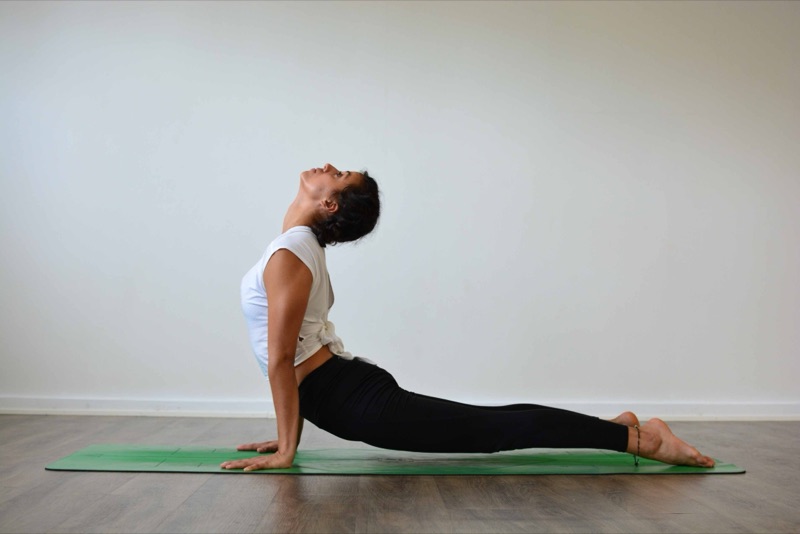
Surya Namaskar A (Sun Salutation A) is a short flowing sequence of nine movements, each linked to one inhale or one exhale, that opens every Ashtanga Vinyasa practice. You move from standing to a forward fold, back to Chaturanga, through Upward-Facing Dog to Downward-Facing Dog, and forward again to standing. One round takes about a minute, and most people use three to five rounds to warm up the whole body before other poses.
Sequence type: flowing warm-up, forward folds and a gentle backbend. Level: beginner with modifications, intermediate as taught in Ashtanga. Props: a mat. A block under the hands helps if your hamstrings are tight.
What Surya Namaskar means
Surya is Sanskrit for the sun. Namaskara comes from namas, a bow, and kara, making or doing: making a bow. The sun has been honoured in Indian prayer since the Vedas, and some families still chant sun mantras while they bow at sunrise. The flowing sequence of poses you learn in a yoga class is much younger than that, which we come back to below.
The "A" belongs to the Ashtanga system taught by K. Pattabhi Jois. There, Surya Namaskar A is the first sequence of every practice, followed by Surya Namaskar B. Most Vinyasa Flow classes use the same shape, often with small changes.
How to do Surya Namaskar A, step by step
Each step is one breath. Breathe through the nose, slow and even. In Ashtanga that breath is Ujjayi, with a soft sound at the back of the throat.
- Samasthitih (standing). Stand at the front of the mat, feet together or hip-width apart, arms by your sides. This is Tadasana (Mountain Pose) with the weight even across both feet. Take a breath here before you start.
- Inhale: Urdhva Hastasana. Sweep the arms out and up until the palms meet overhead. Look up at your thumbs. This is Urdhva Hastasana (Upward Salute).
- Exhale: Uttanasana. Fold forward from the hips, hands beside the feet. Bend your knees as much as you need to get your hands down.
- Inhale: half lift. Lift your chest halfway, spine long, fingertips on the floor or on the shins. Look forward.
- Exhale: Chaturanga Dandasana. Plant the hands, step or jump back and lower halfway, elbows close to your ribs. See our guide to Chaturanga Dandasana (Four-Limbed Staff Pose) for the details.
- Inhale: Urdhva Mukha Svanasana. Roll over the toes, straighten the arms and lift the chest into Upward-Facing Dog. Thighs lift off the floor, shoulders move away from the ears.
- Exhale: Adho Mukha Svanasana. Roll back over the toes and lift the hips into Downward-Facing Dog. Stay here for five full breaths.
- Inhale: half lift. At the end of the fifth exhale, bend the knees, look at your hands and step or jump the feet between them. Lift the chest halfway.
- Exhale: Uttanasana. Fold down again.
- Inhale: Urdhva Hastasana. Rise all the way up, arms overhead, palms together.
- Exhale: Samasthitih. Lower the arms and stand. That is one round.
The Ashtanga count has nine numbered movements, from the arms going up to the arms coming back up. The standing position at the start and end is not counted. Traditionally you do five rounds of A and then move on to B. Three rounds is a fine warm-up on a busy day.
Surya Namaskar A has no left and right side. The whole sequence is symmetrical, so you repeat it the same way each round.
Benefits of Sun Salutation A
A few rounds warm you up. The large muscles of the legs, back and shoulders work in turn, the heart rate rises, and the spine moves forward and back several times. That is why nearly every flowing class starts with some version of it.
- The back of the legs: the forward folds and Downward-Facing Dog lengthen the hamstrings and calves.
- Arms, shoulders and core: Chaturanga and the shift into Upward-Facing Dog load the arms, chest and abdominal muscles with your own body weight.
- The spine: it bends forward in the fold and extends in Upward-Facing Dog, a full range in one minute.
- Breath and focus: one movement per breath keeps your attention on the mat. With a long, slow exhale, many people feel calmer after a few rounds.
Small studies suggest that brisk rounds of Sun Salutation raise the heart rate into the range of moderate exercise. That is a real effect, and it depends on pace. Slow rounds with long holds work more on strength and flexibility than on the heart. Claims that Sun Salutations regulate hormones or help digestion come from tradition and social media, and we have not found research that backs them.
Who should skip or modify Sun Salutation A
- Wrist pain: Chaturanga, Upward-Facing Dog and Downward-Facing Dog all put weight on the hands. Spread the fingers wide and press through the knuckles, or come down onto the forearms in Dolphin instead of Downward-Facing Dog.
- Lower back problems: bend the knees generously in every fold, and swap Upward-Facing Dog for a low Bhujangasana (Cobra Pose) with the hips on the floor.
- Shoulder injury: lower the knees to the floor in Chaturanga, or skip Chaturanga and go from plank straight to Cobra.
- High blood pressure or dizziness: move slowly, keep the head above the heart in the folds, and rise up on an inhale without rushing.
- Pregnancy: after the first trimester, most teachers replace Chaturanga and Upward-Facing Dog, and widen the feet in the folds. Ask a teacher trained in pregnancy yoga.
Common mistakes
- Letting the breath chase the movement. If you run out of breath before the pose is done, slow down. The breath sets the pace.
- Locking the knees in the fold. With tight hamstrings, straight legs pull the lower back into a hump. Bend the knees.
- Dropping into Chaturanga. The chest sinks and the shoulders roll forward. Lower only halfway, or put the knees down, and keep the elbows along the ribs.
- Hanging in the lower back in Upward-Facing Dog. Press the tops of the feet down and lift the thighs, so the bend spreads along the spine.
- Skipping the half lift. The inhale with a long spine sets up a clean exhale into the next movement. Without it, the back rounds as you step back.
- Staring at the floor. Each movement has a gaze point, or drishti: the thumbs, the nose, the navel. It steadies the head and the attention.
Preparatory poses
If a full round feels like too much, learn the poses one at a time:
- Plank Pose: the base for a strong Chaturanga.
- Padahastasana (Hand to Feet Pose): a deeper version of the standing fold.
- Bhujangasana (Cobra Pose): a smaller backbend to use in place of Upward-Facing Dog while you build strength.
- Downward-Facing Dog, held for five to ten breaths, until it feels like a place to rest.
Follow-up sequences
- Surya Namaskar B: adds Utkatasana (Chair Pose) and Virabhadrasana I (Warrior I).
- The standing poses of the Ashtanga primary series. Our list of Ashtanga Vinyasa primary series postures shows the order.
Variations
- Knees down: lower the knees before Chaturanga and use Cobra instead of Upward-Facing Dog. A good beginner round.
- The classical 12-step Surya Namaskar: taught in Sivananda and many Hatha classes. It adds a low lunge, and the leg that steps back changes each round, so here you do have two sides. The old version of this article mixed it up with Sun Salutation A.
- Jumping: in Ashtanga, experienced students jump back into Chaturanga and jump forward from Downward-Facing Dog. Step until your arms and core can control the landing.
- Slow rounds: hold each pose for three to five breaths. Useful for learning the shapes and for cold mornings.
Where the sources disagree
How old is it? Many teachers call Sun Salutation thousands of years old. Bowing to the sun is. The sequence of poses is not found in the Hatha Yoga Pradipika or other classical hatha texts. It was popularized in the 1920s and 1930s by Bhawanrao Pant Pratinidhi, the Raja of Aundh, as a daily exercise, and it was part of what Krishnamacharya taught at the Mysore palace in the same years. Pattabhi Jois, Krishnamacharya's student, gave it the numbered A and B form. Some historians, Mark Singleton among them, also see the influence of Indian wrestlers' training and of the European gymnastics of the time. Others stress the older Indian roots. Both can be partly true: the prayer is old, the choreography is modern.
Twelve poses or nine? The 12-step version and Ashtanga's Surya Namaskar A are two different sequences with the same name. Neither is the one correct version.
Workout or ritual? Some teachers treat it as cardio, others as a moving prayer. The breath count serves both.
Amaranta's Energetic Sun Salutation A breaks the sequence down in 15 minutes with modifications, and Ujjayi meets Sun Salutation A teaches the breath and the sequence together, level 1-2. For a full course, try Ashtanga Fundamentals.
Frequently asked questions
What poses are in Sun Salutation A?
Standing (Samasthitih), Urdhva Hastasana with the arms up, Uttanasana (forward fold), a half lift, Chaturanga Dandasana, Upward-Facing Dog and Downward-Facing Dog, then back through the half lift and fold to standing. Each movement takes one breath, apart from five breaths in Downward-Facing Dog.
What is Ashtanga Sun Salutation A?
It is the opening sequence of every Ashtanga Vinyasa practice, as taught by Pattabhi Jois: nine counted movements, each on one inhale or exhale, done five times at the start of practice. It warms the body and sets the breath rhythm for the rest of the class.
What's the difference between Sun Salutation A and B?
Sun Salutation B adds Utkatasana (Chair Pose) at the start and Virabhadrasana I (Warrior I) on both sides, with an extra Chaturanga and Upward-Facing Dog after each warrior. It has 17 counted movements against A's nine, and it works the legs much harder.
How many rounds of Surya Namaskar A should I do?
The Ashtanga tradition is five rounds of A followed by B. As a warm-up before other practice, three to five rounds are enough. Beginners can start with two or three slow rounds with the knees down.
What happens if I do 10 Surya Namaskar every day?
Ten brisk rounds take about ten minutes and give you a short daily workout: warmer muscles, a higher heart rate, and over weeks more ease in the folds and more strength in the arms. Keep the pace steady and take rest days if your wrists or shoulders start to ache.
Is Surya Namaskar A good for beginners?
Yes, with modifications. Bend the knees in the folds, lower the knees before Chaturanga and use Cobra instead of Upward-Facing Dog. Learn the sequence slowly first, then link it to the breath.
Practise it with a teacher
Over 600 online yoga classes and programs for $4.99 a month. Cancel any time.
Become a member