Gomukhasana (Cow Face Pose): How to Do It Step by Step

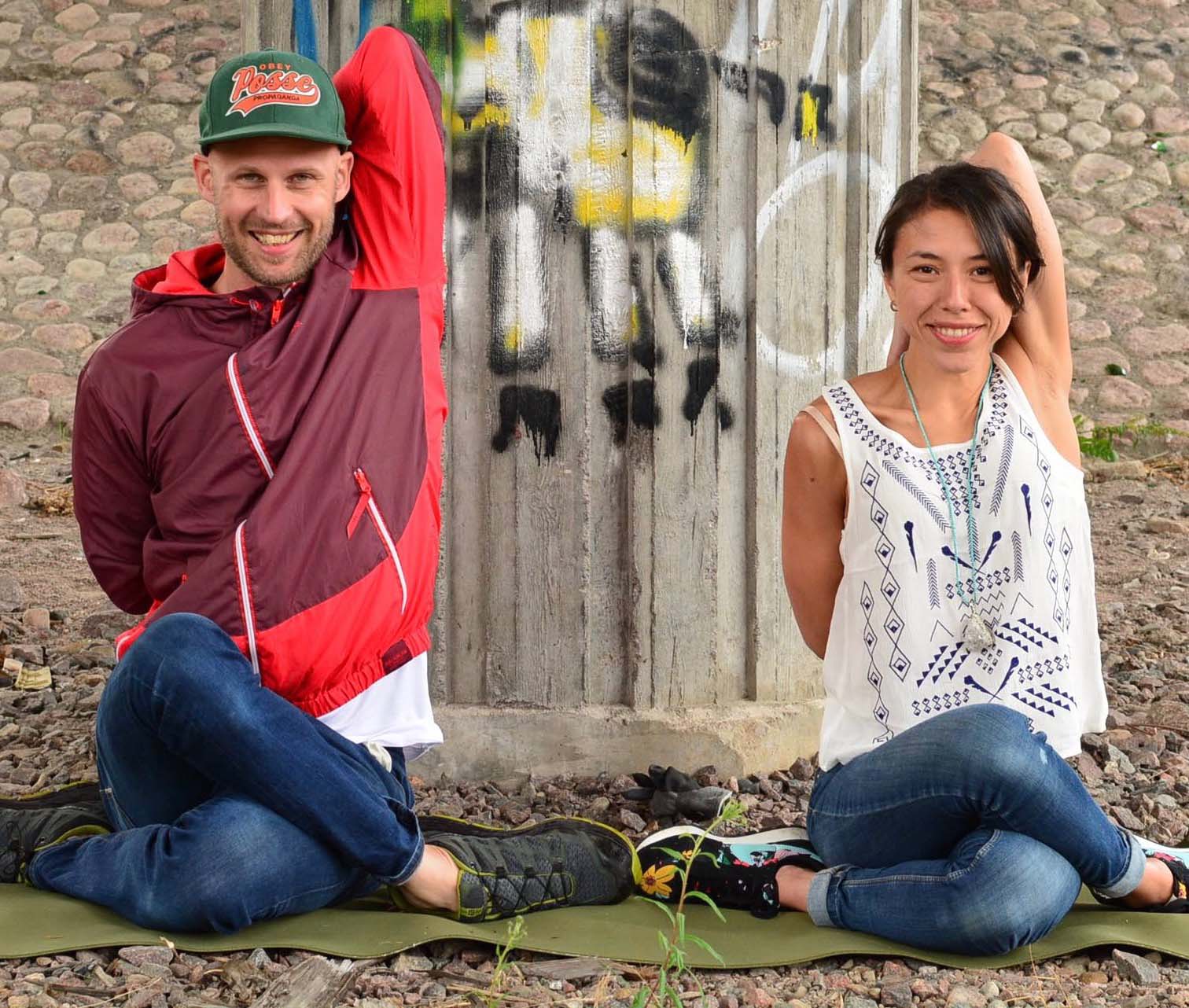
Gomukhasana (Cow Face Pose) is a seated yoga pose in which the knees stack one on top of the other and the hands reach for each other behind the back, one from above and one from below. It stretches the outer hips and both shoulders at once. The pose is one of the fifteen asanas described in the Hatha Yoga Pradipika, and you will also see it spelled Gaumukhasana.
Pose type: seated, hip opener, shoulder opener. Level: beginner to intermediate. Props: a folded blanket or a block to sit on, and a strap for the arms.
What Gomukhasana means
The name joins three Sanskrit words: go, cow, mukha, face, and asana, seat or posture. Gaumukhasana is the same word with a different spelling, closer to how many people say it in Hindi. Look at the pose from the front and the stacked knees form the narrow muzzle of a cow, with the feet out to the sides like the ears. Some teachers read the elbows, one pointing up and one down, as the ears instead. Both are images, and both help you remember the shape.
How to do Gomukhasana, step by step
The pose has two halves: the legs and the arms. Learn them apart before you put them together.
- Come onto your hands and knees. Cross your right knee in front of your left knee, so the right knee sits in the space behind it and the knees are stacked or close to it. Move your feet out to the sides, wider than your hips.
- Sit back between your heels. If your sitting bones do not reach the floor evenly, or you tip to one side, sit on a folded blanket or a block. A level pelvis matters more than getting low.
- Point your toes straight back, so the tops of the feet rest on the floor and the ankles do not bend sideways. Rest your hands on your knees and sit tall.
- Reach your left arm up by your ear. Bend the elbow and let the hand drop down between your shoulder blades.
- Take your right arm out to the side, turn the palm back, bend the elbow and slide the back of the hand up your spine.
- Hook the fingers of both hands together. If they do not meet, hold a strap in the top hand and let the lower hand climb the strap as far as it goes without strain.
- Keep the top elbow pointing up and the head lifted, so the arm does not push your head forward. Draw your lower ribs in so the back does not arch.
- Stay for 5-10 slow breaths. Release the arms, uncross the legs, and repeat with the left knee on top and the right arm up.
In the classic arm position, the top arm is on the same side as the bottom leg. Many teachers do it the other way round. Try both and use the one that lets you sit straight.
The traditional form
The Hatha Yoga Pradipika (15th century) describes only the legs: place the right ankle by the left side of the buttocks and the left ankle by the right side, and the shape resembles the face of a cow. The Gheranda Samhita, which lists 32 asanas, gives a similar description with the body steady and the head upright. Neither text mentions the arm bind. It became a standard part of the pose in the 20th century, through teachers such as B.K.S. Iyengar.
Benefits of Cow Face Pose
Gomukhasana is two stretches in one pose. Each is easy to feel and easy to explain.
- Outer hips: with the knees stacked, each hip is bent, turned out and drawn across the midline. That lengthens the gluteal muscles and the deep rotators at the back of the hip, including the piriformis. You feel it in the side of the buttock of the top leg.
- Top shoulder: the raised arm stretches the triceps and the side of the back, from the armpit down toward the waist.
- Bottom shoulder: the arm behind the back turns inward, which stretches the front of the shoulder and asks for inward rotation that many people have lost after years at a desk.
- Ankles and feet: the tops of the feet stretch against the floor.
It also shows you your sides. Most people find one hip or one shoulder much tighter than the other, and the pose makes the difference plain. Popular claims that Cow Face Pose cures diabetes, back pain or kidney problems have no research behind them. Better posture only comes if you use the mobility you gain when you sit and stand.
Who should skip or modify Cow Face Pose
- Knee problems: if the inside or outside of a knee hurts in the stacked position, do not force the knees together. Sit higher, or keep the bottom leg straight in front of you and cross only the top leg over it.
- Hip replacement: crossing the leg over the midline is often restricted after surgery. Ask your surgeon or physiotherapist before you try it.
- Shoulder injury: with a rotator cuff injury, a frozen shoulder or a shoulder that has dislocated, skip the bind or hold a strap with lots of space between the hands.
- Tight ankles: roll up a blanket and place it under the fronts of the ankles.
A strong stretch in the buttock or the back of the arm is what you want. Sharp pain in a knee or a pinching feeling in the front of the shoulder means come out. For more on this, read our 10 tips to avoid yoga injuries.
Common mistakes
- Sitting unevenly. One sitting bone floats and the spine bends to the side. Sit on a block until both sitting bones touch evenly.
- Forcing the fingers to meet. The ribs flare, the lower back arches and the head pushes forward. Use the strap.
- Top elbow drifting forward. It drags the head and chin down. Draw the elbow back and up, and keep the neck long.
- Sickled ankles. The feet turn in and the outer ankle takes the strain. Point the toes straight back.
- Only doing the easy side. Hold the tighter side as long as the other, or a few breaths longer.
Preparatory poses
- Garudasana (Eagle Pose): the same crossed legs standing up, and a stretch across the back of the shoulders.
- Baddha Konasana (Bound Angle Pose): outward rotation in the hips with both feet together.
- Eka Pada Rajakapotasana (Pigeon Pose): a deeper stretch for the outer hip of the front leg.
- Sukhasana (Easy Pose): a simple cross-legged seat to find a tall spine first.
Arm circles and a few slow reaches overhead warm the shoulders before the bind.
Follow-up poses
- Ardha Matsyendrasana (Half Lord of the Fishes): a seated twist that keeps working the outer hip.
- Paschimottanasana (Seated Forward Bend): straight legs after the long bend in the knees.
- Janu Sirsasana (Head-to-Knee Pose): one leg at a time, forward over the straight leg.
- Padmasana (Lotus Pose): the open outer hips from Cow Face are good preparation for Lotus.
Gomukhasana variations
- Arms only: sit in Sukhasana, on a chair or kneeling, and do only the arm bind. Good at a desk.
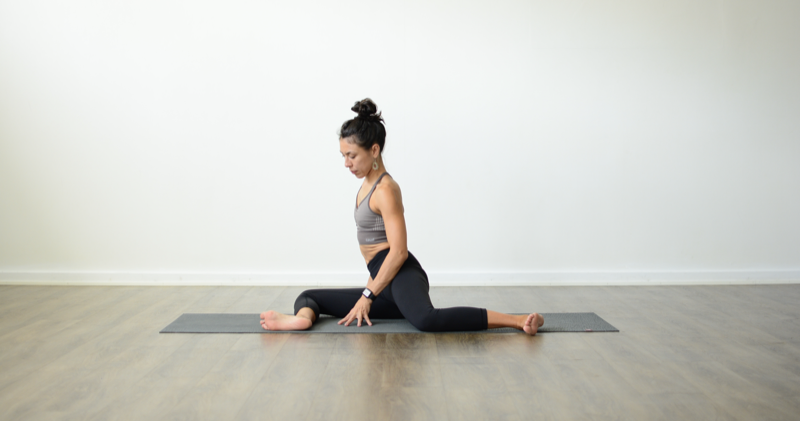
- Legs only: rest the hands on the top knee or on the floor beside you.
- Half Cow Face: the bottom leg straight on the floor, the top leg crossed over it with the foot by the opposite hip.
- Forward fold: with the legs stacked, lengthen the spine and fold forward over the knees, hands on the floor. The stretch moves deeper into the outer hips.
- Shoelace: the name of the leg position in Yin yoga, held for three to five minutes with the muscles relaxed.
Our hip-strengthening yoga exercises build the control around the joint that the long holds do not.
The class Happy Hour: Eagle and Cow Face Pose is 45 minutes of shoulder and hip openers built around these two poses, level 1-2, with two blocks.
Frequently asked questions
What is Gomukhasana and its benefits?
Gomukhasana, or Cow Face Pose, is a seated pose with the knees stacked and the hands clasped behind the back, one arm over the shoulder and one from below. It stretches the outer hips, the triceps and the fronts of the shoulders, and it shows you which side is tighter.
Why is it called Cow Face Pose?
Go means cow and mukha means face in Sanskrit. Seen from the front, the stacked knees look like a cow's narrow muzzle and the feet out to the sides like its ears. Some teachers see the ears in the elbows instead.
Is Gaumukhasana the same as Gomukhasana?
Yes. Gaumukhasana is another spelling of the same Sanskrit name, closer to the Hindi pronunciation. Both mean Cow Face Pose.
What if my hands do not meet behind my back?
That is common, and one side is usually harder than the other. Hold a strap in the top hand and let the lower hand hold it as high as it can. Keep the ribs in and the head up. Over weeks the hands move closer.
How long should you hold Cow Face Pose?
Five to ten slow breaths, or 30 seconds to a minute, on each side is enough in an active class. In Yin yoga the leg position, called Shoelace, is held for three to five minutes. Come out if a knee starts to hurt.
Which leg goes on top in Gomukhasana?
Both, one after the other. Do the pose with the right knee on top, then with the left. The top leg is the one whose outer hip gets the stretch.
Is Cow Face Pose bad for your knees?
Not when the hips do the work. If the knees cannot stack without pain, the hips are not yet ready for it and the knee takes the twist. Sit higher on a block, or straighten the bottom leg, and the pressure on the knees drops.