Hanumanasana (Monkey Pose): How to Do It Step by Step

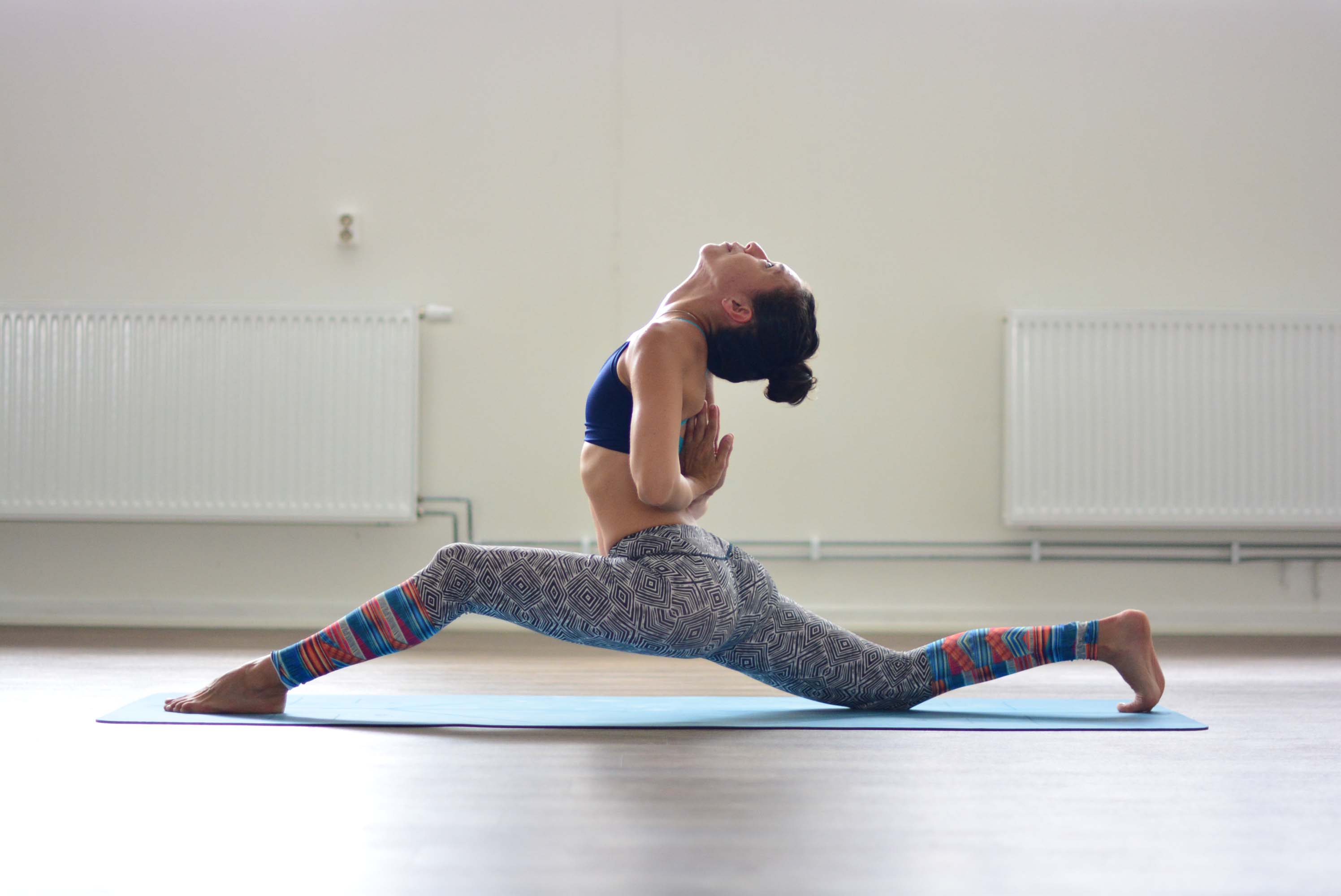
Hanumanasana (Monkey Pose) is the yoga version of the front splits: one leg reaches forward, the other reaches back, and the pelvis lowers toward the floor between them, facing the front. It stretches the hamstrings of the front leg and the hip flexors and quadriceps of the back leg at the same time. The pose is named after Hanuman, who leapt from India to Lanka in the Ramayana, and most people practise it for months with blocks under the hips before they reach the floor.
Pose type: seated, hamstring and hip flexor stretch. Level: intermediate to advanced, with a beginner version on blocks. Props: two blocks, a folded blanket for the back knee, and a bolster or a third block under the pelvis.
What Hanumanasana means
The name joins Hanuman, the monkey-faced hero of the Ramayana, and asana, seat or posture. In the epic, Rama's wife Sita has been carried off to Lanka. Hanuman, son of the wind god Vayu, crosses the sea in a single leap to find her and bring her Rama's ring. The split legs are the leap: one leg on the shore of India, the other landing in Lanka. In Hindu tradition Hanuman is also the model of brahmacharya, a life of celibacy and devotion.
The story is old. The pose, as far as anyone can trace it, is not. Hanumanasana does not appear in the Hatha Yoga Pradipika or the other medieval hatha texts. It became widely known through B.K.S. Iyengar's Light on Yoga (1966), where it is shown with the arms raised overhead and the palms together. Our list of 50 Sanskrit yoga terms covers more of the words you hear in class.
How to do Hanumanasana, step by step
Warm up first. A few rounds of Sun Salutations and some lunges are the minimum. Cold hamstrings and a deep split do not mix.
- Kneel on your mat with a folded blanket under your knees. Place a block on each side of your hips, and have a bolster or a third block within reach.
- Step your right foot forward into a low lunge, Anjaneyasana. Back knee down, fingertips on the blocks. Tuck the back toes under for now.
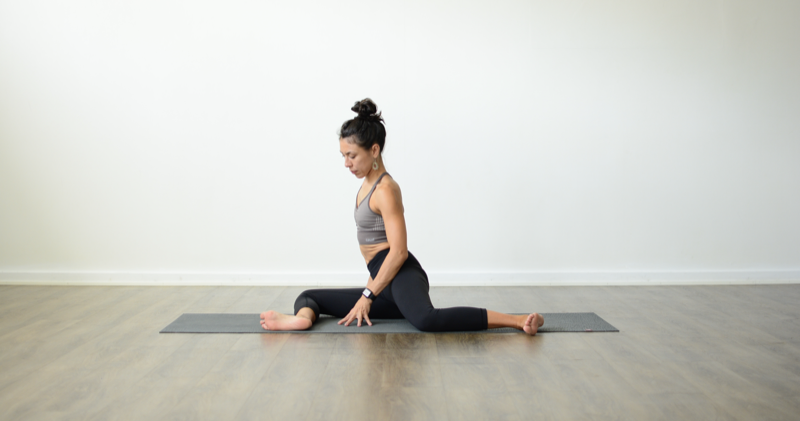
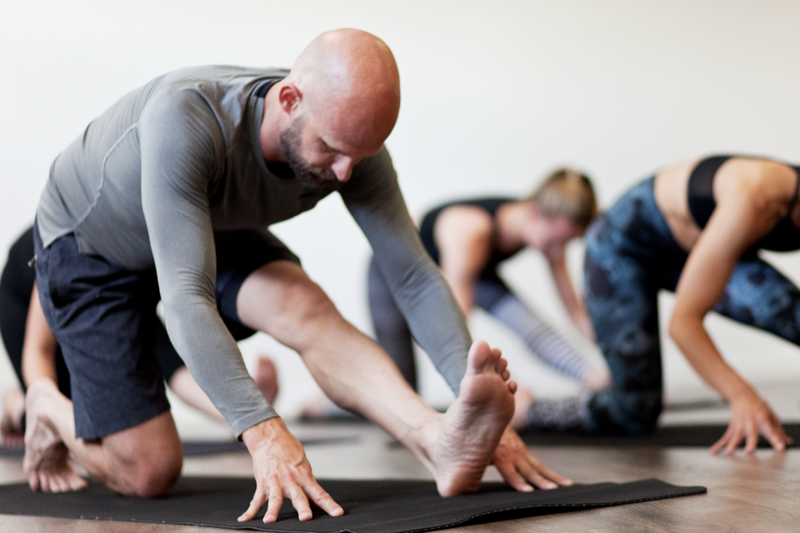
- Shift your hips back over the left knee and straighten the right leg, heel on the floor and toes pointing up. This is Half Splits. Fold over the front leg for a few breaths with a long spine.
- Untuck the back toes so the top of the left foot rests on the floor. Check the back leg: the kneecap and the top of the foot point straight down, not out to the side.
- Slide the right heel forward and the left knee back, a little at a time, on the exhale. Keep your weight in your hands on the blocks so you control how far you go.
- When you reach your edge, slide the bolster or a block under your right sitting bone and let the pelvis rest on it. Draw the front hip back and the back hip forward so both point toward the front of the mat.
- Lift your chest. Stay with the hands on the blocks, or take the arms up with the palms together if you feel steady. Breathe slowly for five to ten breaths.
- To come out, put your weight back into your hands, bend the front knee and slide back to the lunge. Rest in Child's Pose, then repeat with the left leg forward.
Your two sides will not match. Most people have a clearly easier split, and that is normal.
Square hips or open hips?
Yoga teaches Hanumanasana with the hips square: both hip points face forward and the back leg rolls in so the kneecap faces the floor. Dancers and gymnasts often let the back hip open to the side, which gets the pelvis lower sooner. The square version puts more of the stretch into the hip flexors of the back leg. The open version is easier on them and harder to control. Neither is wrong, but they are different stretches, so decide which one you are practising instead of drifting between them.
Benefits of Monkey Pose
Hanumanasana is a stretch, and what it does is mostly what you feel:
- Front leg: a long stretch through the hamstrings and the calf, from the sitting bone to the heel.
- Back leg: the hip flexors, the psoas and the rectus femoris, the part of the quadriceps that crosses the hip. Our guides to the hamstrings in yoga and to the hip flexors and psoas explain those muscles in more detail.
- Control: when you press the front heel and the back knee down into the floor while you hold the pose, the legs work, not only stretch. That active hold is what makes the split usable in poses like Flying Splits.
The old claim that Monkey Pose stimulates the abdominal organs has no mechanism behind it, so we leave it out. The same goes for the idea that the pain of the pose is a spiritual test. Pain means go back a little.
Who should skip or modify Hanumanasana
- Hamstring injury: skip the pose if you have a recent hamstring strain or pain at the sitting bone, where the hamstring tendon attaches. A deep split loads exactly that spot. Half Splits with a bent front knee is a gentler option once it has settled.
- Groin or hip problems: go lower on the props, or stay in Half Splits, if the groin or the front of the hip pinches.
- Knees: pad the back knee well, and keep a micro-bend in the front knee if it tends to lock backward.
- Lower back pain: if the lower back arches hard to get the chest up, lean forward onto the blocks instead.
- Pregnancy: the pelvic ligaments are looser, so keep the split higher than usual and stay on a bolster.
A strong stretch in the belly of the muscle is fine. Sharp pain, pain at a tendon, or anything that feels like a pull: come out. Read our 10 tips to avoid yoga injuries for more.
Common mistakes
- Dropping into the split. Keep the weight in your hands so you lower on your own terms. Gravity is not a good teacher here.
- Back leg turned out. If the back knee points to the side, the hips open and the hip flexor stretch disappears. Roll the back thigh in.
- Front foot rolling out. Point the front kneecap and toes up at the ceiling.
- Locked front knee. A knee pushed back into hyperextension takes the load off the hamstrings and puts it into the joint. Keep it soft.
- Hanging without support. If the pelvis floats above the floor with nothing under it, the stretch turns into a strain. Put a block or bolster underneath.
- Skipping the warm-up. Five minutes of lunges and forward folds changes how far you get.
Preparatory poses
Split the pose into its two halves and work each one:
- Anjaneyasana (Low Lunge): the hip flexors of the back leg. Anjaneya is another name for Hanuman.
- Ardha Hanumanasana (Half Splits): the hamstrings of the front leg, with the hips over the back knee.
- Paschimottanasana (Seated Forward Bend) and Janu Sirsasana (Head to Knee Pose): the hamstrings, seated.
- Supta Vajrasana (Fixed Firm Pose): the quadriceps and the front of the hips.
- Standing Split (Urdhva Prasarita Eka Padasana): the same leg shape standing up, with balance.
Stretching alone gets you part of the way. The 20-minute Vinyasa class Strengthen into Hanumanasana wakes up the hamstrings, hip flexors and quads with strength work on the way to the split.
Follow-up poses
- Eka Pada Rajakapotasana (One-Legged King Pigeon): a hip opener with a backbend, using the same open front of the back hip.
- Upavistha Konasana (Wide-Angle Seated Forward Bend): moves the stretch into the inner thighs.
- Natarajasana (Dancer Pose): the split turned into a standing backbend.
Finish with the legs straight out in front of you or in a gentle Child's Pose before you stand.
Hanumanasana variations
- On blocks or a bolster: the version most people should practise. Lower the support over weeks, not in one session.
- Half Splits (Ardha Hanumanasana): the front leg straight, the hips stacked over the back knee.
- Forward fold: once the pelvis rests on the floor, fold over the front leg and hold the front foot. The hamstring stretch gets much stronger.
- Arms overhead: the form in Light on Yoga, palms together. Adds a backbend and asks more of the hip flexors.
- With a backbend: bend the back knee and hold the back foot, a step toward King Pigeon shapes.
- Flying Splits (Eka Pada Koundinyasana II): the split as an arm balance. The class Flying Splits is a 25-minute level 2 prep for it.
Linnea Ahlgren's 35-minute Hatha class Hanumanasana is made for people who do not find the splits natural: hamstrings, psoas and quads, level 1-2, with two blocks and a strap.
Frequently asked questions
What is Hanumanasana in yoga?
Hanumanasana is the front splits as a yoga pose: one leg forward, one leg back, the pelvis lowered toward the floor and facing forward. It stretches the hamstrings of the front leg and the hip flexors of the back leg. Most people practise it with blocks or a bolster under the hips.
What is the English name for Hanumanasana?
Monkey Pose. It is also called the splits, front splits or Monkey God Pose, after Hanuman, the monkey-faced hero of the Ramayana that the pose is named after.
What is the story behind Hanumanasana?
In the Ramayana, Sita, the wife of Rama, is held captive in Lanka. Hanuman leaps across the sea from the southern tip of India to find her and bring her Rama's ring. The split legs stand for that leap. The story is ancient, but the pose itself is modern and became known through B.K.S. Iyengar's Light on Yoga in 1966.
What is half Hanumanasana?
Half Hanumanasana, or Half Splits, is the preparation for the full pose. From a low lunge you shift your hips back over the back knee and straighten the front leg, heel on the floor and toes up. Then fold forward over the front leg with a long spine. It stretches the hamstrings without the deep hip flexor stretch of the full split.
How long does it take to learn the splits?
It varies a lot. Some people reach the floor in a few months of regular practice, others take years, and some never get the pelvis all the way down because of how their hips and legs are built. Practising three or four times a week with props and patience works better than one long, hard session.
Should my hips be square in Hanumanasana?
In yoga the hips are usually kept square: both hip points face forward and the back kneecap faces the floor. That gives the back leg's hip flexors a strong stretch. Letting the back hip open to the side makes the split lower and easier, but it is a different stretch. Choose one and practise it on purpose.
Is Hanumanasana bad for your hamstrings?
Not when you ease into it warm and with support under the pelvis. It becomes risky when you drop into the split cold or push through pain at the sitting bone, where the hamstring tendon attaches. If you have a recent hamstring injury, skip the full pose and let it settle first.