Tadasana (Mountain Pose): How to Do It Step by Step

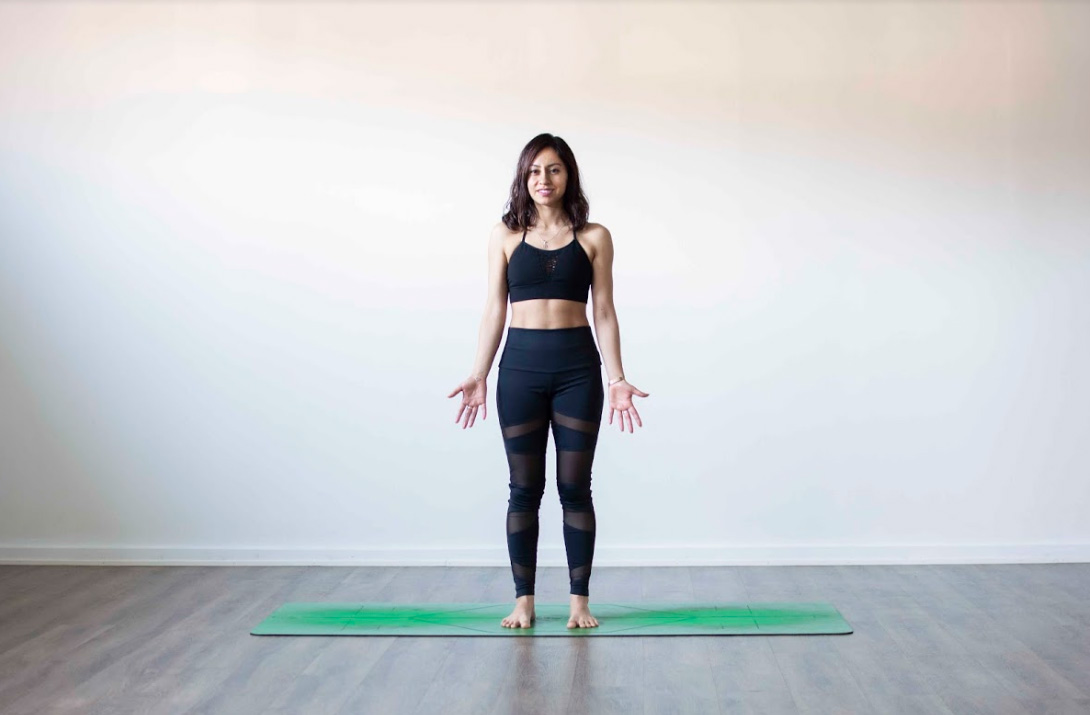
Tadasana (Mountain Pose) is the basic standing pose of yoga: you stand upright with your feet together or slightly apart, legs active, spine long and arms by your sides. It looks like ordinary standing, but every part of the body has a job. Most standing poses start and end in Tadasana, and the alignment you learn here is the alignment you carry into them.
Pose type: standing, foundation pose. Level: beginner, new to yoga is fine. Props: none, a wall or a block if you want feedback.
What Tadasana means
The name joins two Sanskrit words: tada, mountain, and asana, seat or posture. The image is a mountain: a broad base, a tall shape, still. The same pose goes by several names. In Ashtanga Vinyasa it is called Samasthiti, from sama, equal or even, and sthiti, standing, so "equal standing". B.K.S. Iyengar gives both names for one pose in Light on Yoga (1966). Some teachers keep them apart and use Samasthiti for the still, feet-together stand at the start of a sequence.
How to do Tadasana, step by step
- Stand at the front of your mat. Bring the bases of your big toes together and let the heels sit slightly apart. If that bothers your knees or your balance, step the feet a few centimetres apart, hip-width at most.
- Lift and spread your toes, then lay them back down one by one. Feel four corners under each foot: the base of the big toe, the base of the little toe, the inner heel and the outer heel.
- Rock a little forward and back, then side to side, and let the rocking get smaller until your weight settles over the middle of the feet. Keep the arches lifted.
- Firm the front of your thighs so the kneecaps draw up. Keep the knees soft. Think of working the quadriceps, not of pushing the knees back.
- Turn the upper thighs slightly inward, as if you were widening the back of your pelvis.
- Bring the pelvis to neutral. The hip bones point forward, the tailbone lengthens down without tucking hard under.
- Draw the lower ribs gently back toward the spine and lift the top of the breastbone. Widen across the collarbones.
- Roll the shoulders back and let the shoulder blades slide down the back. Let the arms hang by your sides, palms facing your thighs or turned forward.
- Stack the head over the pelvis. The underside of the chin is parallel to the floor, the throat soft, the jaw loose.
- Soften your eyes and look straight ahead. Breathe through the nose, evenly, for 30 seconds to a minute.
Imagine a line that runs up along the inner legs, through the centre of the body and out through the crown of the head. Every cue above helps you stand along that line.
Drishti and bandhas
In the Ashtanga method, the gaze in Samasthiti rests on the tip of the nose (Nasagra Drishti), and the root lock and the belly lock are engaged: Mula Bandha at the pelvic floor, and Uddiyana Bandha in its gentle standing form, a light draw of the lower belly in and up. Other schools keep the gaze level and ahead. Our guide to drishti, the yoga gaze, explains the differences.
Benefits of Mountain Pose
Tadasana teaches you where you stand. Most of us stand with the weight on one leg, the pelvis tipped and the head forward of the chest, and never notice. In Tadasana you notice.
- Body awareness: you learn to feel where your weight falls in your feet and how the pelvis, ribs and head stack over them. That is the base for every standing pose.
- Legs and feet: the thighs, calves and the small muscles of the feet work to hold you steady, even when the pose looks still.
- Balance: standing still with the feet close together asks the ankles to make constant small corrections. Try it with your eyes closed and you will feel them.
- A place to breathe: standing still with an even breath is a short break inside a class, and a way to settle before you move.
Older texts, ours included, have said that Tadasana corrects flat feet, relieves sciatica or makes you taller. There is no good evidence for any of those, and no pose changes the length of your bones. Tadasana will not fix your posture on its own either. It gives you a clear sense of upright standing that you can come back to during the day.
Who should skip or modify Tadasana
Almost anyone can practise Tadasana. Adjust it in these cases:
- Balance problems, dizziness or low blood pressure: stand with the feet hip-width apart, near a wall, and keep your eyes open. Move slowly when you come in and out of forward folds around it.
- Knees that hyperextend: keep a small bend in the knees and firm the thighs without locking the joint.
- Pregnancy: stand with the feet hip-width apart or wider for a steadier base.
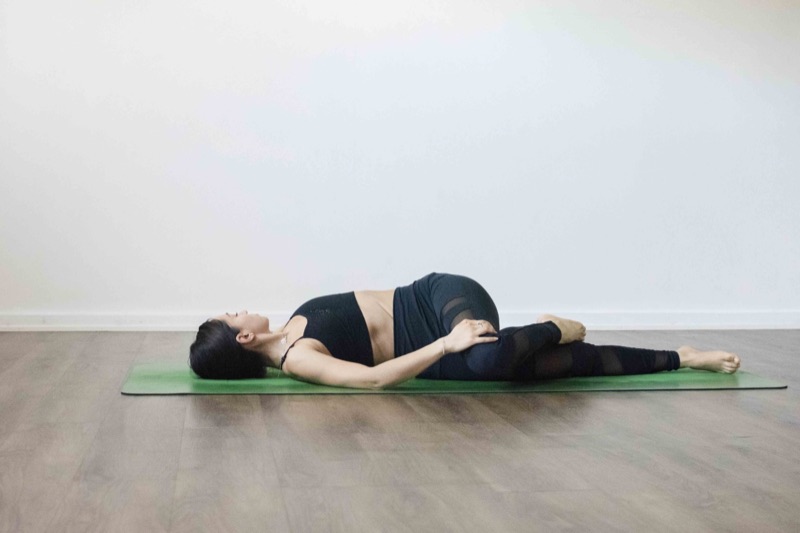
- Standing is painful: practise the same alignment lying down in Supta Tadasana, or seated on a chair with the feet flat.
Common mistakes
- Locking the knees. Pressing the knees back puts the load into the joint. Lift the kneecaps with the thigh muscles instead.
- Weight in the heels. Most people lean back without knowing it. Let the weight come forward until it rests over the middle of the feet.
- Tucking the tailbone hard. It flattens the lower back and grips the buttocks. Aim for neutral.
- Ribs pushed forward. Lifting the chest by arching the back makes the front ribs flare. Draw them softly back.
- Shoulders pulled back by force. Squeezing the shoulder blades together makes the upper back tense. Let them slide down and widen.
- Holding the breath. The pose is still, the breath keeps moving.
Preparatory poses
Tadasana needs no warm-up, but these poses wake up the feet and the backs of the legs first:
- Adho Mukha Svanasana (Downward-Facing Dog): lengthens the calves and hamstrings and teaches you to press evenly through the hands and feet.
- Padahastasana (Hand to Foot Pose): a standing forward fold that releases the back of the legs before you stand tall.
Our class Foot and Ankle Therapy works the feet you stand on.
Follow-up poses
Every standing pose grows out of Tadasana. Try to keep the same stack of feet, pelvis, ribs and head in each one:
- Urdhva Hastasana (Upward Salute): Tadasana with the arms raised, the next step in a Sun Salutation.
- Vrksasana (Tree Pose): the same standing line on one leg.
- Utkatasana (Chair Pose): Tadasana with bent knees and the arms up.
- Virabhadrasana I (Warrior I) and Trikonasana (Triangle Pose): wider stances that keep the length of the spine.
Surya Namaskar A starts and ends in Tadasana, so you practise the pose every round.
Tadasana variations
- Tadasana at the wall: stand with the back of the head, shoulder blades, sacrum and heels touching a wall. Useful to feel what upright is, then step away and keep it.
- Block between the thighs: squeeze a block gently between the upper thighs to feel the inward turn and the active legs.
- Feet hip-width apart: a steadier base for beginners, for balance problems and in pregnancy. A gap of about 8-12 cm between the inner feet is enough.
- Urdhva Hastasana: arms raised overhead, palms facing each other.
- Tadasana with arm variations: Gomukhasana (Cow Face) arms or hands in reverse prayer behind the back open the shoulders while the legs stay in Tadasana.
- Supta Tadasana (Reclined Mountain Pose): the same alignment lying on your back, with the soles of the feet pressing into a wall.
Mountain Pose is a good first pose in our list of essential yoga poses for beginners, and it is taught in most Hatha and Vinyasa flow classes.
Linnea Ahlgren's 15-minute class Breath and Tadasana opens the Trust Your Foundation program, and Lizette Pompa's Tadasana In Every Asana is a 60-minute Vinyasa class that finds the pose inside every other posture.
Frequently asked questions
What is the Tadasana pose?
Tadasana, or Mountain Pose, is the basic standing posture in yoga. You stand with the feet together or slightly apart, the legs active, the pelvis neutral, the spine long and the arms by your sides. It is the starting point and resting position for most standing poses.
How do you perform Tadasana?
Stand with the big toes touching and the heels slightly apart. Spread the toes and feel the weight evenly over both feet. Firm the thighs without locking the knees, bring the pelvis to neutral, lift the breastbone, relax the shoulders down and stack the head over the pelvis. Breathe evenly.
What are the benefits of Tadasana?
Tadasana teaches body awareness: where your weight falls in the feet and how the pelvis, ribs and head line up over them. It works the legs and feet and trains standing balance. It is the base you bring into every other standing pose. Claims that it cures flat feet or sciatica are not supported by research.
How long should you hold Tadasana?
Hold it for 30 seconds to a minute when you practise it on its own, breathing evenly through the nose. Inside a flow such as a Sun Salutation, you may stay for one or a few breaths. There is no upper limit, as long as you can stand without strain or dizziness.
Is Tadasana the same as Samasthiti?
Mostly, yes. Samasthiti means "equal standing" and is the name used in Ashtanga Vinyasa for the standing position at the start and end of a sequence. B.K.S. Iyengar gives Tadasana and Samasthiti as two names for the same pose. Some teachers use Samasthiti for a stiller, feet-together version with the hands in prayer.
Should the feet be together or hip-width apart in Tadasana?
Both are taught. Iyengar and Ashtanga teachers usually bring the big toes together, which asks more of your balance and leg muscles. Many teachers let beginners stand with the feet hip-width apart for a steadier base. Choose the stance where you can keep the knees soft and the weight even.
Does Tadasana increase your height?
No. Adult bones do not grow longer from any yoga pose. Standing tall in Tadasana can make you notice when you slump, and standing upright may make you look a little taller, but your height stays the same.