Urdhva Mukha Svanasana (Upward-Facing Dog): How to Do It Step by Step

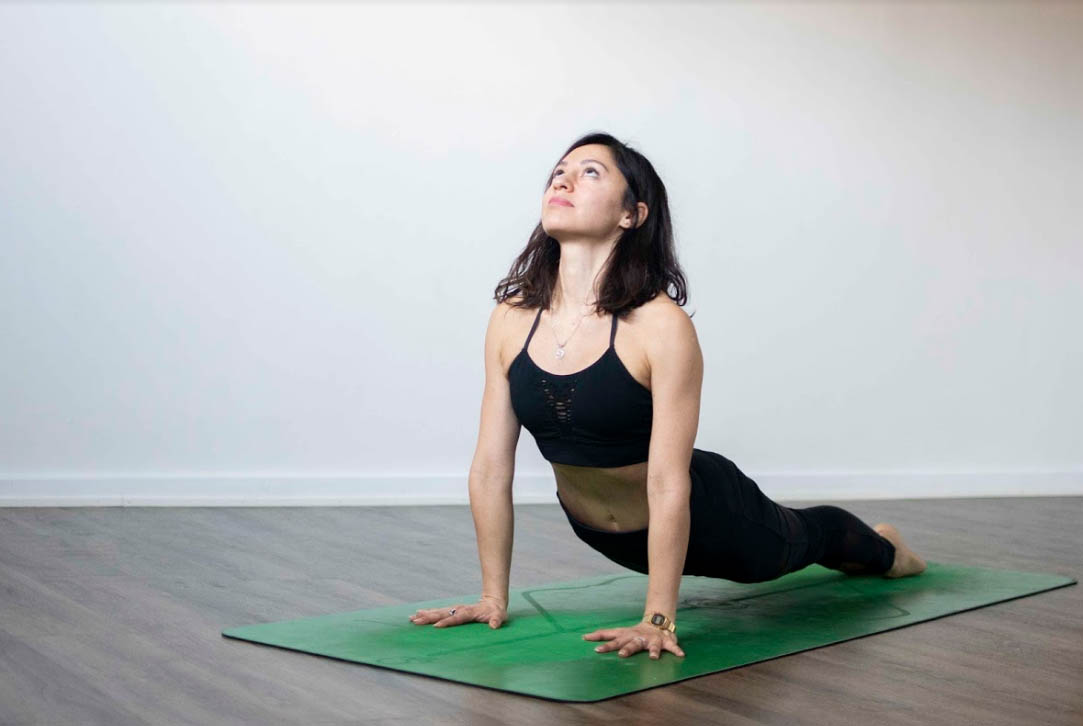
Urdhva Mukha Svanasana (Upward-Facing Dog) is a prone backbend in which you press into straight arms and lift the chest forward and up, while only your hands and the tops of your feet touch the floor. The thighs and knees hover. It is part of the Sun Salutations in Ashtanga and Vinyasa yoga, where it usually comes after Chaturanga and before Downward-Facing Dog.
Pose type: prone backbend, arm support. Level: beginner to intermediate. Props: none needed; a block under each hand or a folded blanket under the thighs helps while you learn.
What Urdhva Mukha Svanasana means
The name is four Sanskrit parts: urdhva, upward, mukha, face, svana, dog, and asana, pose. Picture a dog stretching after a nap: front legs straight, chest forward, head up. Its partner is Adho Mukha Svanasana (Downward-Facing Dog), where adho means downward. In a flow you move between the two with your breath, lifting into Up Dog as you breathe in and pressing back into Down Dog as you breathe out.
How to do Upward-Facing Dog, step by step
- Lie on your belly with your legs hip-width apart and the tops of your feet on the mat. Place your hands on the floor beside your lower ribs, fingers spread, middle fingers pointing forward.
- Press the tops of your feet down, all ten toenails on the mat. Firm your thighs so your kneecaps lift.
- Breathing in, press into your hands and straighten your arms. Your chest moves forward and up, and your hips and thighs lift off the floor.
- Stack your shoulders over your wrists. If they sit behind or in front of the wrists, walk your hands until they line up.
- Draw your shoulders away from your ears and broaden across the collarbones. Let the upper back do the bending, so the curve spreads along the spine instead of folding into the lower back.
- Keep your neck long. Look forward, or slightly up if your neck is comfortable there. Avoid dropping the head back.
- In a flow, stay for one breath. As a held pose, stay for three to five slow breaths. To come out, lower your body to the floor, or lift your hips back into Downward-Facing Dog on an exhale.
From Chaturanga Dandasana you roll forward over your toes into Up Dog. If rolling over the toes does not work for your feet, flip them one at a time.
Benefits of Upward-Facing Dog
Up Dog opens the front of the body and makes the arms and back work to hold you there.
- Chest and shoulders: it stretches the chest muscles and the fronts of the shoulders, which get short in people who spend the day hunched over a desk.
- Front of the hips and belly: with the hips lifted and the legs long, the hip flexors and abdominal wall lengthen.
- Arms and back: straight arms carry a good part of your weight, so the triceps and the muscles around the shoulder blades work. The muscles along the spine hold the backbend.
- Spinal extension: it moves the spine into extension, the opposite of the forward rounding of sitting.
The old version of this page promised relief from asthma, sciatica, depression and back pain. We removed those claims. No study we know of shows Up Dog treating any of them, and for some kinds of back pain, a deep backbend makes things worse.
Who should skip or modify Upward-Facing Dog
- Wrist pain: Up Dog holds the wrists in strong extension under load. Use blocks under your hands, or make fists and rest on your knuckles, or practise Bhujangasana (Cobra Pose) with less weight on the hands.
- Lower back pain: if bending backward sends pain into your lower back, choose Cobra or Sphinx and keep the bend small. Pain that runs down the leg is a reason to stop and ask a professional.
- Shoulder injuries: the straight-arm position loads the front of the shoulder. Keep the chest lower or stay in Cobra.
- Pregnancy: lying on the belly becomes uncomfortable and is usually avoided later in pregnancy. Ask your midwife or doctor and use a prenatal alternative.
Our 10 tips to avoid yoga injuries cover the general rules for backbends and weight on the hands.
Common mistakes
- Shoulders up by the ears. The chest sinks between the arms and the neck gets crowded. Press the floor away and widen the collarbones.
- Hands too far forward. The shoulders end up behind the wrists and the bend collapses into the lower back. Wrists go under the shoulders.
- Thighs resting on the floor. That is closer to Cobra. In Up Dog the legs are active and the thighs lift. If they cannot, put a blanket under them and practise Cobra until the arms are strong enough.
- Hanging in the lower back. Most people bend easily at the base of the spine. Lengthen the tailbone toward the heels and lift the chest forward before you lift it up.
- Head thrown back. The neck is the most mobile part of the spine and bends first. Keep the back of the neck long.
- Locked, hyperextended elbows. Straighten the arms, but keep a micro-bend if your elbows bow backward.
Upward Dog vs Cobra: what is the difference
Both are prone backbends, and people mix them up all the time. In Cobra the pelvis and legs stay on the floor, the elbows are usually bent, and the back muscles do most of the lifting. In Upward Dog the arms are straight, the hips and thighs lift, and only the hands and tops of the feet touch the mat. Up Dog asks for more strength in the arms and more room in the spine. Cobra is the gentler choice, and many teachers use it in Sun Salutations for beginners.
Where teachers disagree
Two cues split teachers. The first is the buttocks. Some say to squeeze the glutes to protect the lower back. Others say that gripping the glutes pinches the sacrum and teach soft buttocks with active legs. Both camps agree on the goal: length in the lower back. Try both and keep whichever lets you bend without a pinch.
The second is the gaze. Iyengar's Light on Yoga shows the head tilted back, while many modern teachers keep the neck in line and the gaze forward to protect it. If your neck is healthy and the upper back is doing its share, a slight lift of the chin is fine. If not, look forward.
The history is recent. Up Dog is not in the Hatha Yoga Pradipika. It became common in the 20th century through Krishnamacharya's students, B.K.S. Iyengar and Pattabhi Jois, whose Ashtanga yoga puts it in every vinyasa.
Preparatory poses
- Bhujangasana (Cobra Pose): the same shape with the legs on the floor, to learn the upper-back bend.
- Salabhasana (Locust Pose): strengthens the back muscles that hold the lift.
- Plank Pose: builds the straight-arm strength and teaches shoulders over wrists.
- Sphinx Pose: a mild backbend on the forearms, a good start on stiff days.
If your wrists complain, Lizette Pompa's ten-minute Wrist Mobility class works on exactly the extension Up Dog needs.
Follow-up poses
- Adho Mukha Svanasana (Downward-Facing Dog): the next pose in the Sun Salutation, and a counter-stretch for the spine.
- Ustrasana (Camel Pose) and Dhanurasana (Bow Pose): deeper backbends once Up Dog feels steady.
- Urdhva Dhanurasana (Wheel Pose): the full backbend on straight arms.
- Balasana (Child's Pose): a rest after a series of backbends.
Upward-Facing Dog variations
- Knees down: keep the knees on the floor and lift the chest on straight arms. Less load on the arms, a good step between Cobra and the full pose.
- Hands on blocks: more room for the chest and less bend in the wrists.
- Blanket under the thighs: a folded blanket to rest on while you learn to lift.
- In the flow: one breath in Up Dog in Surya Namaskar A and Surya Namaskar B, between Chaturanga and Down Dog.
Day 2 of Vinyasa Fundamentals teaches Plank, a safe Chaturanga and Upward-Facing Dog with the hands and shoulders in place, using two blocks.
Frequently asked questions
What is the difference between Upward Dog and Cobra?
In Cobra your hips and legs stay on the floor and the elbows are usually bent. In Upward Dog your arms are straight and your hips and thighs lift, so only your hands and the tops of your feet touch the mat. Up Dog needs more arm strength and a deeper backbend.
What is Upward-Facing Dog good for?
It stretches the chest, the fronts of the shoulders, the belly and the hip flexors, and it works the arms and the muscles along the spine. It also takes the spine into extension, which balances a lot of sitting. It does not cure illness.
Is Upward Dog bad for the lower back?
Not for most people, as long as the bend spreads through the upper back and the lower back stays long. If the pose sends pain into your lower back or down a leg, come out and practise Cobra or Sphinx with a smaller bend instead.
How long should I hold Upward-Facing Dog?
In a Sun Salutation you stay for one breath in. As a held pose, three to five slow breaths is enough for most people. Iyengar students may hold it for 30 seconds or longer once the arms and back are strong.
Should my thighs touch the floor in Upward Dog?
No. In the full pose the thighs and knees lift, and only the hands and the tops of the feet stay on the mat. If your thighs keep dropping, rest them on a folded blanket or practise Cobra until the arms get stronger.
Why do my wrists hurt in Upward Dog?
The wrists bend back close to 90 degrees under a good part of your body weight. Spread your fingers, press through the knuckles, and check that your shoulders sit over your wrists. Blocks under the hands reduce the bend, and wrist warm-ups before practice help.