Parsva Bakasana (Side Crow Pose): How to Do It Step by Step

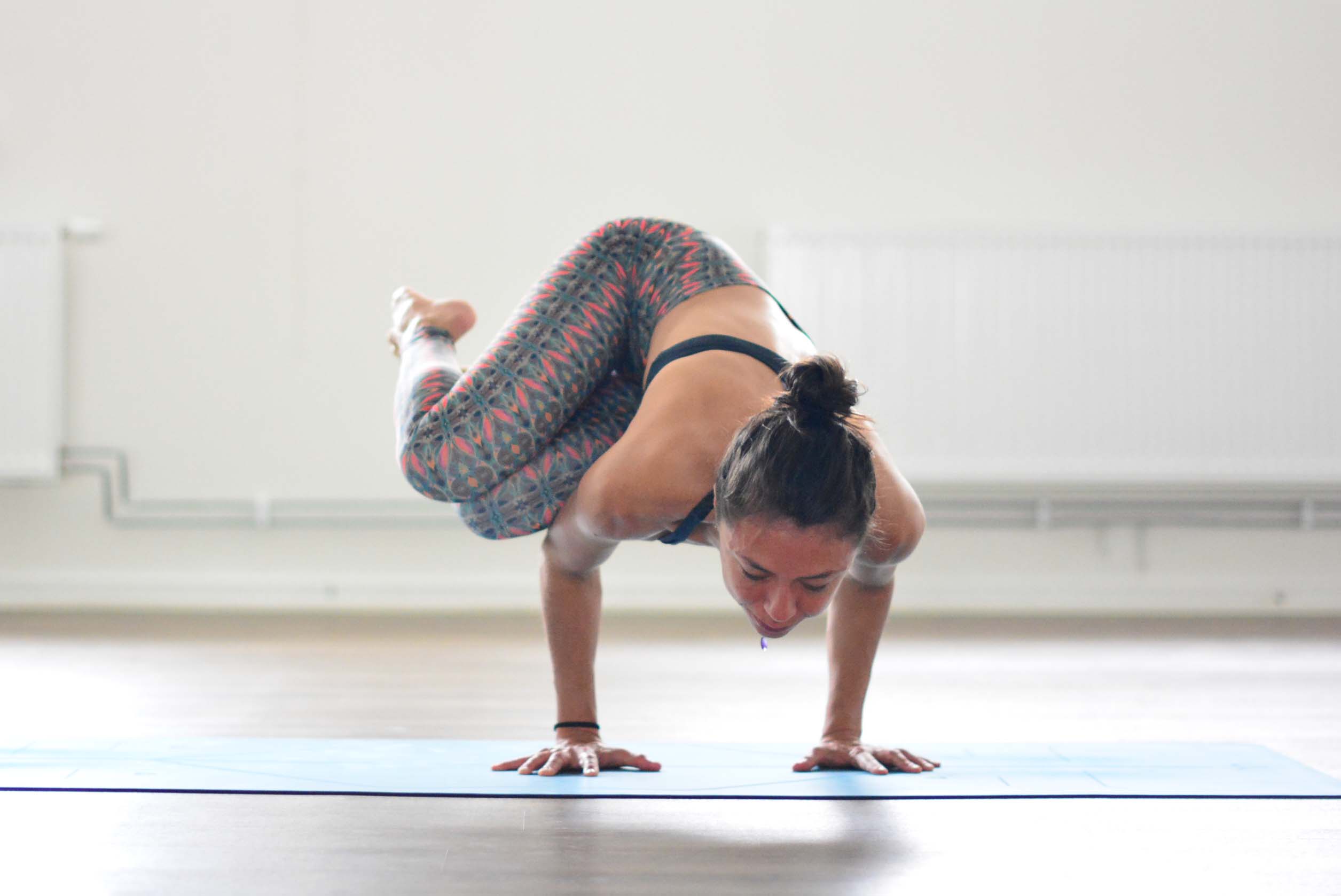
Parsva Bakasana (Side Crow Pose) is an arm balance in which you twist from a squat, rest both knees on the outside of one upper arm and lift your feet off the floor. It combines the balance of Bakasana (Crow Pose) with a deep twist of the upper back. The work comes from the twist and the core as much as from the arms, so most people learn it after they can hold Crow for a few breaths.
Pose type: arm balance, twist. Level: intermediate. Props: a block or a cushion in front of your head, optional.
What Parsva Bakasana means
The name has three Sanskrit parts: parsva, side or flank, baka, crane or heron, and asana, posture. So a literal translation is Side Crane Pose. In English classes it is nearly always called Side Crow. The mix-up comes from the parent pose: Bakasana is named after the crane, but teachers started calling the bent-arm version Crow, and the name stuck. Some teachers keep the two apart and call the bent-arm shape Kakasana, from kaka, crow, and save Bakasana for the version with straight arms. Both names describe the same family of poses.
B.K.S. Iyengar included Parsva Bakasana in Light on Yoga (1966), among the arm balances that grew out of the older hatha tradition in the 20th century. It does not appear in the medieval hatha texts.
How to do Parsva Bakasana, step by step
These steps take you into the version most classes teach: both knees stacked on one upper arm. Warm up your wrists and do a few twists first.
- Squat with your feet and knees together, heels down or on a folded blanket. Come onto the balls of your feet if you like. Place your palms together at your chest.
- Exhale and twist to the right. Hook your left elbow outside your right thigh, as in a twisted Utkatasana (Chair Pose). Lengthen the spine on the inhale and turn a little further on each exhale.
- Keep the twist and place both hands on the floor to the right of your feet, shoulder-width apart, fingers spread and pointing forward. The hands sit roughly in line with your hips, a forearm's length from your legs.
- Bend your elbows toward 90 degrees, like the arms in Chaturanga Dandasana. Keep them pulled in toward each other. They form a shelf.
- Bring the outside of your right thigh, a hand above the knee, onto the back of your left upper arm. The deeper the twist, the further the knees reach across the arm.
- Lean forward. Shift your weight into your hands until your feet feel light. Look forward at the floor, a little way in front of your hands, not down between them.
- Lift one foot, then the other. Keep the feet together and the heels drawn toward your seat. Squeeze the knees together.
- Stay for three to five breaths. To come out, lower the feet with control and sit back into the squat. Rest in a forward fold, then twist to the other side.
A small cue that helps: press the floor away and lift the chest slightly. The pose feels lighter when the shoulders stay level with or above the elbows.
The two-arm version
In the version shown in Light on Yoga, the legs rest on two shelves: the outer thigh on one upper arm and the outer hip on the other. It spreads the weight over both arms and asks for more twist. Once your balance is steady in the one-arm version, try moving the top hand further back so the hip can settle on that arm.
Benefits of Side Crow
- Arms and wrists: you hold your body weight on bent arms, which builds strength in the triceps, the chest and the muscles around the shoulder blades, and loads the wrists in extension.
- Core: the obliques hold the twist and the deep abdominal muscles keep the legs lifted and the knees together.
- Rotation: the twist asks for turning in the upper back. Practised regularly, it keeps that range available.
- Balance and focus: small shifts in weight tip you over, so you learn to adjust through the fingers and to keep the gaze steady.
Many students say arm balances make them braver. That is a real experience for many people and easy to understand: you do something that looked impossible. It is not a measured effect of this pose. Side Crow does not massage or stimulate the digestive organs in any way that research has shown.
Who should skip or modify Side Crow
- Wrist pain or injury, including carpal tunnel syndrome: the wrists take the full body weight in a bent position. Skip it, or work on the prep poses with fists or on blocks until the wrists are ready.
- Shoulder injury: bent-elbow arm balances put a lot of load on the front of the shoulder. Get it cleared first.
- Pregnancy: the deep closed twist compresses the belly, and falling forward is a risk. Leave it out.
- Recent back, abdominal or disc problems: the pose twists under load. Wait until twisting is comfortable without weight.
- High blood pressure or glaucoma: the head drops close to the floor. Keep the head up and the holds short, or skip it and ask your doctor.
Put a cushion or a folded blanket in front of you while you learn. Falling forward onto your face is the most common way this pose hurts people. Read our 10 tips to avoid yoga injuries before you start on arm balances.
Common mistakes
- Too little twist. If only the tip of the knee reaches the arm, the legs slide off. Twist more before you place the hands.
- Elbows splaying out. The shelf collapses and the shoulders drop. Keep the elbows over the wrists and pulled toward each other.
- Looking down between the hands. The head drops and the weight goes backward. Look forward.
- Not leaning forward enough. The feet stay heavy because the weight is behind the hands. Lean until the feet float, with a cushion in front of you.
- Knees drifting apart. The bottom leg sags off the arm. Squeeze the knees and feet together.
- Holding the breath. Breathe slowly through the nose. If you cannot, come down and rest.
Preparatory poses
- Bakasana (Crow Pose): the same arm shelf and forward lean, without the twist.
- Malasana (Garland Pose): the squat you start from.
- Parivrtta Utkatasana (Revolved Chair Pose): the twist with the elbow outside the thigh, standing.
- Ardha Matsyendrasana (Half Lord of the Fishes): seated twisting of the upper back.
- Plank Pose and Chaturanga: strength in the arms and the core.
- Vasisthasana (Side Plank): the obliques and the shoulders.
Our guide to yoga twists and how to twist safely explains where rotation in the spine comes from, and yoga for core strength covers the muscles that keep your legs lifted. For the wrists, the class Wrist Mobility is a good warm-up.
Follow-up poses
- Eka Pada Koundinyasana I: from Side Crow, straighten the top leg back and the bottom leg to the side.
- Astavakrasana (Eight-Angle Pose): another twisted arm balance, with the legs hooked around one arm.
- Jump back to Chaturanga, a common transition in vinyasa and Ashtanga classes once the balance is steady.
- Balasana (Child's Pose): rest for the wrists and back afterward.
Side Crow variations
- Head on a block: rest your forehead on a block in front of you while you lift the feet. The head becomes a third point of support.
- One foot at a time: lift one foot and keep the toes of the other on the floor, then change.
- Strap around the arms: a strap looped above the elbows at shoulder width stops the elbows from splaying.
- Two-arm Side Crow: thigh on one arm, hip on the other, as in the traditional form.
- Side Crow with straight arms: press the arms long for a Side Crane. It needs more strength and a stronger twist.
Arm balances show up most in vinyasa flow and yoga strength classes.
If you are still working on the parent pose, Yogateket's Crow Pose Tutorial gives you three ways into Bakasana with a block, and From Side to Crow is a 15-minute core class with Bakasana walks.
Frequently asked questions
What is Parsva Bakasana?
Parsva Bakasana, or Side Crow Pose, is a twisted arm balance. From a squat you twist to one side, rest both knees on the outside of one upper arm, bend the elbows and lift the feet. Parsva means side and baka means crane, so it is also called Side Crane.
Is Side Crow easier than Crow?
It depends on your body. Many people find Side Crow easier to balance, because the legs sit low and wide on the arm shelf and the hips stay close to the floor. Others find it harder because it needs a deep twist. If your twist is good and Crow scares you, try Side Crow first.
What are the benefits of Side Crow Pose?
Side Crow builds strength in the arms, shoulders and wrists, works the obliques and deep abdominal muscles, and asks for rotation in the upper back. It also trains balance, because you learn to adjust your weight through the hands. Health claims beyond that are not supported by research.
Who should avoid Side Crow Pose?
Skip it or wait if you have wrist, shoulder or recent back injuries, carpal tunnel syndrome, or are pregnant. People with high blood pressure or glaucoma should keep the head up and the holds short, or ask their doctor first.
Why do my knees slide off my arm in Side Crow?
Usually because the twist is not deep enough, so only the tip of the knee reaches the arm. Twist further before you place your hands, keep the elbows pulled in to make a firm shelf, and squeeze the knees together.
How long should you hold Side Crow?
Start with a few seconds, then build toward three to five slow breaths on each side. Always do both sides, and rest in Child's Pose if your wrists feel tired.
What is the hardest yoga pose?
There is no agreed answer. Poses often named include Eka Pada Koundinyasana, Mayurasana (Peacock Pose), handstand variations and deep backbends such as the full King Pigeon. Which one is hardest depends on whether you are short on strength, flexibility or balance.