Urdhva Prasarita Eka Padasana (Standing Split): How to Do It Step by Step

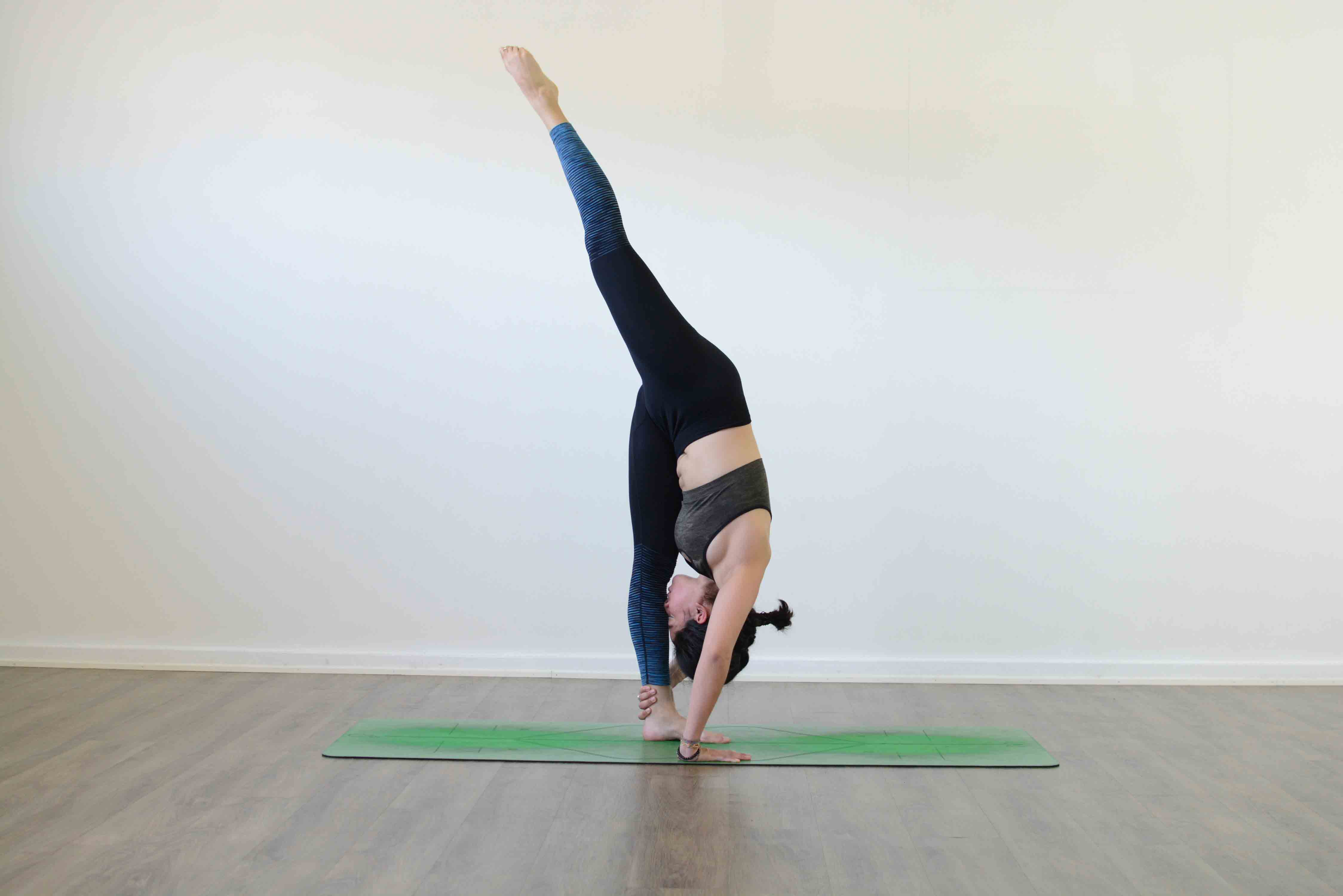
Urdhva Prasarita Eka Padasana (Standing Split) is a standing forward fold in which you balance on one leg and lift the other leg up behind you, as high as it goes. The torso hangs toward the standing leg and the hands rest on the floor, on blocks or around the ankle. It stretches the hamstrings of the standing leg and asks the lifted leg to work, so it is as much a strength pose as a flexibility pose.
Pose type: standing, forward fold, one-leg balance. Level: intermediate, with a beginner version on blocks. Props: two yoga blocks, a wall if balance is new to you.
What Urdhva Prasarita Eka Padasana means
The Sanskrit name describes the shape word by word: urdhva, upward; prasarita, spread out or stretched; eka, one; pada, foot or leg; asana, pose. Upward stretched one-leg pose. B.K.S. Iyengar included it in Light on Yoga (1966), and today you meet it most often in vinyasa classes, where it links Downward-Facing Dog, a lunge and a standing fold. The medieval hatha texts do not describe it. It is a modern standing pose.
How to do Standing Split, step by step
Warm up the hamstrings and the hips first. A few rounds of sun salutations are enough.
- Stand in Tadasana (Mountain Pose) at the front of your mat, with a block on each side of your front foot.
- Breathe out and fold forward from the hips into a standing forward bend. Bend your knees as much as you need to get your hands onto the floor or the blocks.
- Shift your weight into your left foot. Spread the toes and press down through the big toe mound and the heel.
- Breathe in and lift your right leg straight back behind you. Lead with the heel, and keep the toes pointing down toward the floor to start with.
- Walk your hands back toward the standing foot. Let your belly move toward the front of the left thigh and your head hang heavy. Keep a soft bend in the standing knee if it tends to lock.
- Reach the lifted leg up and back through the heel. Height comes from the back of the lifted leg and the glutes, so squeeze the leg straight instead of swinging it.
- If your hamstrings allow it, take hold of the back of the standing ankle with one or both hands. Stay for 5 breaths, slow through the nose.
- To come out, lower the lifted leg with control, stand on both feet in the forward fold, then roll up or rise with a flat back. Repeat on the other side.
Square hips or open hip
Teachers disagree here, and both have a point. Keeping the hips level, with the lifted toes pointing down, keeps the stretch in the hamstrings of the standing leg and trains the back of the lifted leg to lift without help. Letting the hip of the lifted leg open lets the leg go much higher, closer to a full split, and moves more of the stretch into the front of that hip. Start square. Open the hip later, on purpose, when you want the height.
Benefits of Standing Split
What the pose does can be traced to its shape:
- Hamstrings and calves of the standing leg: the fold lengthens the whole back of the leg under body weight. Our guide to hamstrings and yoga explains what you are stretching.
- Glutes and the back of the lifted leg: they lift and hold the leg against gravity, which is strength work, not only stretching.
- Balance and foot strength: the small muscles of the standing foot and ankle work all the time to keep you upright upside down.
The old version of this article promised better digestion, stronger kidneys and lungs and a healthier reproductive system. No study supports that, so it is gone. The focus people feel comes from holding a hard balance and breathing slowly while you do it.
Who should skip or modify Standing Split
- High or unstable blood pressure, glaucoma, or a recent eye operation: the head is below the heart. Keep the torso higher, hands on a wall or on tall blocks, or choose Virabhadrasana III (Warrior III) instead.
- Headache or dizziness: skip inverted folds that day.
- Hamstring strain, especially at the sitting bone: a deep fold loads the top of the hamstring tendon. Bend the standing knee a lot, or leave the pose out until it has healed.
- Recent injury to the back, hip, knee, ankle or wrist: ask your physiotherapist first.
- Late pregnancy: balance and the forward fold both get harder. Use a chair or a wall, or rest.
- New to balancing: stand facing away from a wall and press the lifted foot into it. You get the shape without the fall.
For more on practising without injury, read our 10 tips to avoid yoga injuries.
Common mistakes
- Locking the standing knee. If you hyperextend, the knee joint takes the load instead of the muscles. Keep a micro-bend.
- Kicking the leg up. Momentum gets the leg high for a second, then you wobble. Lift slowly and hold.
- Bent lifted knee. A bent knee looks higher but loses the line. Straighten the leg first, then lift.
- Rounding from the upper back only. Fold from the hip joints. If the back rounds hard, raise your hands on blocks.
- Weight in the hands. The hands steady you. The weight lives in the standing foot.
- Holding the breath. A forward fold squeezes the belly. Keep the breath slow and even.
Preparatory poses
- Padangusthasana (Big Toe Pose): a standing fold on two legs for the hamstrings.
- Prasarita Padottanasana (Wide-Legged Forward Bend): folds forward with a wide, stable base.
- Adho Mukha Svanasana (Downward-Facing Dog): lift one leg for Three-Legged Dog, the same lifted leg with more support.
- Anjaneyasana (Low Lunge): opens the front of the hip of the leg that later lifts.
- Virabhadrasana III (Warrior III): the same balance on one leg with the torso level.
Follow-up poses
- Hanumanasana (Monkey Pose): the full front split on the floor.
- Ardha Chandrasana (Half Moon Pose): open the hip fully and turn the chest to the side.
- Utthita Hasta Padangusthasana (Extended Hand to Big Toe Pose): the leg lifts forward instead of back, another balance for the hamstrings.
- Bhujangasana (Cobra Pose): a gentle backbend after the long fold.
Standing Split variations
- Hands on blocks: the easiest version and the one to start with. Tall blocks keep the back long.
- Foot on the wall: press the lifted foot into a wall behind you and walk it up as the hamstrings allow.
- Hands on the ankle: hold the standing ankle and draw the chest toward the shin.
- Hands free: for a harder balance, let go of the floor and hold the elbows behind the standing leg.
- From Downward-Facing Dog: in a vinyasa flow, step forward from Three-Legged Dog and keep the leg lifted.
Standing Split turns up in vinyasa flow classes, and the Splits Time class works the hamstrings, inner thighs and quads for 30 minutes if you want to prepare the legs.
Our 10-minute class How to Standing Splits takes you through the pose step by step, level 1-2.
Frequently asked questions
What is the standing split pose called?
In Sanskrit it is Urdhva Prasarita Eka Padasana, the upward stretched one-leg pose. In English it is called Standing Split or Standing Splits. It is a standing forward fold on one leg with the other leg lifted high behind you.
How do you do a standing split?
Fold forward from Tadasana with your hands on the floor or on blocks. Shift your weight into one foot and lift the other leg straight back, heel first. Walk your hands toward the standing foot, let your head hang and stay for 5 breaths. Lower the leg with control and change sides.
How hard is standing split?
It is an intermediate pose. The balance is manageable for most people with blocks under the hands. The full shape, with the chest to the shin and the leg high, needs long hamstrings and strong glutes, and for most people that takes months of regular practice.
What is the difference between Warrior 3 and standing split?
In Warrior III the torso and the lifted leg form one straight line parallel to the floor, and the arms reach forward. In Standing Split the torso folds down toward the standing leg, the hands go to the floor and the lifted leg goes as high as it can. Warrior III is more strength, Standing Split more hamstring stretch.
Why can't I lift my leg higher in standing split?
Usually for two reasons: tight hamstrings in the standing leg keep the torso from folding, or the glutes and the back of the lifted leg are not yet strong enough to lift it. Tightness in the front of the lifted hip also limits the height. Bend the standing knee, use blocks, and practise lifting the leg slowly.
How long should you hold standing split?
Start with 3 to 5 breaths on each side. Hold longer as the balance steadies. Come out if you feel pulling pain at the sitting bone of the standing leg or if you get dizzy.